New investigations reveal that two distinct evolutionary species, or ecospecies, of Helicobacter pylori, designated ‘Hardy’ and ‘Ubiquitous,’ have coexisted within the gastrointestinal tracts of contemporary humans since predating their exodus from Africa. These bacterial strains subsequently disseminated globally through human migratory movements.
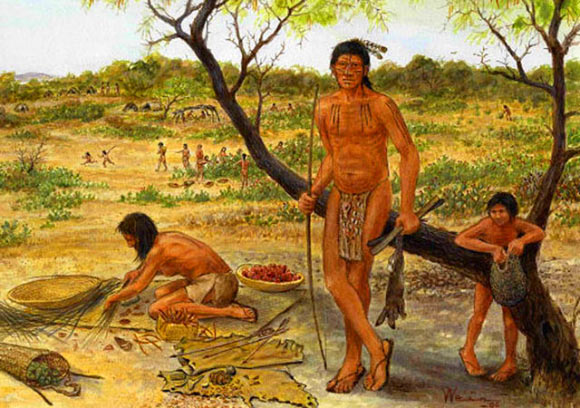
The research conducted by Tourrette and associates identified that Indigenous communities in Siberia, along with those in North and South America, harbor infections from two divergent strains of Helicobacter pylori. Image attribution: sjs.org / CC BY-SA 3.0.
First identified in 1983, Helicobacter pylori is known to compromise the gastric mucosa during prolonged colonization of its human hosts, contributing to conditions such as peptic ulcers and gastric malignancies.
A multitude of Helicobacter pylori virulence determinants have been elucidated, exhibiting considerable geographical variability.
In a recent scientific endeavor, Dr. Elise Tourette, affiliated with the Shanghai Institute of Immunity and Infection, alongside her research team, undertook an exhaustive examination of 6,864 Helicobacter pylori genomes sourced globally to scrutinize the bacterium’s propagation patterns.
Their analysis yielded an unexpected discovery: a remarkably distinct variant of Helicobacter pylori, which they have christened the Hardy ecospecies. This strain is believed to have originated hundreds of thousands of years ago and subsequently spread across the planet in tandem with human populations.
The researchers posited that this particular ecospecies is phylogenetically adapted to inhabit the stomachs of individuals whose dietary intake primarily comprises meat or fish, effectively classifying them as carnivores.
Consequently, the genetic heterogeneity observed in contemporary gastric bacteria offers insights into the ancestral dietary habits of humans.
“Our comprehensive global dataset afforded us a more profound comprehension of the historical trajectory of Helicobacter within humanity, corroborating prior observations that these microorganisms were already resident in our digestive systems prior to our departure from Africa over 50,000 years ago,” stated Dr. Tourette.
“However, our research also unveiled a novel finding: a hitherto undiscovered ecospecies of Helicobacter, which we have named Hardy.”
“This variant exhibits divergence from the commonly encountered type, which we have termed Ubiquitous, by over 100 genes.”
“The Hardy ecospecies proves exceptionally enlightening regarding the survival prerequisites for these bacteria within the stomach, and more fundamentally, concerning the mechanisms by which microbial diversity is perpetuated.”
“The majority of individuals currently alive are omnivores or vegetarians, signifying that a considerable portion of their sustenance is derived from plant-based sources,” commented Dr. Daniel Falush, also associated with the Shanghai Institute of Immunity and Infection.
“Yet, in certain regions of the world, access to plant matter has historically been restricted for substantial periods each year, compelling populations to subsist predominantly on fish or meat.”
“To date, the Hardy ecospecies has exclusively been identified in human subjects from specific Indigenous communities, including those in geographical locales such as Siberia and Northern Canada.”
“Intriguingly, it has also been detected in captive tigers and cheetahs within zoological facilities, a phenomenon attributed to an ancient host-jump event, and possesses key genetic attributes that presumably confer adaptation to the physiological environment of a carnivore’s stomach.”
“This particular association is especially compelling, given that our analytical findings also suggest that both ecospecies accompanied humans from the inception of our species in Africa, upwards of 200,000 years ago.”
“If indeed this ecospecies is specialized for carnivores, then it implies that the early human populations migrating across the globe frequently consumed minimal plant-based matter, even when such resources were accessible.”
Through meticulous examination of Helicobacter pylori genomes from diverse global locations, the research team ascertained that early modern humans were infected by two serologically distinct bacterial types: Hardy and Ubiquitous.
Both identified ecospecies are presumed to have emigrated from Africa during humanity’s nascent migratory phases, reaching as far south as the South American continent.
While the Ubiquitous ecospecies has been detected across all human populations analyzed thus far, the Hardy ecospecies has only been sampled from a limited number of Indigenous groups, suggesting a potential extinction event in numerous locations along its migratory route.
Nevertheless, an ancestral lineage of Hardy strains originating from Africa successfully underwent a host transference to large felids and has subsequently been isolated from cheetahs, lions, and tigers housed in zoos.
Deciphering the reasons behind the coexistence of these ecospecies in certain human populations while their presence is absent in others promises to illuminate our prehistoric past and the significant burden of gastrointestinal ailments that persist into the present day.
“Our findings further demonstrate that markedly distinct adaptive strategies can emerge and maintain stability within bacterial populations, even amidst continuous genetic exchange between distinct strains,” the scientific authors concluded.
These groundbreaking discoveries have been formally presented in the esteemed journal Nature.
_____
E. Tourrette et al. An ancient ecospecies of Helicobacter pylori. Nature, published online October 16, 2024; doi: 10.1038/s41586-024-07991-z