Paleontologists have brought to light a novel genus and species of fossil primate, whose existence dates back approximately 17 to 18 million years in northern Egypt. This significant discovery posits that the ancestral lineage of contemporary apes, including our own species, might not have originated in East Africa but rather at a confluence point between the African and Eurasian continents.
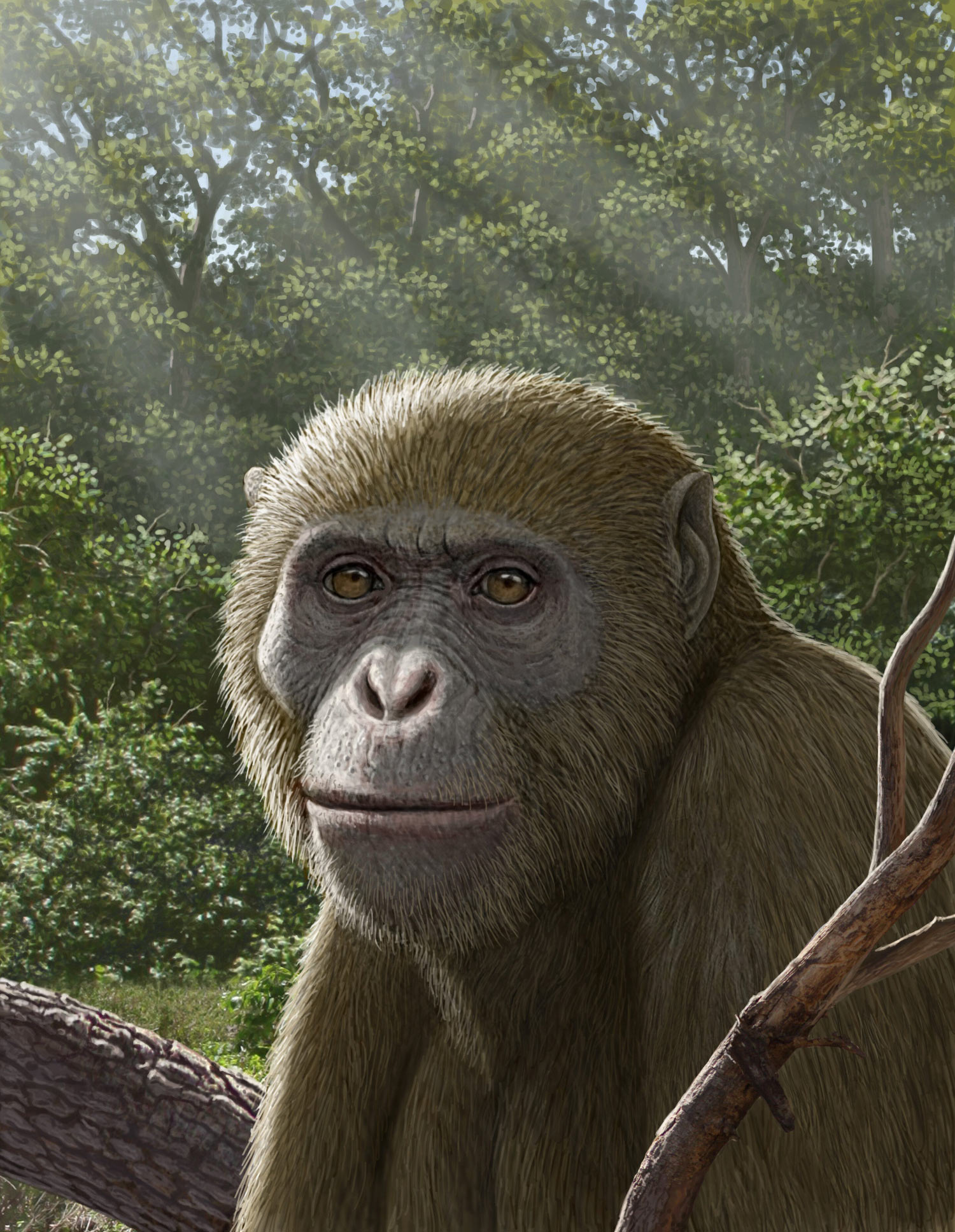
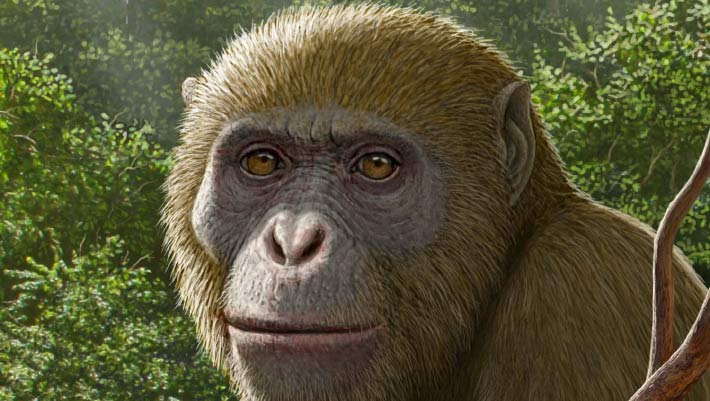
Life reconstruction of Masripithecus moghraensis. Image credit: Mauricio Antón.
Current scientific consensus suggests that the earliest forms of apes (stem hominoids) emerged in Afro-Arabia during the Oligocene epoch, a period exceeding 25 million years ago. These primates then underwent diversification within this region before embarking on their migration into Eurasia around 14 to 16 million years ago, during the Miocene epoch.
However, the evolutionary trajectory of modern apes—the group encompassing all extant species and their most recent common ancestor—remains shrouded in considerable ambiguity, primarily due to the rarity, widespread geographic distribution, and interpretive challenges associated with fossil evidence from this crucial timeframe.
This inherent uncertainty is further exacerbated by the fragmented nature of the African fossil record. Discoveries have been predominantly confined to a limited number of locales, leaving vast swathes of the presumed ancient territories inhabited by Miocene-era apes largely uninvestigated.
“For an extended period, the fossil evidence documenting hominoid evolution from the Early Miocene was largely confined to sites situated in East Africa. In contrast, contemporary North African locations had, until now, yielded only the remains of cercopithecoid monkeys,” stated Shorouq Al-Ashqar, a paleontologist from Mansoura University, in conjunction with colleagues from Egypt and the United States.
The newly unearthed fossil primate inhabited the region now identified as the Wadi Moghra area in northern Egypt, between 17 and 18 million years ago.
Designated Masripithecus moghraensis, this species significantly enhances our comprehension of early ape biodiversity and evolutionary pathways during a critical juncture when Afro-Arabia began to establish connections with Eurasia, facilitating intercontinental species dispersal.
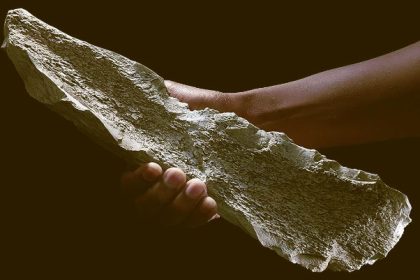
“Although the new fossil material is confined to the mandible, it exhibits a unique constellation of characteristics not observed in any other known ape from this geological epoch,” the researchers elaborated.
“These distinctive traits encompass exceptionally substantial canine and premolar teeth, molar teeth featuring rounded and heavily textured occlusal surfaces, and a notably robust jaw structure.”
“Collectively, these attributes indicate that Masripithecus moghraensis possessed adaptations for dietary versatility,” the research team further posited.
“The study interprets its masticatory anatomy as indicative of a flexible, predominantly frugivorous diet, with the capacity to process harder food items such as nuts or seeds when necessity dictated.”
In an effort to ascertain the precise position of Masripithecus moghraensis within the human evolutionary lineage, the scientific team employed a contemporary Bayesian ‘tip-dating’ methodology. This advanced technique integrates both morphological traits and the chronological ages of fossils to estimate phylogenetic relationships and divergence timelines.
Their comprehensive analysis suggests that this newly identified species represents the stem hominoid most closely affiliated with the ancestral line that eventually led to all extant ape species.
These groundbreaking findings lend support to the hypothesis that the origins of modern apes may be traced back to northern Afro-Arabia, the Levant, or the eastern Mediterranean region.
“Our pursuit of this type of fossil evidence spanned a period of five years, driven by the observation that a critical gap existed in our understanding of the early ape family tree—a void that North Africa appears to hold the key to filling,” commented Hesham Sallam, a paleontologist from Mansoura University.
The findings have been published in the esteemed journal Science.
_____
Shorouq F. Al-Ashqar et al. 2026. An Early Miocene ape from the biogeographic crossroads of African and Eurasian Hominoidea. Science 391 (6792): 1383-1386; doi: 10.1126/science.adz4102