A trio of previously undocumented multituberculate mammal species—designated Camurodon borealis, Qayaqgruk peregrinus, and Kaniqsiqcosmodon polaris—have been identified by paleontological researchers. These ancient creatures inhabited polar forests approximately 73 million years ago. Notably, Qayaqgruk peregrinus exhibits a close evolutionary relationship to a genus from Mongolia, signifying the earliest concrete evidence of multituberculate migration from Asia into North America and prompting a re-evaluation of the prevailing assumption that the Arctic was an area of evolutionary isolation.
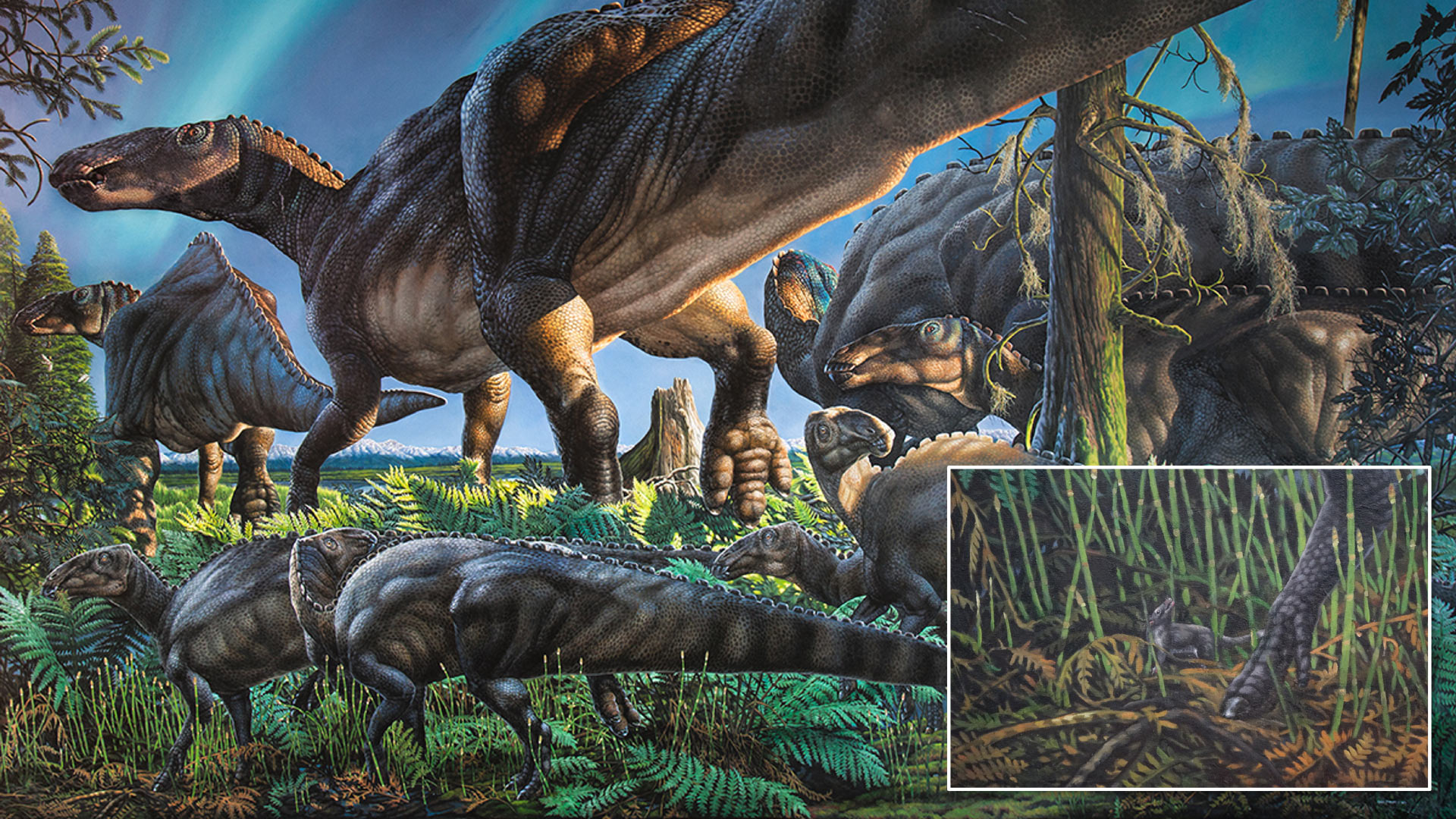
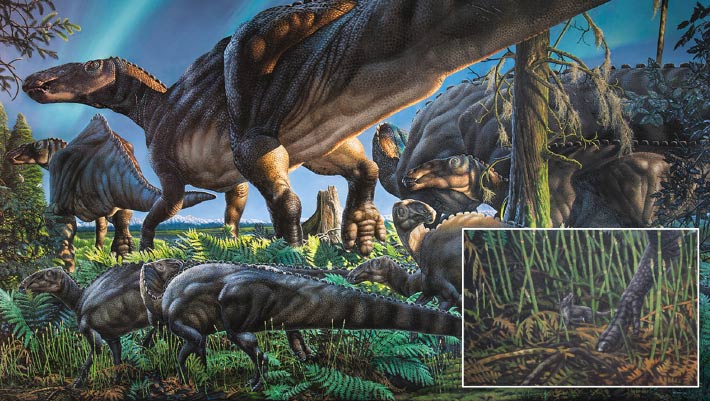
A reconstruction of the Late Cretaceous paleoenvironment of Alaska. Image credit: James Havens.
With a body size akin to that of modern mice and rats, multituberculates represent the most enduring mammalian lineage discovered in Earth’s fossil record.
These organisms persisted for an extraordinary duration exceeding 100 million years, spanning from the Jurassic period through to the conclusion of the Eocene epoch, around 35 million years ago.
Remarkably, they managed to survive the catastrophic Chicxulub impact event that led to the extinction of all non-avian dinosaurs 66 million years ago.
Scientific inquiry has long sought to understand the factors contributing to the longevity of multituberculates compared to many other mammalian groups, and the discovery of these three novel Arctic species offers a potential explanation.
“Although the polar regions do not exhibit the same ecological richness as tropical environments, they nonetheless served as highly active arenas for life’s proliferation, extending far back into prehistoric eras,” stated Dr. Sarah Shelley, a paleontologist affiliated with the University of Lincoln.
The fossilized dental remains of Camurodon borealis, Qayaqgruk peregrinus, and Kaniqsiqcosmodon polaris were unearthed from geological strata dating back 73 million years, specifically within the Prince Creek Formation, situated in the high-latitude Arctic Circle.
Even during that epoch, this geographical area experienced prolonged periods of winter darkness, sub-freezing temperatures, and likely intermittent food scarcity. Nevertheless, these small mammals managed to flourish.
“The addition of these three new mammalian species corroborates an increasing body of evidence suggesting that this ancient Arctic territory was the habitat of distinct, polar-adapted fauna,” commented Dr. Patrick Druckenmiller, a paleontologist at the University of Alaska Fairbanks.
An examination of the fossilized teeth revealed pronounced morphological variations among the three species, indicating that they likely subsisted on disparate food sources.
Camurodon borealis possessed dentition characteristic of herbivores, whereas Qayaqgruk peregrinus was an omnivore, presumed to have consumed a diet of both plants and insects.
Concurrently, Kaniqsiqcosmodon polaris also presented as an omnivorous species, albeit one that appears to have prioritized plant matter in its diet.
In an environment characterized by limited nutritional resources, the capacity for evolutionary adaptation and the establishment of specialized dietary niches may have facilitated the coexistence of various multituberculate species.
“Such a degree of adaptability might also have been instrumental in their survival of the asteroid impact event,” suggested Dr. Shelley.
“The multituberculate clade exhibits considerable intraspecific diversity. They endured for an immense geological timescale, and I believe they hold significant insights into mammalian resilience, not only in the context of mass extinction events but also concerning the climatic pressures currently faced by numerous organisms.”
Furthermore, the research team ascertained that Qayaqgruk peregrinus shares a close phylogenetic connection with a species discovered in what is now Mongolia, supporting the hypothesis that the ancestors of Qayaqgruk peregrinus journeyed from Asia to North America.
This migratory event is estimated to have occurred approximately 92 million years ago, marking it as one of the earliest documented instances of mammalian intercontinental dispersal.
“This finding implies the existence of a terrestrial land bridge connecting Asia and North America, enabling the movement of these small mammals,” explained Professor Jaelyn Eberle, a curator at the University of Colorado Museum of Natural History.
“And this land bridge was already quite active as far back as 90 million years ago.”
This groundbreaking discovery contributes to the growing body of evidence demonstrating that species have engaged in migratory patterns, thereby reshaping ecosystems across continents for hundreds of millions of years.
“It profoundly challenges conventional perspectives on endemic species,” observed Dr. Shelley.
“The concept of deep time fundamentally reminds us that a geographical location is not merely a static point on a map but rather a repository of a long, stratified history of landscapes and their inhabitants.”
The findings of this research are detailed in a published academic paper in the journal Proceedings of the National Academy of Sciences.
_____
Sarah L. Shelley et al. 2026. Arctic ecosystems shaped mammalian dispersal and diversification before the Cretaceous-Paleogene mass extinction. PNAS 123 (22): e2601794123; doi: 10.1073/pnas.2601794123