The Earth’s climatic systems are undergoing substantial transformations, leading to profound and enduring alterations in meteorological phenomena. A recent investigation highlights a discernible escalation in the frequency of severe weather occurrences within the Arctic, directly attributable to escalating global temperatures.
This comprehensive study, conducted by a consortium of international scientists who meticulously examined data spanning several decades, asserts that the planet’s northernmost expanse has entered a “new epoch” characterized by extreme weather events.
Researchers indicate that this represents a significant transition into uncharted climatic conditions, poised to exert considerable influence on Arctic flora and fauna, as well as the human populations indigenous to the region. Furthermore, the disruption of the Arctic’s delicate carbon equilibrium, exacerbated by diminishing sea ice and thawing permafrost, will precipitate broader global ramifications.
“Our findings compellingly demonstrate a marked increase in the incidence of extreme weather events throughout the Arctic,” stated ecologist Gareth Phoenix, affiliated with the University of Sheffield in the United Kingdom.
“Across a third of the Arctic territory, these phenomena have only recently begun to manifest, signalling the Arctic’s entry into an unprecedented era of climatic extremes, which will likely yield dire repercussions for its ecosystems.”
The temporal scope of the collected data encompasses over seven decades, with a specific emphasis on short-term climatic anomalies that might not be apparent in monthly averages. This dataset included critical information concerning heatwaves, arid conditions, and snowfall patterns.
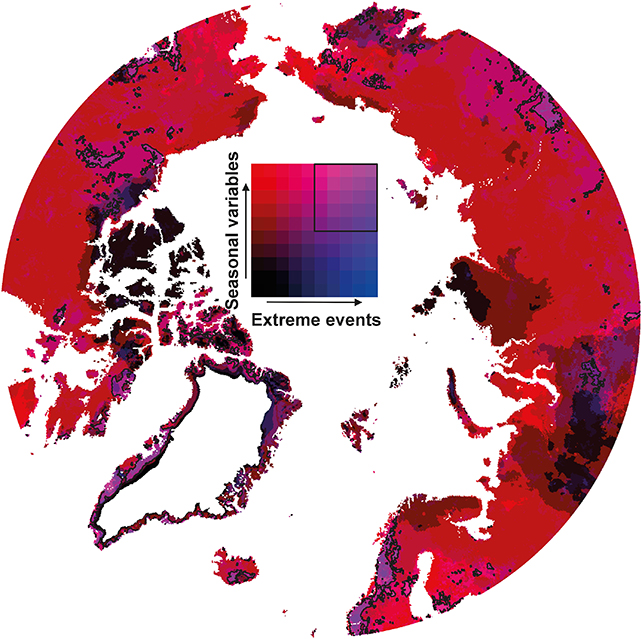
The scientific team ascertained that extreme weather occurrences are not only becoming more prevalent but also more geographically extensive, particularly within the last thirty years, during which numerous new territories have started to experience such events. Certain geographical locales, including Central Siberia, Western Scandinavia, and the coastal areas of Greenland, have been disproportionately affected.
Among the increasingly recurrent phenomena are instances of rain-on-snow events, a direct consequence of a warming climate. This meteorological condition leads to the formation of an icy crust on the surface, incapacitating food sources and thus impacting Arctic wildlife, such as reindeer that depend on lichen for sustenance.

Although the researchers did not directly investigate ecological ramifications, substantial evidence suggests that the ensuing repercussions are likely to be severe and detrimental. The Arctic’s native flora and fauna are ill-equipped to cope with or adapt to these novel meteorological patterns.
“The predictability of seasons, encompassing aspects like the growing period and snow cover, is recognized as being fundamental to ecosystem functionality and the survival of species native to northern latitudes,” observed climate scientist Juha Aalto, associated with the Finnish Meteorological Institute.
In their pursuit of enhanced understanding, the researchers are eager to acquire more granular data, which will be instrumental in further elucidating the Arctic’s new era of extreme weather. This study incorporated certain estimations and approximations in regions where empirical data were less abundant.
Previous investigations have indicated that the Arctic is experiencing warming at a rate significantly exceeding the global average, leading to a reduction in ice extent and the aforementioned shifts in weather patterns.
The phenomenon of ‘Arctic browning,’ which denotes the decline in vegetative life across the region, is a term utilized by experts to describe this environmental change. The extreme weather events detailed in the current study are considered to be primary contributors to this browning phenomenon.
Beyond impacting the availability of sustenance, this climatic transition has the potential to disrupt the delicate balance of carbon sequestration and release within the Arctic. It serves as a stark reminder that global warming is instigating indelible alterations to planetary ecosystems.
“This discovery implies that as the climate continues to evolve, Arctic ecosystems will face progressively greater exposure to climatic conditions they have never previously encountered,” posited geoscientist Miska Luoto, from the University of Helsinki in Finland.
“Such a scenario could precipitate considerable long-term consequences for the natural environment of the Arctic.”