While the integumentary systems of various dinosaur species ranged from keratinous scales and ossified dermal armor to elaborate feather coverings, a recent paleontological revelation has unveiled a novel cutaneous adaptation previously unobserved in these ancient reptiles: hollow, spine-like structures.
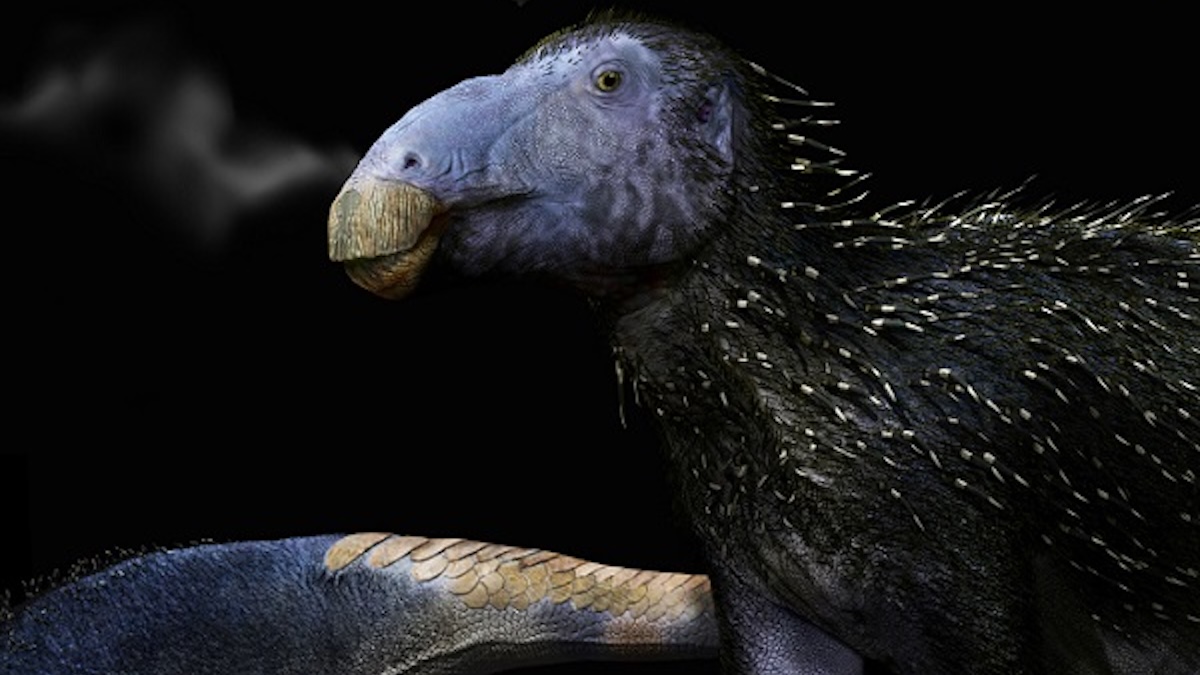
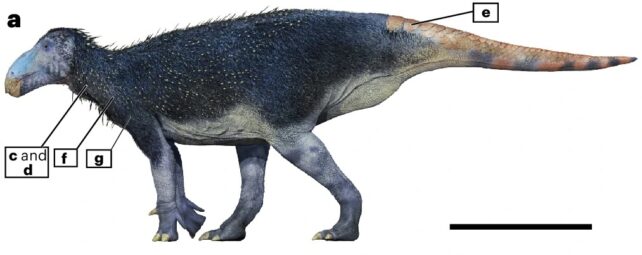
This newly identified species, unearthed in northeastern China, has been christened Haolong dongi. The appellation translates to “spiny dragon,” a moniker readily understood upon visual assessment; in stark contrast to the predominantly scaled integument of most of its iguanodontian kin, Haolong presents an appearance akin to being adorned in a pelt composed of quiescent porcupine quills.
These dermal projections are strategically arrayed across the neck, dorsal region, and flanks, exhibiting a parallel orientation and universally pointing towards the posterior of the creature. The majority of these structures are diminutive, measuring approximately 2 to 3 millimeters in length, with infrequent interspersing of moderately sized spines extending between 5 and 7 millimeters. A select few are considerably larger, with the most substantial reaching lengths exceeding 44 millimeters.
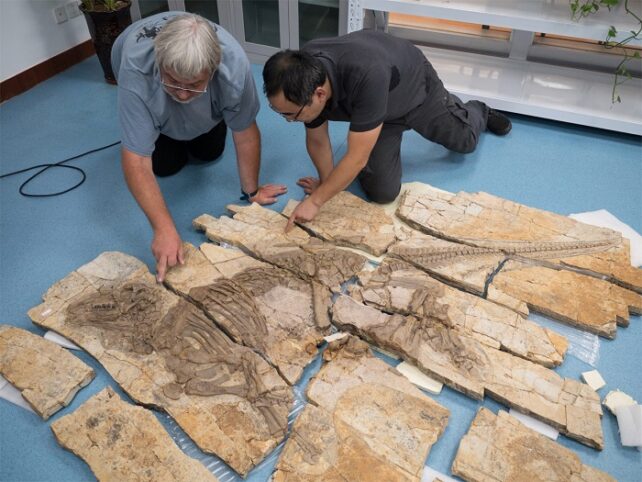
Our understanding of Haolong is presently limited to a singular specimen—an exceptionally well-preserved, nearly complete fossil skeleton measuring 2.45 meters (8 feet) in length, exhibiting remarkable integumentary detail. Intriguingly, skeletal morphology suggests the individual was a juvenile at the time of its demise, thus precluding definitive conclusions regarding whether these spiky appendages were a characteristic of mature specimens or were subsequently shed during the growth process.
The precise function of these novel structures remains enigmatic, though the research team has expounded upon a range of compelling hypothetical purposes.
Superficially, the spines bear a striking resemblance to the nascent protofeathers observed on other dinosaur lineages; however, the researchers meticulously note that such epidermal developments were already well-established by the era in which Haolong existed, approximately 125 million years ago.
It is plausible that these appendages served a thermoregulatory function. The species inhabited a comparatively temperate climate, and cohabiting dinosaurs in its environment, such as Yutyrannus, were equipped with dense feather coverings presumed to aid in maintaining stable body temperatures. Nevertheless, the density of Haolong‘s spines may have been insufficient to provide comparable thermal insulation.
Were they, then, primarily for visual signaling or camouflage? The investigative team cannot definitively assert this, given the absence of preserved pigment cells within the fossilized integument.
Alternatively, might they have served as sensory integuments? They bear a superficial resemblance to the minute spinule structures utilized by certain extant lizards and snakes for tactile perception and vibratory detection. However, the researchers posit that Haolong‘s spines appear disproportionately large and lack the requisite connection to the surrounding scales for such specialized sensory endowment.
The most probable hypothesis, according to the scientists’ current conjecture, is that these structures functioned as a deterrent against predation. Haolong‘s habitat was populated by a variety of relatively diminutive carnivores, suggesting that this defensive adaptation may have evolved in response to such environmental pressures.
It is unlikely that these spines possessed the structural integrity to inflict significant harm, let alone incapacitate, an aggressor. Nonetheless, they may well have presented sufficient annoyance to render alternative prey more appealing to potential predators.
“These defences did not necessarily provide impenetrable protection against theropod teeth and claws, but they made the prey more difficult and time-consuming to kill and ingest and consequently reduced the likelihood of successful ingestion,” the researchers articulate.
The findings of this investigation have been disseminated in the esteemed journal Nature Ecology & Evolution.