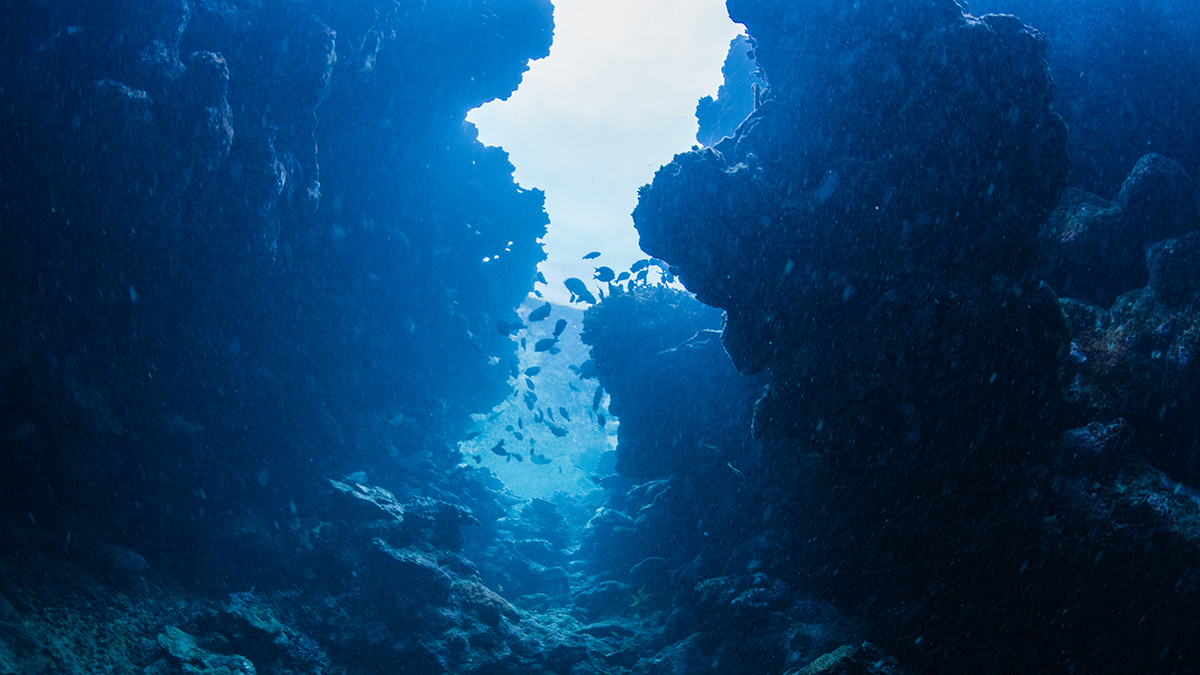
The King’s Trough formation, situated approximately 1,000 kilometers (around 600 miles) offshore from Portugal, has earned the moniker ‘Grand Canyon of the Atlantic’ owing to its immense scale. A recent investigation sheds light on the grand geological forces responsible for its creation.
The genesis of this extensive network of ravines and depressions, which spans approximately 500 kilometers across the ocean floor, has been a longstanding subject of scientific debate. A prevailing theory posited that these features were simply the consequence of oceanic crust undergoing extensional forces.
Scholars involved in the contemporary research, spearheaded by a contingent from the GEOMAR Helmholtz Centre for Ocean Research in Germany, aimed to conduct a more in-depth examination. Their findings indicate a significantly more intricate geological narrative than previously understood.
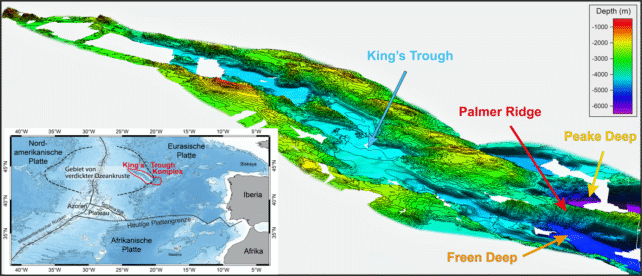
Leveraging novel and comprehensive datasets, the research team proposes that a confluence of factors, including thermal weakening induced by an extant mantle plume and the substantial stress exerted by a transient plate boundary, orchestrated the formation of the King’s Trough complex (KTC) at its current location.
“Geoscientists have long harbored the suspicion that lithospheric dynamics—specifically, the movements of the Earth’s crust—played a pivotal role in the development of the King’s Trough,” commented Antje Dürkefälden, a marine geologist affiliated with GEOMAR.
“Our findings now offer the inaugural explanation for why this extraordinary geological edifice emerged precisely at this geographical locus.”
The investigators employed advanced sonar technology to meticulously map the KTC. Subsequently, they retrieved volcanic rock specimens from various points within the trough to perform chemical analyses, thereby ascertaining their chronological origins.
Several groundbreaking discoveries were unearthed. Firstly, the team was able to refine their estimation of the KTC’s formation period, dating the event to between 37 and 24 million years ago.
Furthermore, substantial evidence was uncovered indicating the passage of a plate boundary through the region, which facilitated the creation of the KTC before migrating. The researchers surmise that the critical stretching and fracturing processes were concentrated along this boundary.
The trajectory of this plate boundary was likely influenced predominantly by the pre-existing mantle plume, which effectively channeled the boundary and its associated fracturing effects along the path of least resistance, thereby dictating the KTC’s eventual configuration.
“This augmented, thermally influenced lithosphere may have rendered the area mechanically more susceptible, prompting the plate boundary to preferentially reorient itself in this vicinity,” elaborated Jörg Geldmacher, a marine geologist at GEOMAR.
Nonetheless, despite the formidable magnitude of the tectonic forces at play, the researchers concluded that they were insufficient in strength or duration to instigate the formation of a fully developed seafloor-spreading ridge, akin to the Mid-Atlantic Ridge.
“As the plate boundary subsequently advanced southward towards the contemporary Azores archipelago, the developmental process of the King’s Trough concurrently ceased,” stated Geldmacher.
The ephemeral nature of the plate boundary’s location, coupled with the influence of the mantle plume, constitutes an atypical scenario for the KTC’s formation. These newly elucidated details are poised to serve as a foundational basis for subsequent investigations into this submerged geological marvel.
Moreover, connections to broader planetary geological processes are apparent, as the researchers hypothesize that the identified plume represents an early effluence of the Azores mantle plume, which remains active approximately 700 kilometers to the south.
The Terceira Rift in the Azores region presents a comparable system of developing trenches, the research group suggests, echoing the KTC in terms of activity and scale.
Should this parallel prove accurate, it could offer the scientific community a rare, observable instance of how these extraordinary underwater canyon networks materialize and the influences exerted upon them by both supra-crustal forces and internal terrestrial heat.
“Extensive submarine canyon-like troughs remain poorly understood features on the abyssal plains,” the authors noted in their published treatise.
“It is conceivable that the lateral displacement of the plate boundary towards the King’s Trough area, and its subsequent repeated shifts towards the Azores region, were precipitated by the arrival of the respective plume branch at the lithospheric base.”