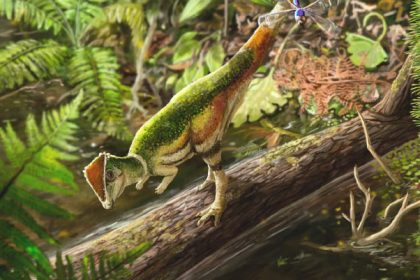
A singular trace, discovered by an amateur paleontologist in 1958 at Albion, Brisbane, Queensland, Australia, has now been definitively classified as the continent’s most ancient verified dinosaur imprint. This remarkable find dates back approximately 230 million years to the Late Triassic period, indicating that dinosaurs inhabited the region now known as Brisbane considerably earlier than previously conjectured by scientific experts.
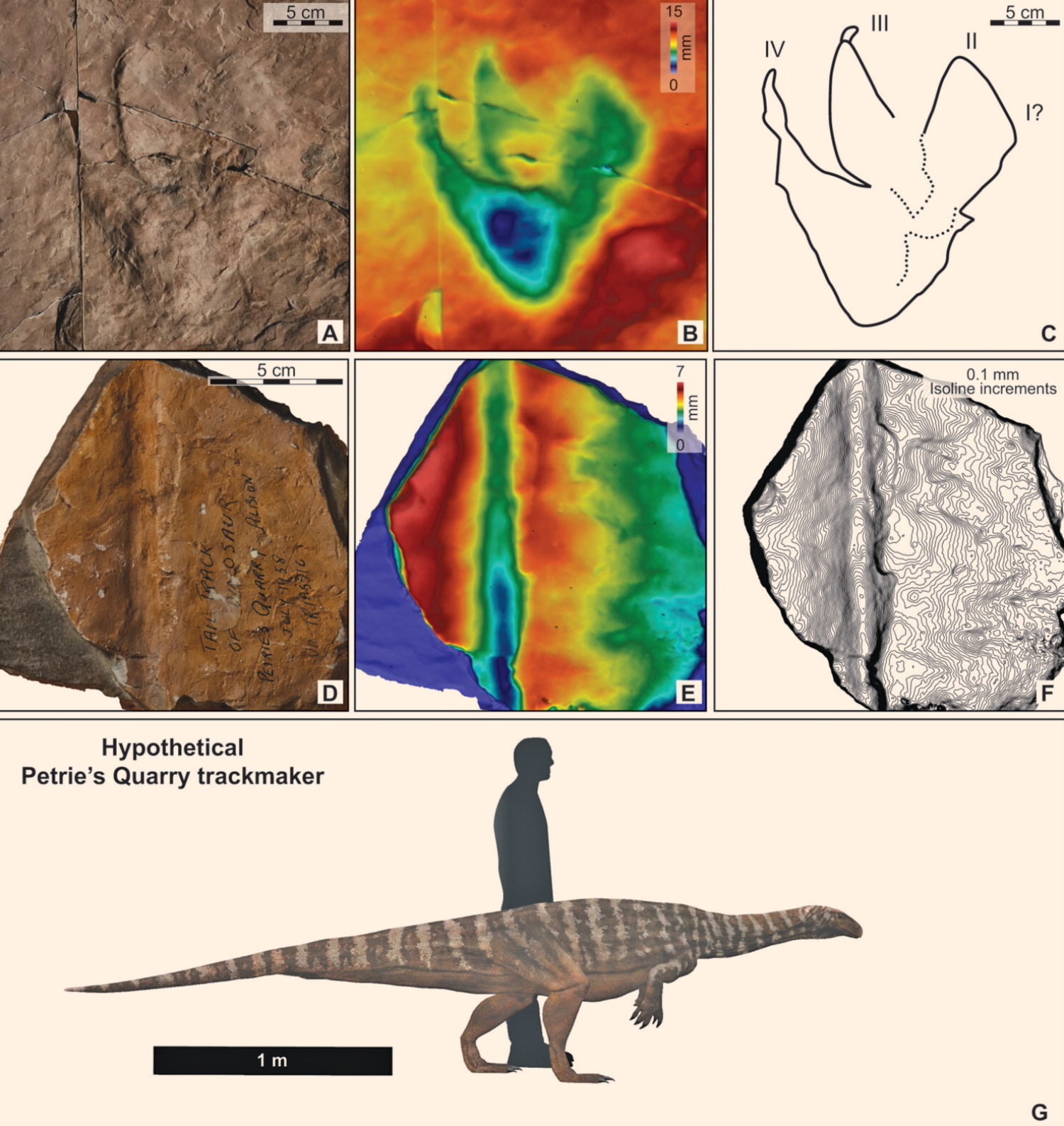
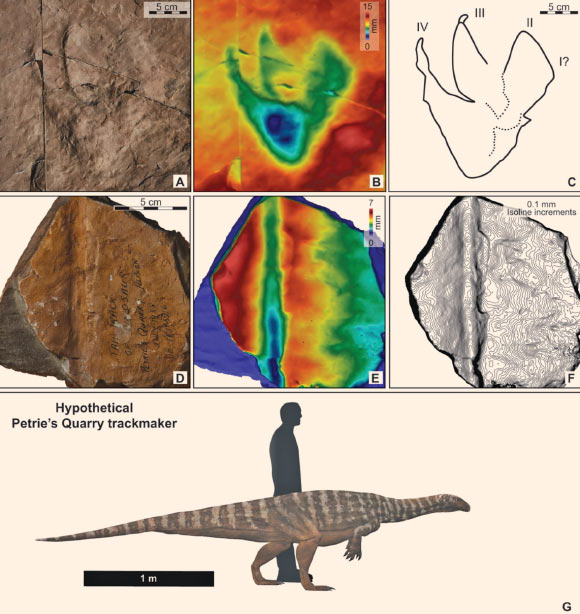
Ichnofossils from Petrie’s Quarry at Albion in Brisbane, Queensland, Australia. Image credit: Anthony Romilio & Bruce Runnegar, doi: 10.1080/03115518.2025.2607630.
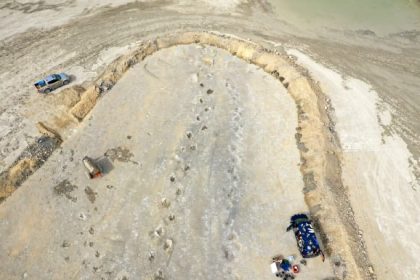
The fossilized print, measuring 18.5 cm (7 inches) in length, was extracted from Petrie’s Quarry, a location within the Aspley Formation. Alongside this significant footprint, a piece of rock bearing a narrow, linear impression, believed to be a caudal drag mark, was also recovered.
Both geological specimens were salvaged from the quarry prior to its subsequent redevelopment and have since been housed within various university instructional collections.
“This represents the sole dinosaurian fossil recovered from within an Australian capital city, underscoring how discoveries of global importance can often remain concealed in plain view,” remarked Dr. Anthony Romilio, a paleontologist affiliated with the University of Queensland.
“Subsequent urban expansion has rendered the original excavation site inaccessible, leaving this singular footprint as the sole surviving testament to the area’s dinosaurian inhabitants during that era.”
Despite its fragmented nature, the Albion imprint clearly displays impressions of three anteriorly directed digits. Its fan-shaped contour, characterized by a subdued prominence of the central toe, aligns with typifying features of bipedal dinosaurs.
Advanced three-dimensional modeling and morphometric assessments indicate that the track bears a striking resemblance to the ichnogenus Evazoum, a classification of footprint commonly linked elsewhere to early sauropodomorph dinosaurs.
Based on measurements of the fossilized imprint, Dr. Romilio and his collaborator, Professor Bruce Runnegar, have posited that the dinosaur possessed an estimated hip height of approximately 78 cm (31 inches) and a body mass around 144 kg.
Employing established correlation formulas, they have projected a theoretical maximum terrestrial locomotion velocity of roughly 60 km per hour (37 mph).
To date, no fossilized skeletal remains of dinosaurs have been unearthed from the Aspley Formation. Consequently, this footprint stands as the sole piece of direct evidence confirming their presence in this specific locale during that geological epoch.
“It is highly probable that the dinosaur was traversing near or within a watercourse when it deposited the impression. This impression was subsequently encased in sandstone, which was later quarried millions of years subsequently for construction material across Brisbane,” Dr. Romilio explained.
“Had there not been the foresight to preserve this material, Brisbane’s prehistoric dinosaurian narrative would remain entirely unknown.”
“This specimen served as an exemplary instance of a specialized type of trace fossil, given that the footprint was impressed into sediment by a substantial creature,” stated Professor Runnegar.
The accompanying caudal trace, approximately 13 cm (5 inches) in length, is consistent with formations sometimes interpreted as tail scrapes within dinosaur trackways. However, the researchers caution that, due to the absence of accompanying footprints preserved *in situ*, its precise origin cannot be unequivocally attributed to a dinosaur.
“While the shallow linear impression observed on the caudal block shares morphological similarities with documented tail drag traces, its classification remains indeterminate in the absence of any surviving manus or pes impressions and given its *ex situ* provenance,” they noted.
“Although such grooves are occasionally associated with caudal contact in prosauropod trackways, they are typically discovered *in situ* and positioned centrally within such trackways. This scenario deviates from that expectation.”
The research team’s publication was released this week in The Alcheringa, an Australasian Journal of Palaeontology.
_____
Anthony Romilio & Bruce Runnegar. Earliest Australian dinosaur: ichnofossils from the Carnian Aspley Formation of Brisbane, Queensland, Australia. Alcheringa, published online February 1, 2026; doi: 10.1080/03115518.2025.2607630