Tektites represent virtually pure glassy substances, devoid of crystalline inclusions, that originate from the cataclysmic impact of a celestial body with Earth. This event melts terrestrial materials, subsequently ejecting them vast distances, ranging from hundreds to thousands of kilometers.
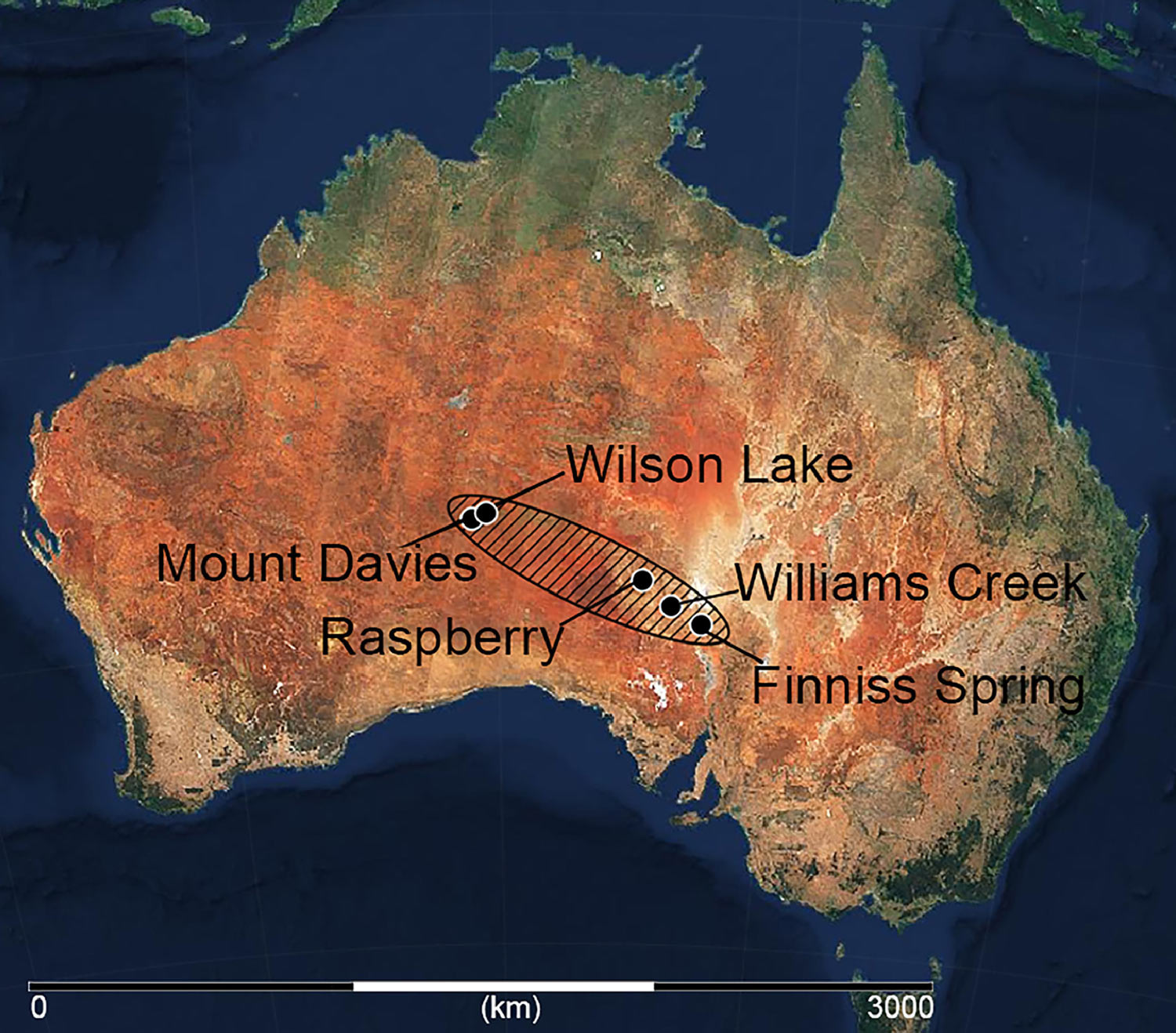
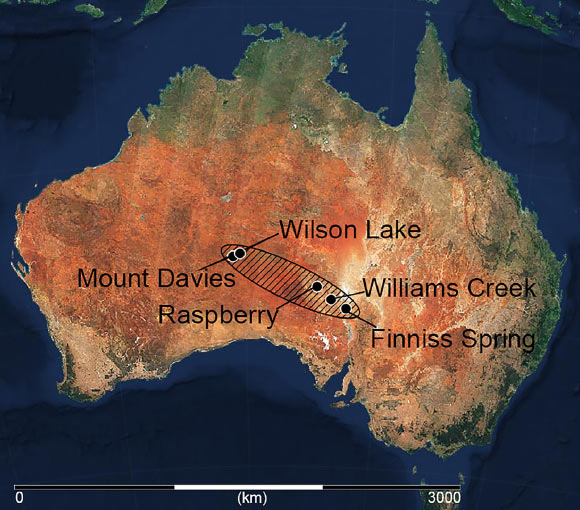
Map of the ananguites strewn field, based on the tektite locations. Image credit: Musolino et al., doi: 10.1016/j.epsl.2025.119600.
“Tektites are a distinct category of impact-generated glass, primarily identified by their presence within extensive strewn fields situated far from their formative crater,” explained Professor Fred Jourdan of Curtin University and his research associates.
“Presently, only five distinct strewn fields are documented: the four ‘traditional’ ones recognized for nearly a century, originating from Central Europe (14 million years old), North America (35 million years old), the Ivory Coast (1 million years old), and a broad expanse stretching from China to Australia (780,000 years old), alongside a more recently charted strewn field in Central America (800,000 years old).”
“The tektites associated with these locations are designated as moldavites, bediasites-georgiaites, ivorites, australasites, and belizites, respectively.”
The novel tektite variety, christened ananguite, has thus far been exclusively unearthed in a region primarily encompassing South Australia.
“The discovery of a new tektite field is akin to unfurling a fresh chronicle of Earth’s tumultuous geological past,” Professor Jourdan remarked.
“These glassy formations are exclusive to Australia and bear witness to an ancient impact event previously unknown to us.”
“These diminutive fragments serve as miniature time capsules, preserving records from profound epochs in our planet’s history.”
“What amplifies the intrigue of this discovery is that, despite the inferred magnitude of the impact, the originating crater has yet to be pinpointed by scientists.”
“Elucidating the temporal patterns and frequency of major asteroid impacts on Earth is instrumental in our evaluation of future impact risks, a critical aspect of planetary defense.”
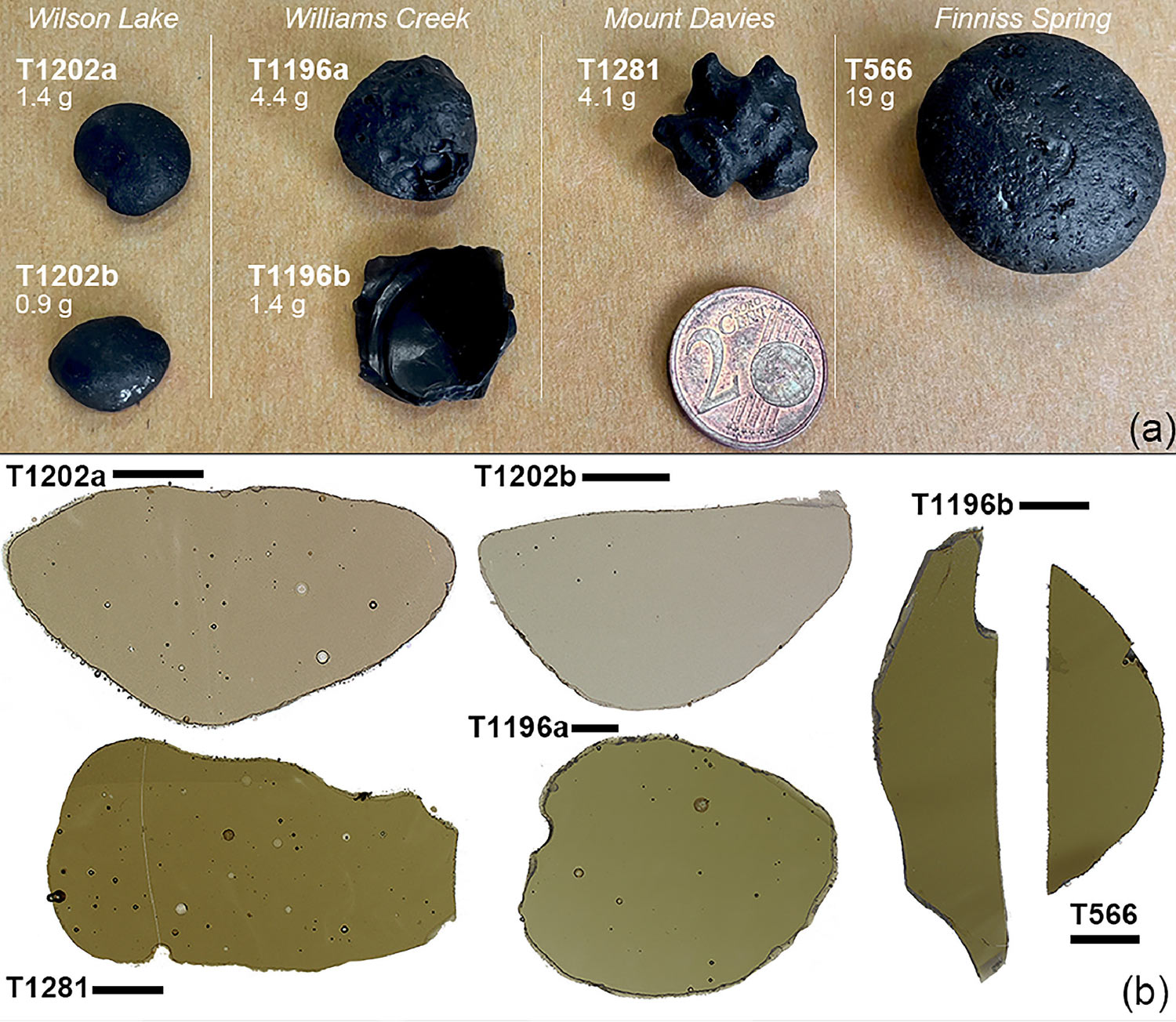
Picture of six tektites studied by Musolino et al. Scale bars – 2 mm. Image credit: Musolino et al., doi: 10.1016/j.epsl.2025.119600.
“The chemical composition of these glassy specimens was markedly distinct from all previously identified tektites,” stated Anna Musolino, a doctoral candidate at Aix-Marseille University.
“These tektites possess unique characteristics owing to their anomalous chemical makeup and their age, which is estimated to be approximately 11 million years.”
“They provide a record of an impact event entirely separate from the well-known Australasian tektite-strewn field.”
“While the Australasian tektites coalesced around 780,000 years ago and are dispersed across a substantial portion of the globe, these newly found tektites are considerably older, and their emergence points towards a hitherto unrecognized colossal impact.”
The research team’s publication has been featured in the esteemed journal Earth and Planetary Science Letters.
_____
Anna Musolino et al. 2025. A new tektite strewn field in Australia ejected from a volcanic arc impact crater 11 Myr ago. Earth and Planetary Science Letters 670: 119600; doi: 10.1016/j.epsl.2025.119600