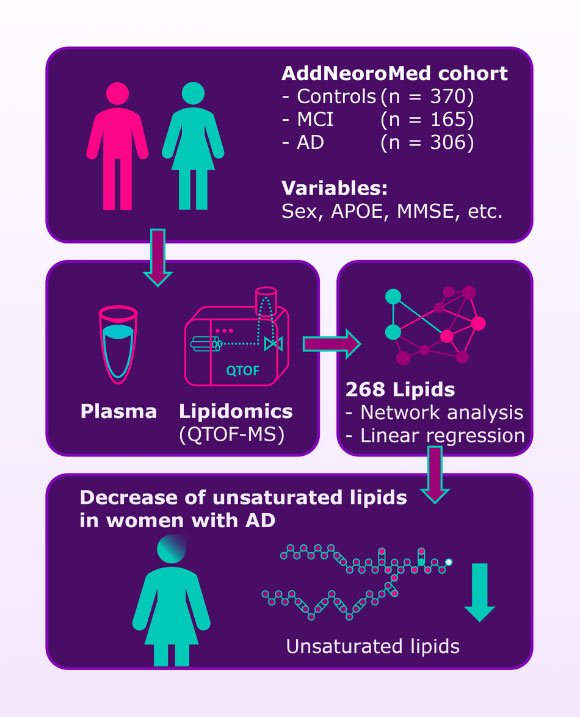
Emerging scientific findings indicate that correlations between various lipid types and Alzheimer’s disease—a profoundly debilitating neurological condition with a notably higher prevalence in women—are significantly more pronounced in the female population and frequently absent in men.
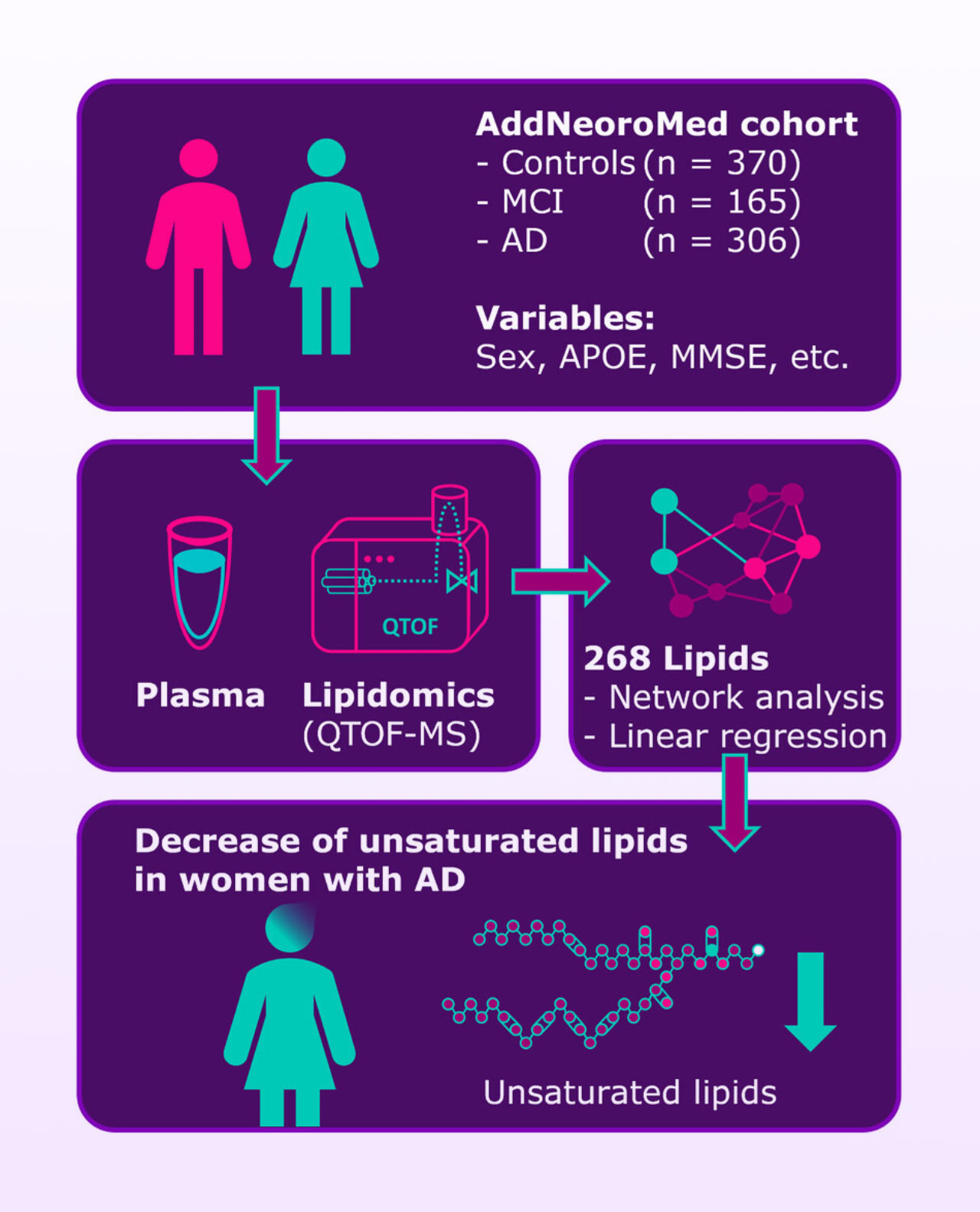
Wretlind et al. aimed to investigate sex-specific single lipids associated with Alzheimer’s disease. Image credit: Wretlind et al., doi: 10.1002/alz.70512.
Alzheimer’s disease (AD) represents a severe neurodegenerative disorder affecting an escalating global demographic.
Women bear a disproportionate burden of AD, constituting approximately two-thirds of all diagnosed cases.
“The impact of AD is felt more acutely by women, with diagnoses being more frequent compared to men beyond the age of 80,” stated Dr. Cristina Legido-Quigley, a researcher affiliated with King’s College London.
“A particularly striking observation during our examination of the sexes was the absence of any discernible difference in these lipids among healthy and cognitively impaired men; however, the pattern was entirely distinct for women.”
“This investigation underscores divergent lipid biology between the sexes in relation to AD, thereby illuminating novel avenues for future research endeavors.”
The research team collected plasma specimens from 841 individuals, encompassing those with AD, mild cognitive impairment, and cognitively healthy control groups, to evaluate markers of cerebral inflammation and damage.
Utilizing mass spectrometry, the researchers undertook an analysis of 700 distinct lipid molecules present in the blood. Lipids are a broad category of biochemical compounds.
Generally, saturated lipids are categorized as ‘detrimental’ or ‘unhealthy’ lipids, whereas unsaturated lipids, which may contain omega fatty acids, are typically regarded as ‘beneficial’.
A pronounced elevation in lipids characterized by saturation—the ‘unhealthy lipids’—was observed in women diagnosed with Alzheimer’s when contrasted with the healthy cohort.
Lipids associated with omega fatty acids exhibited the most significant reduction within the Alzheimer’s group.
“Our findings suggest that women ought to ensure adequate intake of omega fatty acids through their dietary choices, such as consuming fatty fish or utilizing supplements,” advised Dr. Legido-Quigley.
“Nevertheless, rigorous clinical trials are essential to ascertain whether modulating lipid composition can exert an influence on the biological progression of AD.”
“It has been recognized for some time that AD affects more women than men,” noted Dr. Asger Wretlind, also from King’s College London.
“While this phenomenon still necessitates further investigation, we have succeeded in detecting quantifiable biological disparities in lipids between the sexes within a substantial cohort and have highlighted the significance of omega-containing lipids in the bloodstream, a contribution that has not been previously documented.”
“The implications of these results are quite profound, and our current focus is on determining the earliest life stages at which this alteration manifests in women.”
This research study was officially published today in the esteemed publication, Alzheimer’s & Dementia: The Journal of the Alzheimer’s Association.
_____
Asger Wretlind et al. 2025. Lipid profiling reveals unsaturated lipid reduction in women with Alzheimer’s disease. Alzheimer’s & Dementia 21 (8): e70512; doi: 10.1002/alz.70512