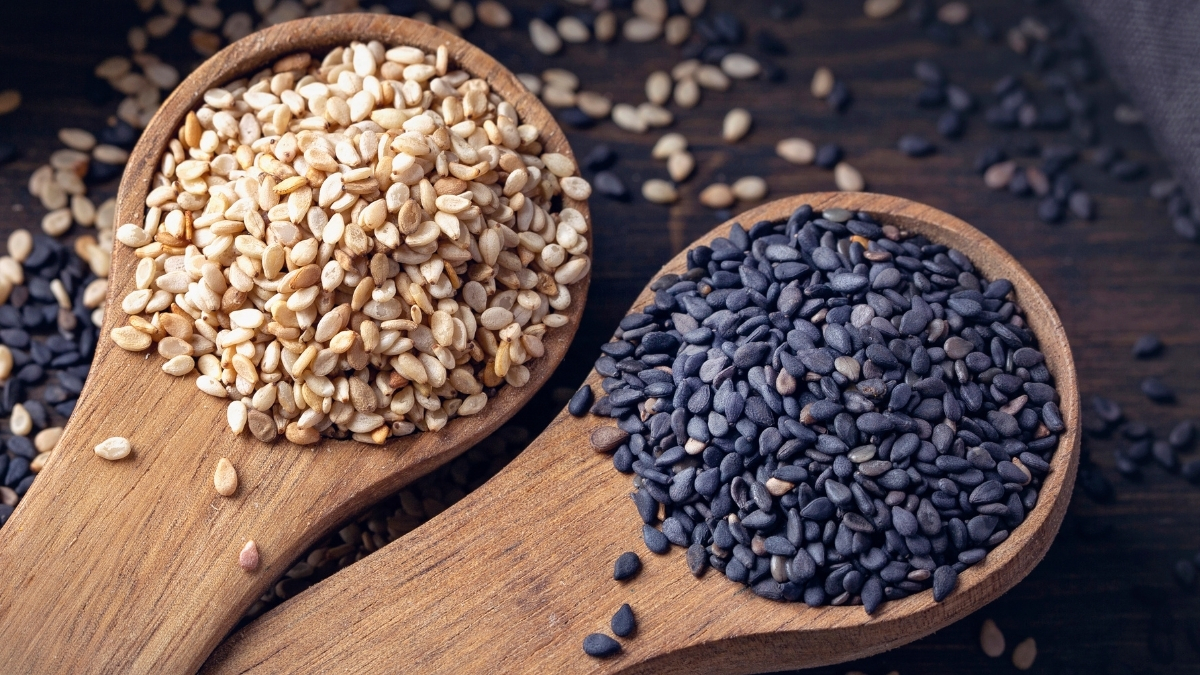
The latest plant-based food item gaining significant traction is black sesame, lauded for its attractive hue and distinctive nutty flavour profile.
Social media platforms are currently awash with assertions suggesting that these dark sesame seeds possess superior health attributes compared to their white counterparts. Reports indicate they are more effective in moderating blood glucose levels, mitigating cardiovascular disease risks, and even potentially reversing the greying of hair.
However, the pertinent question arises: is black sesame truly the next big health trend, akin to matcha? Many will recall the widespread popularity of this green tea, another plant-derived product that captivated consumers with its purported health advantages.
Understanding Black Sesame: Composition and Properties
Sesame seeds are cultivated in a spectrum of colours, including white, yellow, and black varieties, and have been a staple in traditional Asian gastronomy for many centuries.
Presently, they are incorporated into a diverse array of both savoury and sweet culinary creations, serving as a valuable source of protein. Given sesame’s substantial lipid content, typically ranging from 50–64% (as detailed in the subsequent table), it is also highly prized for its oil extraction.
Nevertheless, distinct disparities exist between black and white sesame varieties concerning certain vital nutrients.
Black sesame seeds exhibit elevated concentrations of fat, protein, and carbohydrates, which consequently translates to a higher caloric density (measured in kilojoules). Furthermore, the levels of vitamins and minerals are generally more pronounced in black sesame.
It is evident that sesame seeds are inherently nutrient-dense foodstuffs. However, it is crucial to note that the nutrient figures presented in the table correspond to a 100-gram serving, which approximates two-thirds of a metric cup. Consuming such a quantity daily would pose a considerable challenge for most individuals.
Typically, sesame seeds are utilized as a decorative element or flavour enhancer for dishes such as stir-fries, curries, and breads. In certain cultural contexts, their application is more extensive, featuring prominently as a key component in indulgent items laden with sugar and fat, including halva, biscuits, tahini paste, and sesame seed bars.

Sesame seeds also contain naturally occurring anti-nutrients, such as oxalic acid and phytic acid. These compounds possess the ability to bind with minerals like iron, calcium, and zinc, thereby diminishing the body’s capacity for absorption and utilization.
For the majority of individuals, the consumption of foods containing oxalates and phytic acid in typical dietary amounts presents no significant health concern. However, if one has a diagnosed nutritional deficiency, augmenting sesame seed intake may not be advisable. In such circumstances, it is prudent to consult with a registered dietitian.
Investigating Antioxidant Properties
Free radicals are inevitably generated as byproducts of normal physiological processes, including respiration and physical activity, as well as through external factors like ultraviolet radiation exposure, tobacco use, environmental pollutants, and industrial chemicals. These reactive molecules have the potential to inflict damage upon proteins, cellular membranes, and DNA.
Sesame seeds are a source of antioxidants, which are substances that neutralize these free radicals, thereby preventing cellular harm.
A specific investigation indicated that black sesame seeds harbour demonstrably higher concentrations of phenolic compounds, a class of antioxidants, when contrasted with white sesame seeds.
Moreover, black sesame seeds contain elevated quantities of lignans, a significant group of phenolic compounds, compared to their white counterparts.
In vitro and animal-based research studies have focused on sesamin, the predominant lignan found in sesame. These studies have illuminated its antioxidant capabilities, alongside potential benefits such as cholesterol reduction, blood pressure moderation, and anti-tumour effects.
However, it is important to acknowledge that superior antioxidant levels do not invariably correlate with conclusively proven health benefits.
Assessing the Healthfulness of Black Sesame
Impact on Body Mass Index, Blood Pressure, and Cholesterol Levels
A comprehensive systematic review, incorporating data from six studies involving a total of 465 participants, meticulously examined the health implications of sesame consumption in various forms, including seeds, oil, and capsules.
The researchers reported statistically significant reductions in Body Mass Index (BMI), blood pressure, and cholesterol levels. The dosages of sesame employed in these studies ranged from 0.06 to 35 grams per day, administered over periods of four to eight weeks.
However, it is noteworthy that not all of the included studies featured a placebo control group, nor were they all double-blinded (where neither participants nor investigators are aware of treatment allocation). Furthermore, in several of the investigated studies, participants were concurrently using prescribed medications.
Consequently, the authors of this review concluded that the evidence generated was of low quality, precluding the formulation of definitive health recommendations.
Within the scope of this review, only a solitary study specifically investigated the effects of black sesame seeds. This particular study examined the impact of administering 2.52 grams of black sesame seeds daily in capsule form, compared to a placebo, over a four-week duration. The findings indicated a reduction in systolic blood pressure (the higher number in a blood pressure reading), decreasing from approximately 129 mmHg to about 121 mmHg among individuals diagnosed with prehypertension (blood pressure slightly elevated above normal).
Addressing the Claim Regarding Gray Hair
Extensive literature searches failed to uncover any scientific studies that have specifically explored the relationship between black sesame seeds and hair colouration.
Similarly, there is currently no empirical evidence to support the assertion that any particular food item or dietary supplement possesses the ability to reverse the greying of hair.

Potential Health Risks
It is important to be aware that a segment of the global population, estimated between 0.1% and 0.9%, experiences sesame allergies, a prevalence that appears to be on an upward trend.
As with all food allergies, the manifesting symptoms can range in severity from mild to life-threatening. An anaphylactic reaction necessitates immediate emergency medical intervention.
Practical Recommendations
The increasing prominence of black sesame presents a novel ingredient that can be readily incorporated into your culinary repertoire. If its flavour profile is not to your liking, conventional sesame seeds remain an excellent alternative.
Considering the modest quantities typically consumed, the choice between black or white sesame seeds is unlikely to exert a significant overall impact on your health status.
Regarding the purported ability of black sesame to reverse gray hair, it is advisable not to rely on this claim.
The most effective strategy for ensuring the intake of all essential nutrients required for optimal physical and mental well-being is to maintain a diverse and varied dietary pattern.