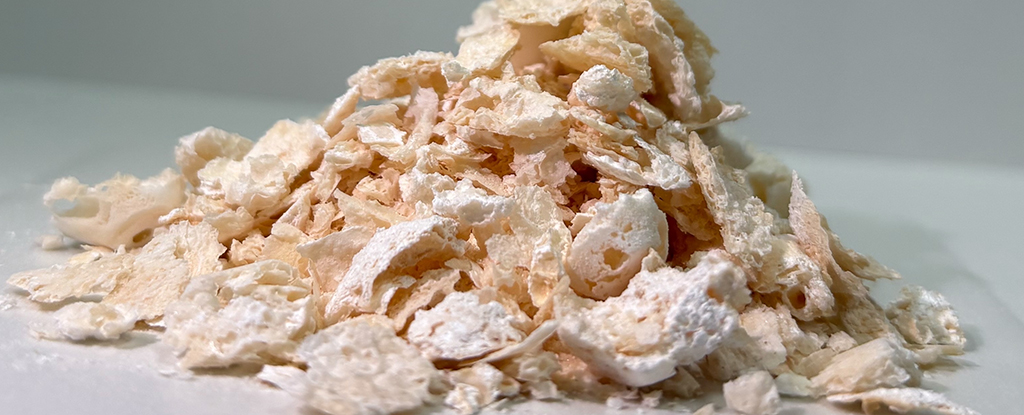
While plastics are indispensable in contemporary society, their manufacturing incurs substantial environmental burdens and they constitute a significant source of pollution.
A novel material, identified as pyridinedicarboxylic acid (PDCA), holds promise for mitigating some of these environmental concerns, particularly following recent advancements in its synthesis methodology.
It is important to clarify that PDCA is not a direct substitute for conventional plastics from an environmental standpoint. Rather, it functions as a nitrogen-infused, environmentally conscious precursor ingredient for the production of plastics exhibiting enhanced biodegradability. Prior investigations into PDCA’s potential have predominantly highlighted its efficacy as a viable replacement for the non-biodegradable terephthalic acid monomers commonly used in PET plastics.
This latest research, conducted by a collaborative team at Kobe University in Japan, introduces two pivotal enhancements to the PDCA production pathway. These improvements result in material yields an impressive sevenfold greater than current techniques, while concurrently eliminating the generation of toxic waste that was previously associated with its fabrication.
“Our team approached this challenge from an innovative perspective,” explains bioengineer Tanaka Tsutomu. “Our objective was to leverage cellular metabolic processes to integrate nitrogen and construct the compound from its foundational elements to its final form.”
“The profound significance of our discovery lies in demonstrating that metabolic reactions can be effectively employed to incorporate nitrogen without generating undesirable byproducts, thereby facilitating the clean and highly efficient synthesis of the intended compound.”
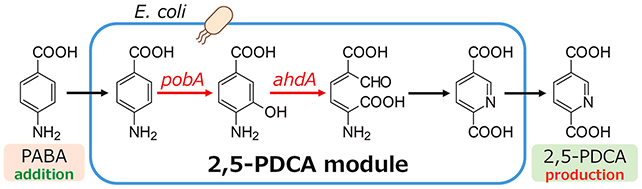
The central component of this modified plastic manufacturing technique involved supplying glucose to Escherichia coli bacteria that had been specifically engineered with tailored enzymes. These enzymes were crucial for transforming an intermediate compound into the desired end product.
However, the process was not without its initial complications. The refined production methods inadvertently introduced a new toxic byproduct at first. The researchers successfully addressed this by incorporating a separate chemical agent, pyruvate; yet, this particular step might introduce future complexities further down the production chain.
“By meticulously optimizing the culturing conditions, and notably by introducing a compound capable of scavenging H2O2, we were ultimately able to surmount this obstacle. Nevertheless, this additive may introduce new economic and logistical considerations for large-scale manufacturing,” notes Tanaka.
Substantial developmental work remains before this technology can be implemented commercially, partly due to the integration of pyruvate. Notwithstanding these challenges, the research unequivocally showcases significant advancements in the creation of robust, biodegradable plastic materials.
Consequently, PDCA is emerging as an increasingly viable substitute for petroleum-derived materials in the realm of plastic production. Its synthesis can be achieved through the utilization of natural constituents within a bioreactor system.
An additional promising biomaterial that garnered attention this year is bacterial cellulose-hexagonal boron nitride, or BCBN for brevity. This material leverages bacterial cellulose fibers, which are precisely oriented to impart advantageous characteristics.
Given the escalating accumulation of plastic waste within our environments and even within our own bodies, the development of biodegradable alternatives represents a critical imperative for materials scientists.
“Our success in integrating enzymes derived from nitrogen metabolism significantly expands the repertoire of molecules attainable through microbial synthesis, thereby amplifying the potential of bio-manufacturing even further,” states Tanaka.