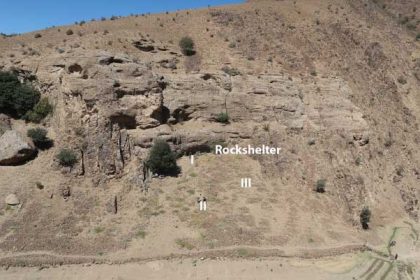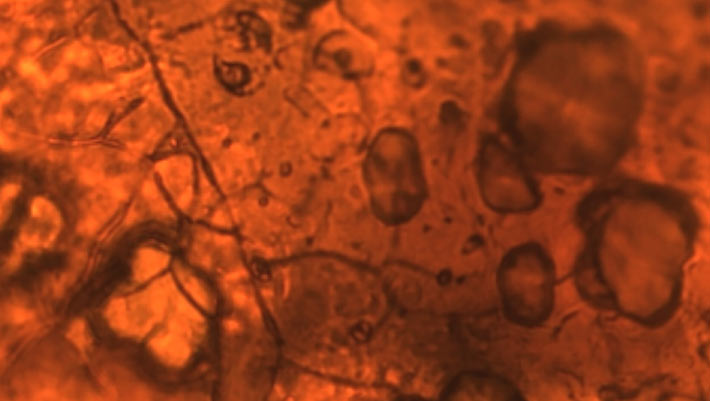
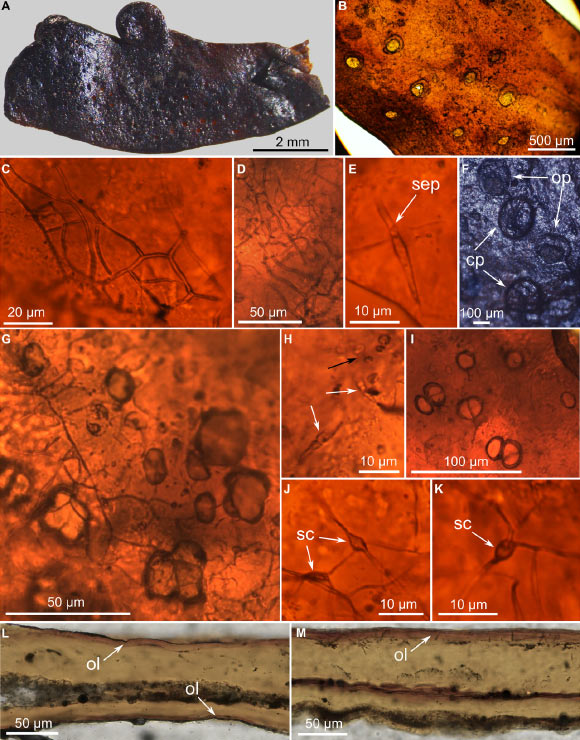
The discovery of 410-million-year-old specimens, identified as Spongiophyton nanum and originating from Brazil’s Paraná Basin Ponta Grossa Formation, marks a significant find: it represents one of the most ancient and widely distributed lichens documented in the fossil record.
The transition of life from aquatic to terrestrial environments, and the subsequent emergence of sophisticated land-based ecosystems, stands as one of the most profound evolutionary milestones in the planet’s history.
This transformative process has exerted a substantial influence on both terrestrial and marine realms, contributing to a reduction in atmospheric carbon dioxide levels, an escalation in rock weathering and nutrient influx into the oceans, the formation of soils, and the diversification of major terrestrial faunal groups.
It is widely acknowledged that early plant life played a pivotal role in the initial colonization of land, notably by establishing the very first plant communities.
The earliest indications of ancient terrestrial flora are observed in the form of cryptospores dating back to the Middle Ordovician period (approximately 460 million years ago), while macrofossils of primitive vascular plants emerge in Silurian strata (between 443 and 420 million years ago).
However, the precise involvement and presence of lichens during specific phases of this process of terrestrialization remain somewhat enigmatic.
“Spongiophyton nanum exhibits a combination of fungal and algal components analogous to modern lichens,” stated Dr. Bruno Becker-Kerber of Harvard University.
“Our investigations reveal that lichens were not peripheral organisms but rather instrumental pioneers in reshaping Earth’s surface.”
“These organisms played a critical role in developing the foundational soils that facilitated the establishment and subsequent diversification of plant and animal life on land.”
The investigative team’s findings indicate that ancient lichens likely first appeared in the frigid polar regions of the supercontinent Gondwana, in territories that now correspond to contemporary South America and Africa.
“Spongiophyton nanum is an exceptional fossil, preserved with remarkable fidelity. It is essentially mummified, retaining its organic constituents intact,” commented Professor Jochen Brocks from the Australian National University.
“The resilient material found in rudimentary plants is cellulose. Lichens, conversely, are quite peculiar—they are composed of chitin, the same substance that imparts toughness to beetles and other insects.”
“Chitin is rich in nitrogen. Our analysis of Spongiophyton nanum yielded an unprecedentedly strong nitrogen signal.”
“Such unambiguous findings are rare; it was a moment of profound realization.”
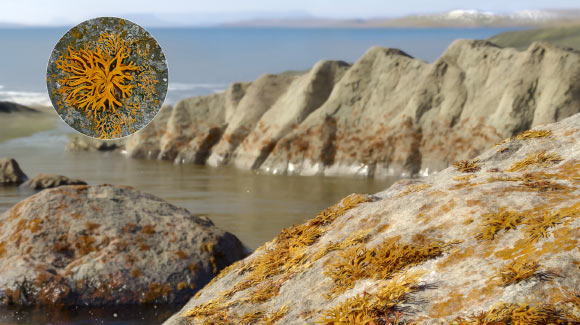
“Today, lichens continue to perform vital functions in soil creation, nutrient cycling, and carbon sequestration across extreme environments, from arid deserts to polar zones.”
“Despite their ongoing importance, their evolutionary origins have remained obscured due to their inherent fragility and a scarcity of fossil evidence.”
“This research underscores the imperative of integrating conventional research methods with state-of-the-art techniques,” declared Dr. Nathaly L. Archilha, a researcher at the Brazilian Synchrotron Light Laboratory.
“Preliminary measurements directed us to key areas of interest, enabling us to subsequently employ 3D nanometric imaging, which unveiled the intricate fungal and algal networks that unequivocally characterize Spongiophyton nanum as a genuine lichen.”
The research paper authored by the team was officially published this week in the esteemed journal Science Advances.
_____
Bruno Becker-Kerber et al. 2025. The rise of lichens during the colonization of terrestrial environments. Science Advances 11 (44); doi: 10.1126/sciadv.adw7879