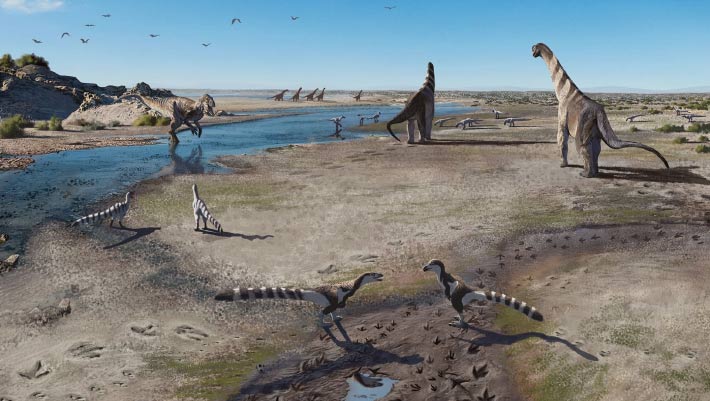
The recently identified theropod and sauropod fossilized tracks are situated within the Late Jurassic Majala Formation, marking the earliest dinosaur track evidence documented for both Chile and the western periphery of the ancient supercontinent Gondwana.
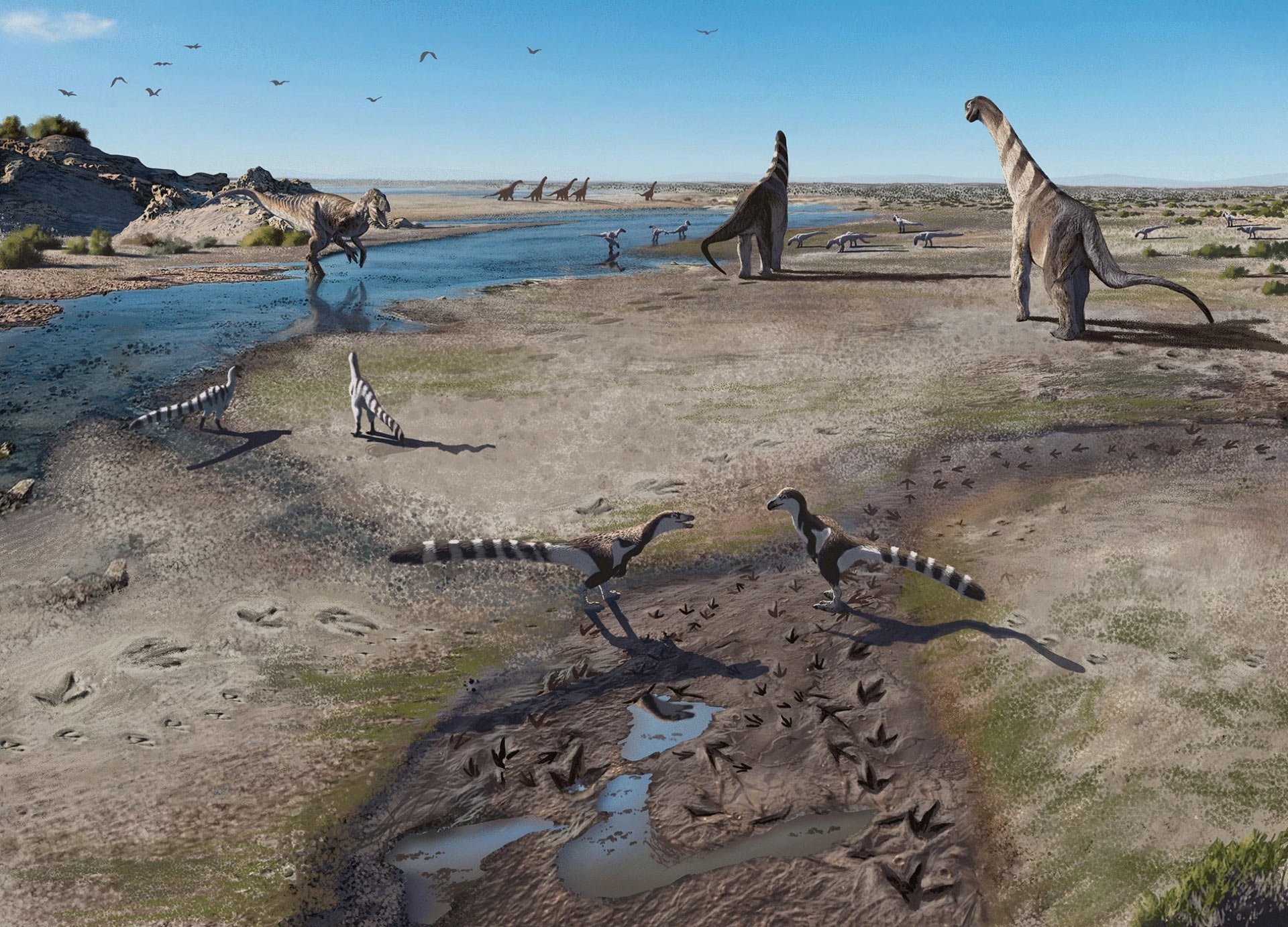
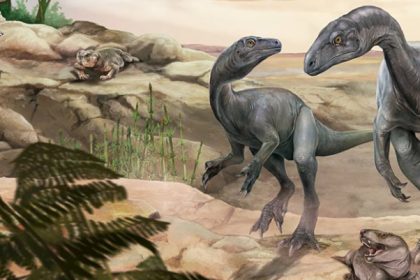
Paleoartistic reconstruction of Quebrada Huatacondo during the Late Jurassic epoch. Image credit: Nahuel Vásquez.
“The abundance and geographic distribution of dinosaur tracksites from the Late Jurassic period show significant discrepancies between Laurasia and Gondwana,” stated Dr. Marko Yurac of the Unidad de Patrimonio Paleontológico, alongside his research associates.
“Europe alone has yielded multiple documented sites, encompassing locations in Italy, Croatia, Poland, Spain, Switzerland, France, Germany, and Portugal.”
“Furthermore, North America boasts extensive track-bearing sites that provide abundant ichnological evidence.”
“Conversely, the dinosaur track record originating from Gondwana is considerably more limited and fragmented. Notable exceptions include outcrops bearing tracks within the High Atlas Mountains of Morocco.”
“Beyond this, ichnological evidence is relatively sparse, with only a modest number of occurrences reported from Australia.”
“In South America, the majority of dinosaur tracksites are clustered along the continent’s eastern edge, predominantly in Brazil, Guyana, and Uruguay, with additional discoveries noted in northern territories such as Colombia.”
“In stark contrast, the western border of South America — which corresponds to the western boundary of Gondwana — has exclusively revealed Late Jurassic dinosaur track occurrences in Chile.”
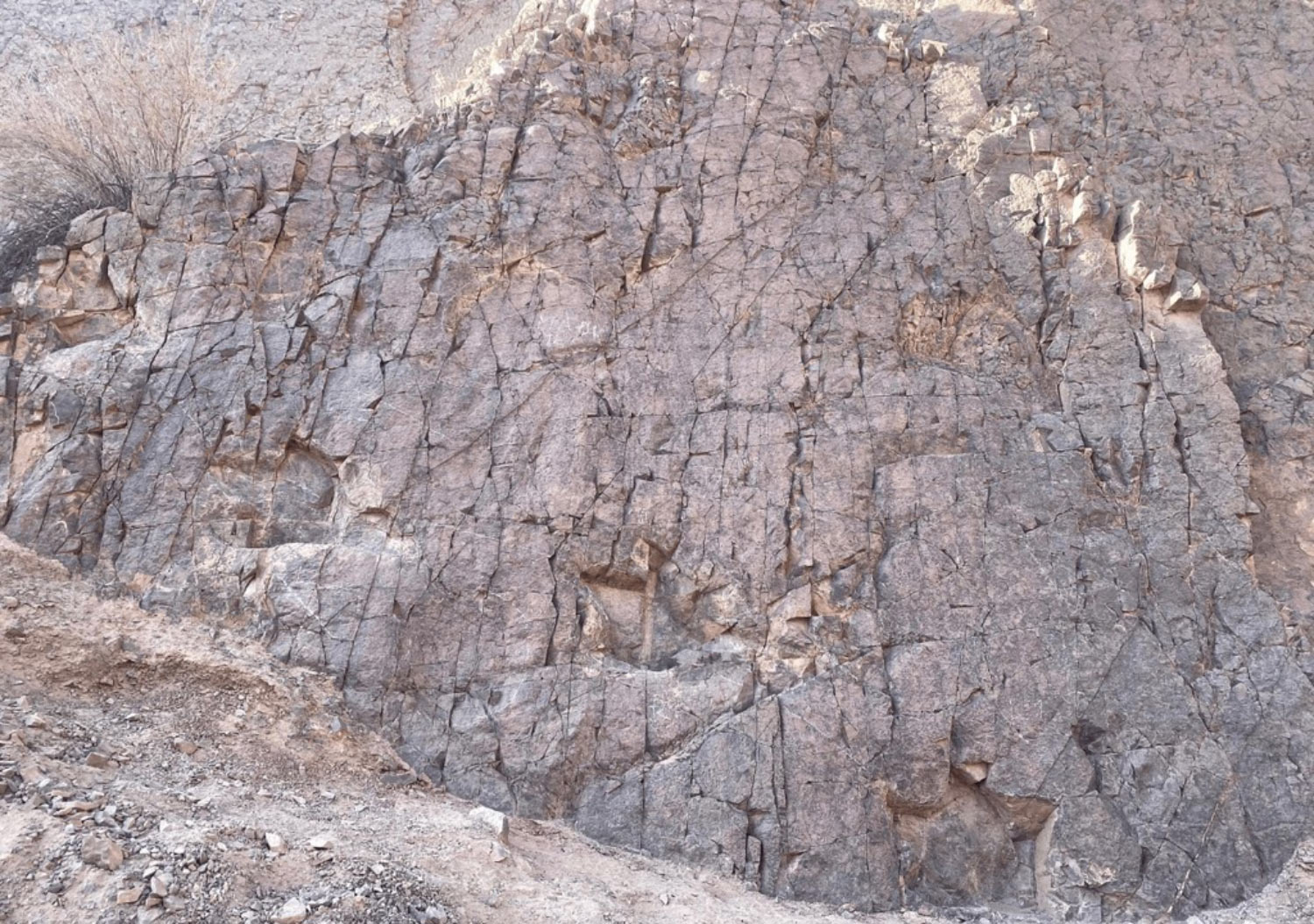
Trackway with four consecutive tracks of a large tridactyl trackmaker in the Majala Formation in Chile. Image credit: Yurac et al., doi: 10.1186/s13358-025-00419-9.
The paleontological team identified a total of five stratigraphic levels containing tracks within the Majala Formation in the Quebrada Huatacondo vicinity of Chile.
These imprints were created by theropod and sauropod dinosaurs approximately 160 million years ago, during the Late Jurassic geological epoch.
“Approximately 160 million years ago, northern Chile experienced alternating periods of inundation and arid conditions,” the researchers elaborated.
“Although the climate was predominantly dry, intermittent water accumulation fostered the formation of temporary wetlands, drawing in fauna of all sizes — ranging from diminutive theropods to colossal carnivorous dinosaurs.”
“As dinosaurs traversed the damp mud near these water sources, their footfalls were impressed into the soft substrate.”
“Subsequent flood events gently covered the tracks, thereby preserving them for eons.”
The Majala footprints indicate the presence of colossal (measuring between 51 and 52.8 cm in length), large (ranging from 43.5 to 46.5 cm in length), and medium-sized (between 25 and 27 cm in length) theropod dinosaurs.
One surface exhibits more than 25 footprints attributed to minute to small theropods (with track lengths spanning from 8 to 13 cm).
“These particular footprints represent the smallest theropod tracks documented thus far in Chile, and potentially across the entirety of Gondwana’s western margin,” the scientists observed.
Another stratum displays exclusively sauropod tracks (possibly undertracks), marking the sole stratigraphic level with this characteristic.
“Regrettably, their compromised state of preservation precluded the acquisition of quantitative measurements,” the authors noted.
“Nevertheless, an examination of the digital model facilitates the inference of at least 9 footprints exhibiting an alignment that could potentially represent a trackway.”
According to the paleontologists, their discoveries constitute the most ancient dinosaur tracks identified to date in Chile and along the western edge of Gondwana.
“These fossilized prints serve as the foundational evidence for reconstructing the paleoenvironmental conditions and behavioral patterns of dinosaurs in northern Chile during the Late Jurassic, signifying intermittent use of semi-arid floodplains and ephemeral wetland environments,” they concluded.
The findings are detailed in a publication featured in the Swiss Journal of Palaeontology.
_____
M. Yurac et et al. 2025. Upper Jurassic dinosaur tracks from the Majala Formation in the Huatacondo area (Tarapacá Basin, Chile): reappraisal of known localities and new tracksite discoveries. Swiss J Palaeontol 144, 72; doi: 10.1186/s13358-025-00419-9