A comprehensive genetic analysis has demonstrated that the canids commonly referred to as ‘wild dogs’ across Australia are, in large part, genuine dingoes, thereby prompting a reappraisal of prevailing conservation strategies and wildlife management paradigms.
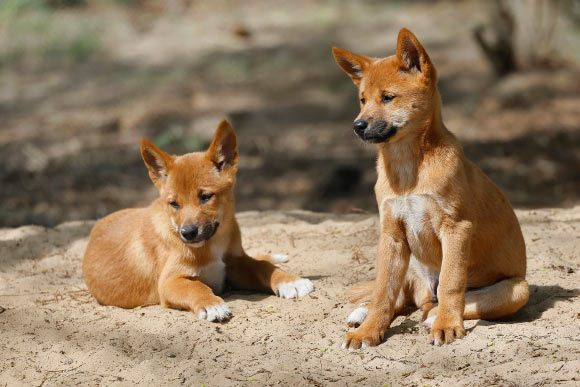
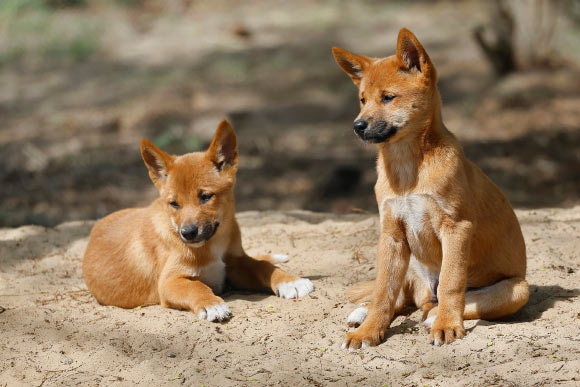
Australian dingoes. Image credit: Sharkolot.
“Within Australian ecological frameworks, dingoes occupy a singular niche as the primary terrestrial apex predator, a role they have fulfilled on the mainland and several adjacent islands since their introduction over 3,000 years ago,” researchers from Adelaide University, including Yassine Souilmi, have articulated.
“From a cultural perspective, they hold profound importance for numerous Indigenous Australian communities, frequently featuring in ancestral narratives as pivotal agents of ecological and cultural equilibrium.”
“Nevertheless, dingoes have been implicated in persistent friction with agricultural producers since the nascent stages of European settlement in the 19th century, leading to the implementation of dingo control initiatives throughout the continent.”
In their latest investigation, the research team examined over 300 free-ranging canines from diverse Australian locales, ascertaining that, on average, merely 11.7% of their genetic makeup originates from domestic dogs.
The prevalence of domestic dog ancestry was observed to be most pronounced in the southeastern regions of Australia, notably Victoria and New South Wales, while it was considerably less prevalent in the remote northern and western territories.
“For many years, different genetic methodologies have yielded divergent conclusions regarding the extent of European dog lineage present in free-roaming dingo populations,” stated Dr. Souilmi.
“Our research employed pre-colonial dingo genetic material as a definitive benchmark to reconcile these discrepancies, leading us to the conclusion that the overwhelming majority of free-roaming canines in Australia are indeed predominantly dingoes.”
This discovery, further substantiated by ancient DNA evidence, carries significant ramifications for the species’ taxonomic classification and the subsequent strategies for population management.
“The appellation ‘wild dog’ obscures crucial biological and cultural distinctions. An animal identified primarily as a dingo differs fundamentally from a feral domestic canine,” Dr. Souilmi elaborated.
“Future management protocols should be tailored to specific regions and developed in close collaboration with Indigenous Australian communities, among whom dingoes have been esteemed companions and kinfolk for millennia.”
The novel analytical approach maintains its efficacy even with a minimal number of genetic markers, thus rendering accessible and large-scale ancestral lineage assessments a tangible possibility for the first time.
“Given that our testing methodology proves reliable with a limited quantity of genetic markers, ancestry assessment is now economically viable for routine application,” commented Dr. Shyamsundar Ravishankar, the study’s lead author and also affiliated with Adelaide University.
“Wildlife authorities are no longer required to allocate substantial resources for whole-genome sequencing to obtain accurate findings.”
Furthermore, the investigation delineated Australia’s dingo populations into eight genetically distinct groups, encompassing two previously unrecognized assemblages in the northern and central parts of the continent.
After accounting for the influence of domestic dog hybridization, the southeastern dingo populations exhibited diminished genetic diversity compared to their counterparts in the north and center.
The Mallee dingoes (inhabiting the Big Desert) of northwestern Victoria presented a notable case, displaying even lower ancestral diversity than the small, isolated population found on K’gari.
“Once we isolate and exclude the domestic dog genetic component, the overall picture undergoes a transformation,” observed Dr. Nhi Chau Nguyen, a co-author of the study, also from Adelaide University.
“While hybridization with domestic dogs has augmented the overall genetic variability within southeastern dingoes, it has concurrently diminished certain characteristics that define these dingoes’ unique genetic identity.”
“Our findings also corroborate prior research indicating that the infusion of European dog genes into dingoes reached its zenith in the mid-20th century, particularly during the 1960s, coinciding with accelerated post-war demographic expansion and intensified agricultural practices in southeastern Australia.”
The study’s conclusions have been published in the scientific journal Conservation Letters.
_____
Shyamsundar Ravishankar et al. 2026. Paleogenomics-Informed Inferences of European Dog Admixture Enables Scalable Dingo Conservation. Conservation Letters 19 (3): e70052; doi: 10.1111/con4.70052