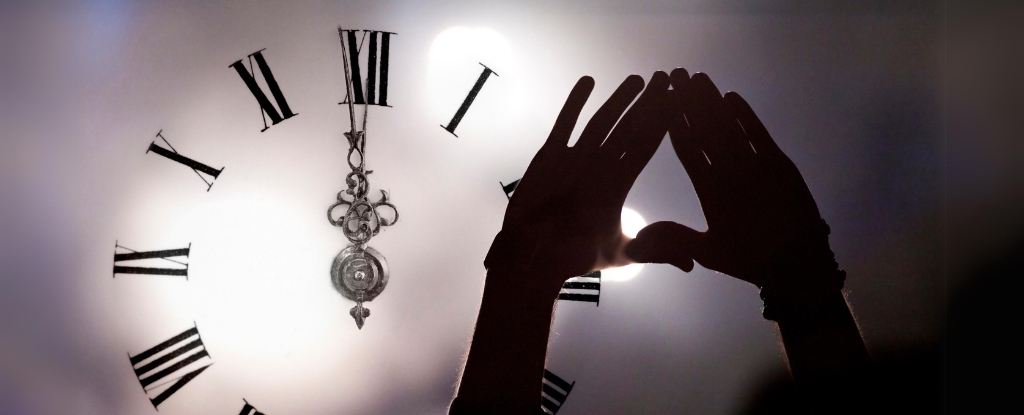
The Doomsday Clock, characterized by its hands positioned precariously near the symbolic hour of midnight (“doomsday”), functions as a visual admonition to humanity, indicating our proximity to global peril.
The midnight mark signifies the theoretical point at which our planet would become untenable for human existence.
This peculiar timepiece originated during the nascent stages of the Cold War. Its inception was intrinsically linked to a publication known as the Bulletin of Atomic Scientists. This journal was established in 1947 by individuals who had been intimately involved in the development of atomic weaponry through their participation in the Manhattan Project.
These scientists harbored profound anxieties regarding the “agents of destruction” they had brought into being. The articles featured in the Bulletin have historically focused, and continue to do so, on elucidating the grave dangers posed by nuclear arsenals.
As of early 2023, the Doomsday Clock’s indicators were adjusted to a mere 90 seconds before midnight, representing its closest approach to this existential threshold to date.
This significant shift is not attributable to a singular cause. Naturally, the escalating threat of climate change, a critical factor imperiling humankind, is incorporated into the clock’s assessment and reflected in its position. However, it is predominantly more immediate concerns that have precipitated this drastic advancement of the clock’s hands.
The preeminent contributor to this alarming setting has been the ongoing conflict in Ukraine, and specifically, the Russian rhetoric of “escalating to de-escalate.” This strategic concept has been a subject of considerable discussion within Russia, including among individuals with close affiliations to President Vladimir Putin.
The underlying rationale suggests that should Russian military forces face substantial setbacks in Ukraine, they might resort to deploying tactical (low-yield) nuclear ordnance on the battlefield, thereby “escalating” the conflict. Such an action, it is theorized, would compel Western powers supporting Kyiv to exercise considerable restraint.
The premise posits that these Western nations would be dissuaded from continuing their support due to the unacceptable risk of engaging in a broader confrontation with Russia, potentially involving strategic nuclear exchanges. This outcome, in theory, would enable Moscow to achieve victory against a Ukraine deprived of Western assistance, thereby concluding the war—hence the notion of “de-escalation.”
Beyond the potential actions on active combat fronts in Ukraine, the overarching increase in animosity between Washington and Moscow has also contributed to the current proximity of the clock’s hands to midnight.
The bilateral agreements that previously served to regulate advancements in the domain of nuclear weapons have largely dissolved. The United States itself withdrew from the Anti-Ballistic Missile (ABM) Treaty in 2001 and subsequently from the Intermediate-range Nuclear Forces (INF) treaty in 2019.
While the dissolution of these pacts undoubtedly influenced the clock’s placement at 90 seconds at the commencement of 2023, further disquieting developments have transpired throughout the current year.
In February 2023, Russia initiated its withdrawal from the New Start Treaty, and at the outset of November, it was formally declared that Russia would also cease its participation in the Comprehensive Nuclear Test Ban Treaty.
Consequently, all the international instruments designed to limit nuclear proliferation, which in the past had served to move the clock hands away from the midnight hour, have now been abrogated.

Genesis of the Clock
Since 1947, the Bulletin’s editorial board has been responsible for setting the clock’s hands at the beginning of each calendar year. Initially, the clock’s primary concern was the existential threat of outright nuclear warfare between the principal superpowers of the Cold War era: the United States and the Soviet Union.
More recently, however, the clock’s purview has expanded to encompass and acknowledge the global menace posed by climate change, a factor that the Bulletin first integrated into its considerations in 2007.
Throughout its history, the clock’s hands have been periodically adjusted to reflect significant global events. In 1947, its inaugural setting was positioned seven minutes shy of midnight. This was later advanced to a mere two minutes in 1953, a consequence of both the United States and the Soviet Union conducting tests of their newly developed, and significantly more destructive, hydrogen bombs.
However, the clock did not approach this critical juncture again for the remainder of the Cold War period.
Instances where the hands were advanced were typically followed by subsequent retractions, reflecting periods of thawing relations between Washington and Moscow, such as the détente observed in the early 1970s or the successful negotiation of various arms limitation accords.
These agreements included, but were not limited to, the Partial Nuclear Test Ban Treaty of 1963, the Strategic Arms Limitation Talks (SALT) conducted throughout the 1960s and 1970s, the ABM Treaty established in 1972, the INF agreement formalized in 1987, the Strategic Arms Reduction Treaty (START I) in 1991, and its successor, New START, enacted in 2010.
Indeed, in 1991, during a period characterized by reduced global tensions in the immediate aftermath of the Cold War, the Doomsday Clock’s hands were moved further from the midnight hour than at any point since its inception in 1947, settling at a reassuring 17 minutes.
In the year 2023, the global landscape appears precarious, particularly if credence is given to the Doomsday Clock’s alarming indications. Nevertheless, this clock serves as a crucial, albeit symbolic, instrument of warning.
As such, it is hoped that it can effectively galvanize attention and foster the emergence of prudent leadership capable of implementing measures to avert the catastrophic outcomes—whether stemming from nuclear conflict or climate change—that its creators meticulously sought to prevent.