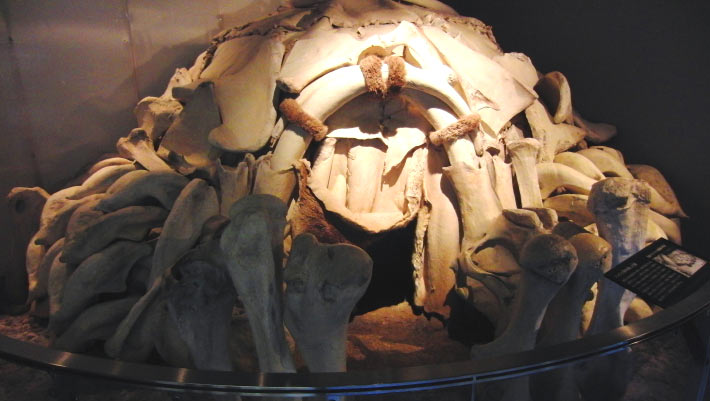
Within the Upper Paleolithic settlement of Mezhyrich, situated in Ukraine’s Cherkasy oblast, four extraordinary structures constructed from mammoth bones have been discovered. These formations, measuring between 12 and 24 square meters, were meticulously assembled utilizing hundreds of mammoth skeletons and tusks. A recent examination of minuscule mammal remains unearthed directly from the archaeological strata suggests that at least one of these edifices was utilized for a period of up to 429 years, reinforcing the hypothesis that it served as a habitation.
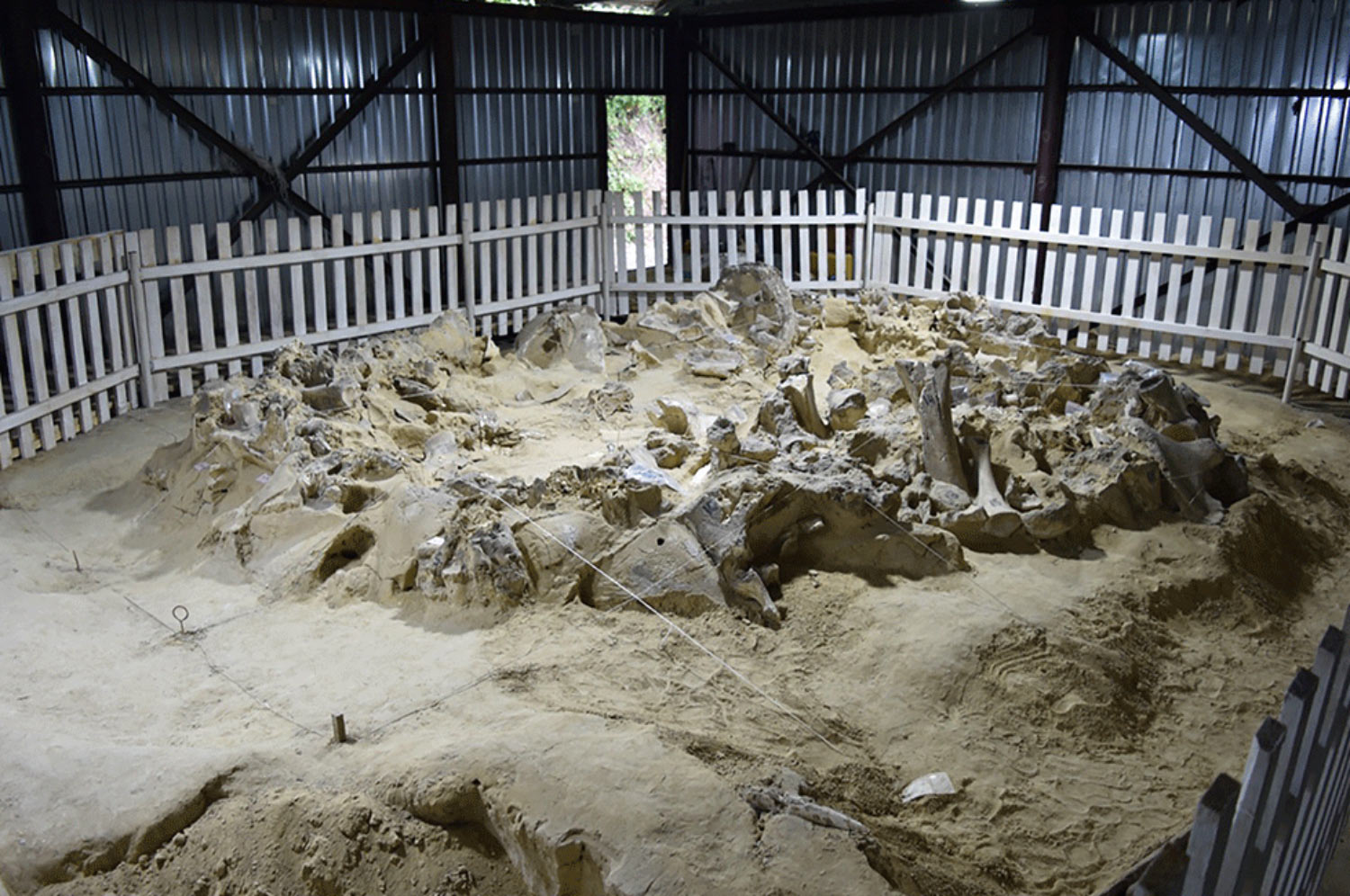
MBS 4 during excavation at the Upper Paleolithic site of Mezhyrich in Cherkasy oblast, Ukraine. Image credit: Chu et al., doi: 10.12688/openreseurope.20112.1.
“The open-air Upper Paleolithic locales found in East-Central Europe provide invaluable insights into human endeavors and biogeographical patterns during the Late Pleniglacial, a phase marked by significant environmental transformations,” stated Universiteit Leiden archaeologist Wei Chu and her associates.
“Numerous these sites, characterized by deep loess sedimentary formations, contain extensive lithic, faunal, and osseous assemblages, interwoven with environmental proxies that aid in discerning contemporaneous climatic conditions.”
“Of particular note in this geographical area, some of these sites are found in direct conjunction with mammoth bone accumulations, which have been proposed as among the earliest indicators of constructed habitats exhibiting spatial and seasonal organization.”
“Many of these constructions have heretofore been identified as the remnants of domestic structures,” they further elaborated.
“However, given that the majority were excavated many decades ago, the question has resurfaced regarding their primary function—whether they served as dwellings or if they represent sites dedicated to other purposes, such as bone deposits, food storage areas, interments, religious practices, or ritualistic refuse heaps that might have functioned as primitive monuments.”
“A pivotal site relevant to this ongoing debate is Mezhyrich, situated in Ukraine’s Middle Dnieper Basin and renowned for its exceptionally preserved quartet of mammoth bone structures (MBS 1-4), each approximately 12-24 meters in diameter.”
“These edifices are associated with peripheral features and artifacts, including pits laden with artifacts, hunting implements, and ornaments fashioned from ivory and bone, alongside designated activity zones containing butchered animal remains and workshops with dense cultural layers, each organized into distinct economic settlement units with the mammoth bone structures serving as central elements.”
In their recent investigation, the researchers concentrated their efforts on the chronological assessment and analysis of MBS 4, the sole structure at Mezhyrich that possesses artifacts with secure provenance within cultural layers, thereby permitting the acquisition of direct age determinations.
By undertaking the dating of small mammal remnants rather than mammoth bones, they successfully established a more precise age for MBS 4, situating it within the timeframe of approximately 18,248 to 17,764 years ago.
Crucially, the newly acquired data suggest that this structure remained in use for an extended duration of up to 429 years.
The findings indicate that Mezhyrich was likely a settled, long-term habitation rather than a transient encampment utilized for merely a few seasons.
The structure probably functioned as a dwelling passed down through generations, meticulously maintained and reoccupied over the course of several centuries.
“MBS 4 dates to the most severe epoch of the last Ice Age,” the research team commented.
“Even more astonishingly, the period of occupation was brief; potentially comprising a single or a few visits spread across centuries.”
“This leads to the conclusion that these shelters, constructed from bone, represented practical adaptations for survival rather than permanent settlements.”
“What is the significance of this? Beyond the sheer ingenuity displayed in utilizing mammoth bones as construction material, these discoveries fundamentally alter our comprehension of human resilience and adaptability.”
“They demonstrate how communities flourished in austere environments, transforming the remnants of colossal animals into protective architecture.”
“As chronological methodologies advance in precision, sites like Mezhyrich continue to challenge our preconceptions about prehistoric existence,” they concluded.
“Far from being static entities, these societies were dynamic, resourceful, and profoundly connected to their surroundings, a lesson that continues to hold relevance today.”
The investigative team’s dissertation was published in the periodical Open Research Europe.
_____
W. Chu et al. 2025. A Revised Radiocarbon Chronology for the Mammoth Bone Structures and Associated Features at Mezhyrich, Ukraine. Open Res Europe 5: 198; doi: 10.12688/openreseurope.20112.1