In 2015, excavators unearthed fossilized remains belonging to a Neanderthal individual at Grotte Mandrin. This rock shelter, situated in Mediterranean France, overlooks the Rhône River Valley. This individual, affectionately named Thorin, represents one of the most comprehensively preserved Neanderthal specimens discovered in France since the 1979 find at Saint-Césaire. Through a sophisticated integration of archaeological data, chronostratigraphic evidence, isotopic analysis, and genomic sequencing, Martin Sikora, a researcher at the Globe Institute, and his associates have determined that Thorin originated from a Neanderthal population that had remained genetically isolated for an extraordinary fifty thousand years. Furthermore, distinct from the Thorin lineage, the genome of the Les Cottés Neanderthal revealed evidence of genetic exchange originating from another ancestral line that diverged from the European Neanderthal ancestral lineage over eighty thousand years ago. These revelations point towards the existence of multiple, secluded Neanderthal communities within Europe nearing the time of their disappearance, offering insights into their social structures. It suggests that interactions between disparate Neanderthal groups were either minimal or nonexistent during their final millennia, despite their close geographical proximity.
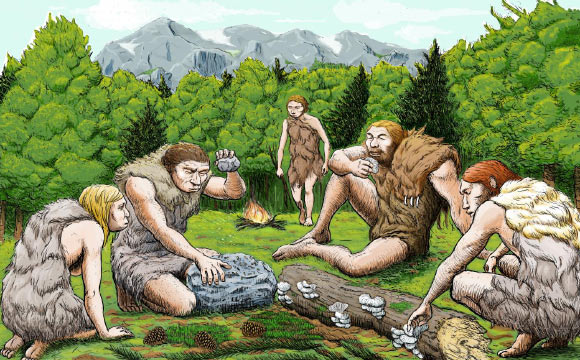
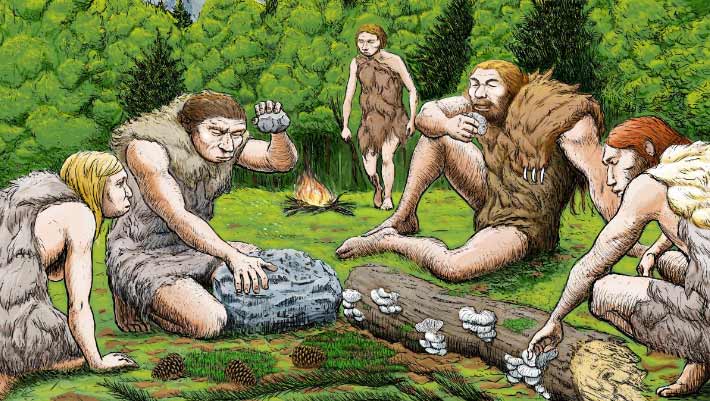
Neanderthals. Image credit: Abel Grau, CSIC Communication.
“When we examine these Neanderthal genomes, it becomes apparent that they exhibit a significant degree of inbreeding, consequently possessing limited genetic diversity,” stated Dr. Sikora.
“These populations had been subsisting in small, isolated groups for numerous generations.”
“It is well-established that inbreeding diminishes a population’s genetic heterogeneity, which can prove detrimental to its long-term survival prospects if sustained over extended periods.”
“The newly identified Neanderthal genome emanates from a distinct genetic lineage compared to other recently discovered late Neanderthals that have undergone previous study.”
“This finding lends credence to the hypothesis that the social organization of Neanderthals differed from that of early modern humans, who appear to have maintained more extensive interconnections.”
“To put it differently, in contrast to Neanderthals, early modern humans demonstrated a greater propensity for engaging with other groups, an advantage that would have contributed to their survival.”
“While this assertion resides at the more speculative end of the spectrum, the very concept of enhanced communication and knowledge sharing, a characteristic human trait, may have been less prevalent among Neanderthals to a certain extent, owing to their solitary existence within smaller, segregated groups.”
“And that represents a significant adaptive advantage,” commented Dr. Tharsika Vimala, a population geneticist affiliated with the University of Copenhagen.
“We observe evidence of early modern humans in Siberia establishing what are termed mating networks to circumvent the challenges associated with inbreeding, even while residing in small communities. This phenomenon has not been identified among Neanderthals.”
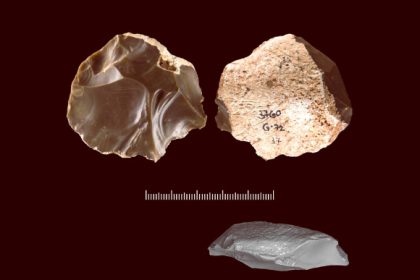
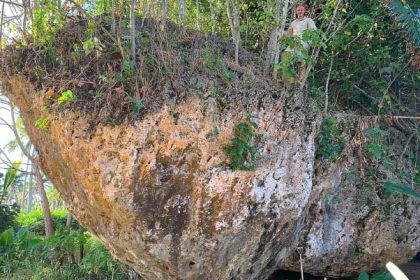
The fossilized remnants of Thorin were initially unearthed in 2015 within Grotte Mandrin—a meticulously studied cave complex that also served as a dwelling for early Homo sapiens, albeit not concurrently. The excavation of this site is an ongoing, meticulous process.
Based on Thorin’s stratigraphic placement within the cave sediments, archaeologists estimated his age to be between 45,000 and 40,000 years ago.
To accurately ascertain his age and genetic affiliations with other Neanderthal individuals, DNA was meticulously extracted from his teeth and jawbone, and his complete genome sequence was subsequently compared against previously sequenced Neanderthal genomes.
Unexpectedly, the preliminary genomic analysis indicated that Thorin predated the archaeological age estimate considerably, as his genome exhibited a marked divergence from those of other late Neanderthals and bore a striking resemblance to the genomes of Neanderthals who lived over 100,000 years prior.
To resolve this apparent discrepancy, the research team undertook an analysis of isotopic ratios within Thorin’s bones and teeth, seeking to glean insights into the climatic conditions of his era. It is known that late Neanderthals inhabited the Ice Age, whereas earlier Neanderthals thrived in a considerably milder climate.
The isotopic analysis conclusively demonstrated that Thorin inhabited a frigid environment, thus confirming his status as a late Neanderthal.
In comparison to the Neanderthal genomes that had been sequenced previously, Thorin’s genome evinced the strongest genetic affinity to an individual excavated in Gibraltar. The authors postulate that Thorin’s population may have migrated to France from the Gibraltar region.
“This finding signifies the existence of a previously unrecognized Mediterranean Neanderthal population whose territorial range extended from the westernmost extremity of Europe all the way to the Rhône Valley in France,” explained Dr. Ludovic Slimak, a researcher at the Université Toulouse Paul Sabatier and CNRS.
Understanding the insular and small-scale nature of Neanderthal communities could be pivotal in unraveling the reasons behind their eventual extinction, as isolation is widely regarded as a disadvantage for population viability and adaptability.
“Intercourse with other populations is invariably beneficial for a species’ survival,” remarked Dr. Vimala.
“Prolonged isolation leads to a reduction in genetic variability, thereby diminishing a population’s capacity to adapt to shifting environmental conditions and novel pathogens. Furthermore, it imposes social limitations, impeding the exchange of knowledge and collective evolutionary advancement.”
Nevertheless, the researchers emphasize the necessity of sequencing additional Neanderthal genomes to achieve a comprehensive understanding of Neanderthal population structures and the underlying causes of their extinction.
“My conjecture is that if we were to acquire more genomic data from diverse regions during a comparable temporal period, we would likely uncover additional populations exhibiting profound structural isolation,” Dr. Sikora posited.
The findings have been formally published in the journal Cell Genomics.
_____
Ludovic Slimak et al. 2024. Long genetic and social isolation in Neanderthals before their extinction. Cell Genomics 4 (9): 100593; doi: 10.1016/j.xgen.2024.100593