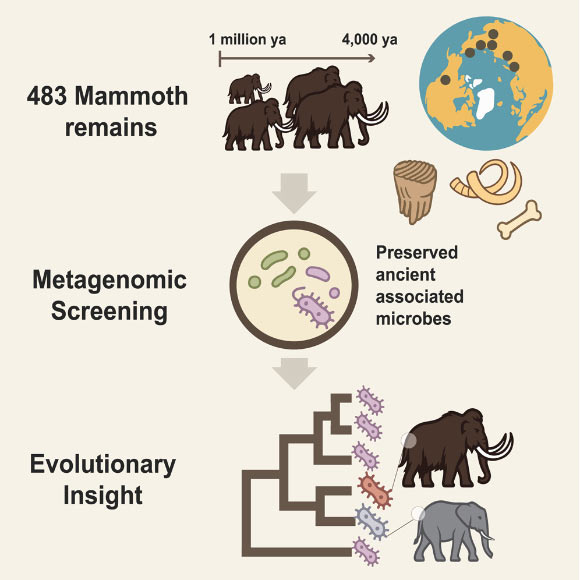
A recent scientific investigation involved the comprehensive analysis of ancient microbial DNA extracted from 483 mammoth specimens, with temporal origins stretching back over a million years. This extensive dataset includes 440 newly sequenced and previously unpublished samples, notably a specimen from a steppe mammoth dating back 1.1 million years. Through the application of metagenomic screening, rigorous contaminant filtering, detailed analysis of DNA degradation patterns, and sophisticated phylogenetic inference techniques, researchers successfully identified 310 distinct microbial taxa demonstrably linked to various mammoth tissues.
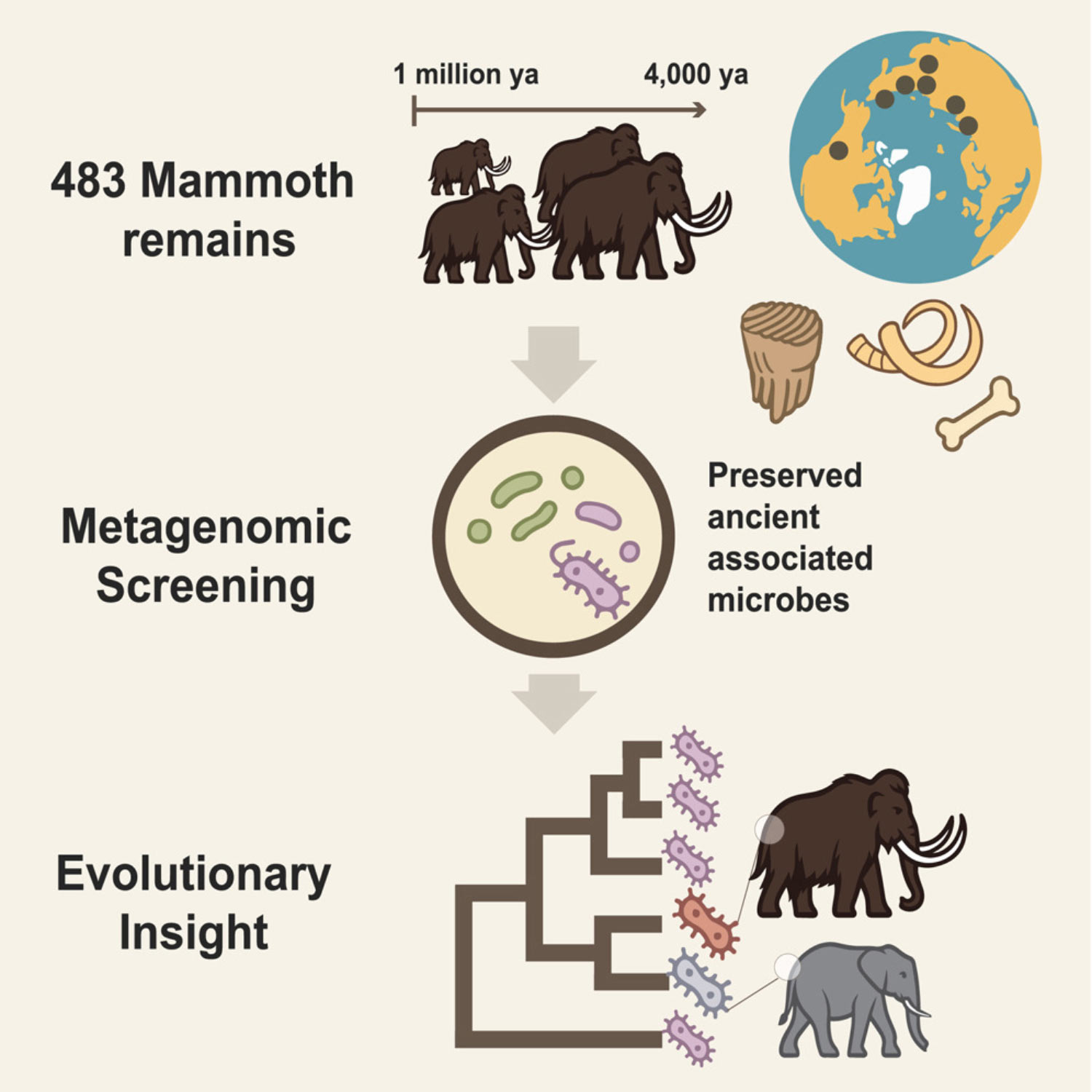
Guinet et al. reconstructed partial genomes of Erysipelothrix from the oldest mammoth sample, representing the oldest authenticated host-associated microbial DNA to date. Image credit: Guinet et al., doi: 10.1016/j.cell.2025.08.003.
Dr. Benjamin Guinet, a postdoctoral researcher affiliated with the Centre for Palaeogenetics in Stockholm and the Swedish Museum of Natural History, shared a compelling thought experiment: “Imagine examining a mammoth tooth that is a million years old,” he posited.
“What if I were to inform you that this ancient relic still retains vestiges of the microbial life that cohabited with this colossal creature?”
“Our findings extend the lineage of microbial DNA analysis to beyond the one-million-year mark, thereby unlocking novel avenues for investigating the evolutionary trajectories of host-associated microbes in tandem with their hosts.”
The research team pinpointed six specific microbial assemblages that exhibited consistent association with mammoth hosts. These identified groups encompass organisms closely related to genera such as Actinobacillus, Pasteurella, Streptococcus, and Erysipelothrix. It is plausible that some of these microorganisms were indeed pathogenic in nature.
For illustrative purposes, a bacterium identified in the study, displaying kinship with the Pasteurella genus, is remarkably similar to an agent responsible for devastating outbreaks among African elephant populations.
Considering that African and Asian elephants represent the extant phylogenetic relatives of mammoths, these discoveries provoke contemplation regarding the susceptibility of mammoths to analogous infectious diseases.
In a truly remarkable feat, the scientific team successfully elucidated partial genomic reconstructions of the Erysipelothrix genus from a steppe mammoth specimen dating back 1.1 million years. This achievement marks the recovery of the most ancient authenticated host-associated microbial DNA ever documented.
This breakthrough significantly advances the frontiers of scientific understanding concerning the intricate interdependencies between ancient hosts and their resident microbial ecosystems.
Dr. Tom van der Valk, also associated with the Centre for Palaeogenetics in Stockholm and the Swedish Museum of Natural History, commented on the challenges: “Given the rapid evolutionary pace of microbes, obtaining dependable DNA data spanning over a million years was akin to pursuing a narrative that was perpetually being revised.”
“Our discoveries underscore the capacity of ancient biological samples to preserve profound insights into biological processes that extend far beyond the host’s own genetic blueprint, thereby furnishing us with critical perspectives on the roles microbes may have played in adaptation, disease dynamics, and extinction events within Pleistocene ecosystems.”
While the precise impact of the identified microorganisms on the health status of mammoths remains somewhat elusive due to inherent DNA degradation and the scarcity of comparative data, this study nonetheless provides an unparalleled window into the microbial communities that once inhabited extinct megafauna.
The research indicates that certain microbial lineages maintained a coexistent relationship with mammoths for durations spanning hundreds of thousands of years. These associations were geographically widespread and persisted across vast evolutionary timescales, originating from over a million years ago and continuing until the eventual extinction of woolly mammoths on Wrangel Island approximately 4,000 years ago.
Professor Love Dalén, a researcher at the Centre for Palaeogenetics in Stockholm, the Swedish Museum of Natural History, and Stockholm University, remarked on the groundbreaking nature of this work: “This endeavor inaugurates a new era in our comprehension of extinct species’ biology.
“Beyond our capacity to study the genomic makeup of mammoths themselves, we are now poised to commence the exploration of the microbial consortia that thrived within them.”
The investigation was officially disseminated this week within the esteemed scientific journal, Cell.
_____
Benjamin Guinet et al. Ancient host-associated microbes obtained from mammoth remains. Cell, published online September 2, 2025; doi: 10.1016/j.cell.2025.08.003