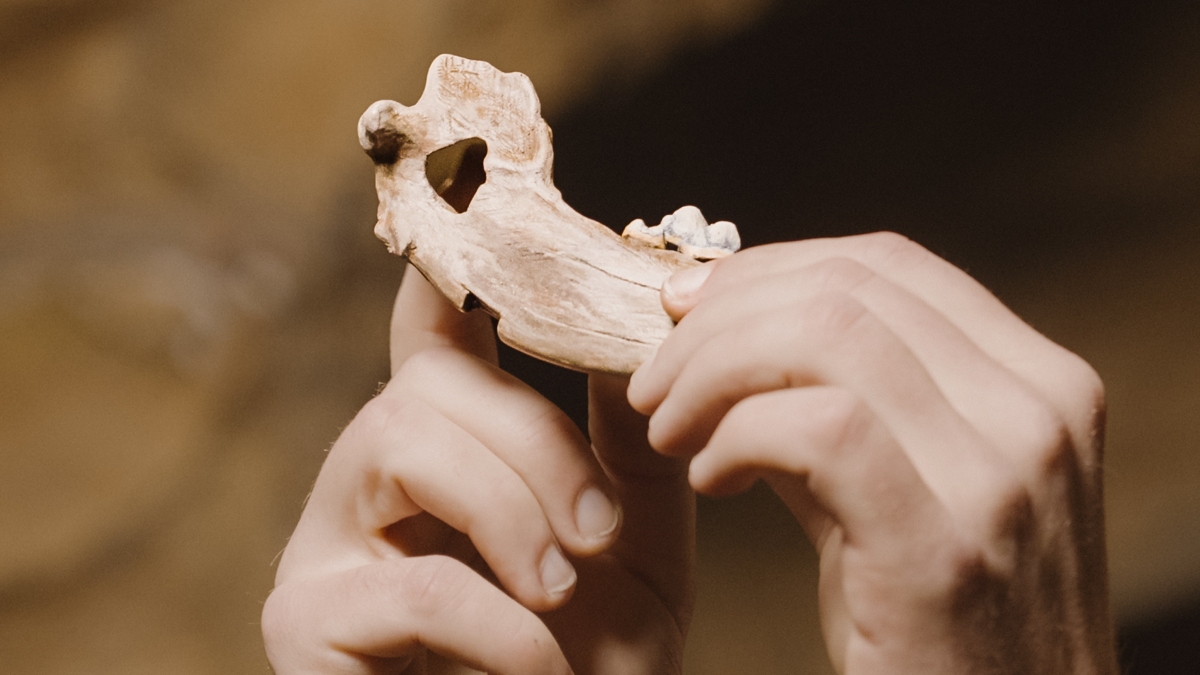
The identification of the most ancient dog DNA discovered to date indicates that canines have shared companionship with humans for approximately 16,000 years—a timeframe that precedes prior estimations by 5,000 years, according to new scientific findings reported on Wednesday.
Despite their pervasive presence in households, outdoor spaces, and the affections of people globally, the precise origins of dogs remain a subject of considerable mystery.
“It presents a fascinating enigma,” remarked Swedish geneticist Pontus Skoglund, affiliated with the UK’s Francis Crick Institute, when addressing reporters.
It is highly probable that dogs originated from a hybridization of two distinct subspecies of grey wolves. Nevertheless, pinpointing the exact period when dogs diverged from wolves has proven challenging, partly due to the difficulty in distinguishing their antique skeletal remains.
Consequently, researchers involved in a pair of recent investigations, published in the esteemed journal Nature, conducted genome sequencing on archaeological remnants. This approach has illuminated the obscure lineage of our canine companions.
The initial study revealed that the world’s most venerable canine DNA was unearthed from a fragment of a skull located in Pinarbasi, in what is presently recognized as Turkey.

This juvenile female, estimated to be “a few months old” at the time of its life, likely bore a resemblance to a small wolf during its existence approximately 15,800 years ago, as stated by study co-author Laurent Frantz from the Ludwig Maximilian University of Munich.
Prior to Wednesday’s announcement, the oldest confirmed dog DNA dated back 10,900 years.
Also surpassing that previous record was genetic evidence recovered by the research team in southwest England, with an age of 14,300 years. This discovery underscored the extent to which early canines had disseminated across the European continent.
Frantz indicated that the scientists could not definitively establish the exact function these dogs served for human populations during the last Ice Age.
“However, I believe we can reasonably infer that they must have fulfilled a purpose, given the considerable effort required to sustain them,” he posited.
It is plausible that these canines were employed for hunting or for providing security, he speculated.
Even if the relationship between humans and these ancient dogs differed from contemporary pet ownership, a profound connection likely still existed, he suggested, adding that “children would undoubtedly have engaged in play with puppies.”
An additional indicator of a close interspecies bond was the discovery of puppies interred above human burial sites in Pinarbasi.
‘Pursuit of the missing link’
In the context of the second study, an extensive group of investigators meticulously compared the genomes derived from 216 canine and wolf remains sourced from various European locales.
This comparative analysis enabled them to construct a timeline detailing the evolutionary trajectory of dogs across the continent.
Commencing around 10,000 years ago, a significant wave of human migration originated from southwestern Asia towards Europe, coinciding with the period known as the Neolithic agricultural revolution.
This substantial influx of agrarian communities led to genetic intermingling among human populations as individuals from disparate regions encountered one another and procreated.
Intriguingly, the researchers were surprised to observe that this genetic admixture did not occur concurrently with canines.
It appears that the hunter-gatherer groups who inhabited Europe prior to the arrival of the farmers were already maintaining domestic dogs.
“Canines undeniably held importance for our forebears, as the initial waves of farmers seem to have integrated existing hunter-gatherer dogs into their own communities upon settling in Europe,” commented study co-author Skoglund.
This observation strongly implies that dogs must have been domesticated considerably earlier than this period.
Furthermore, a discernible “genetic chasm persists between dogs and wolves,” Skoglund added.
“The quest to identify the definitive evolutionary link goes on.”