On November 26, 2025, observational data of the interstellar comet 3I/ATLAS was acquired using the Gemini Multi-Object Spectrograph (GMOS) instrument aboard the Gemini North telescope, situated atop Maunakea in Hawai’i. These recent observations provide crucial insights into the celestial body’s transformations following its closest celestial passage to the Sun.
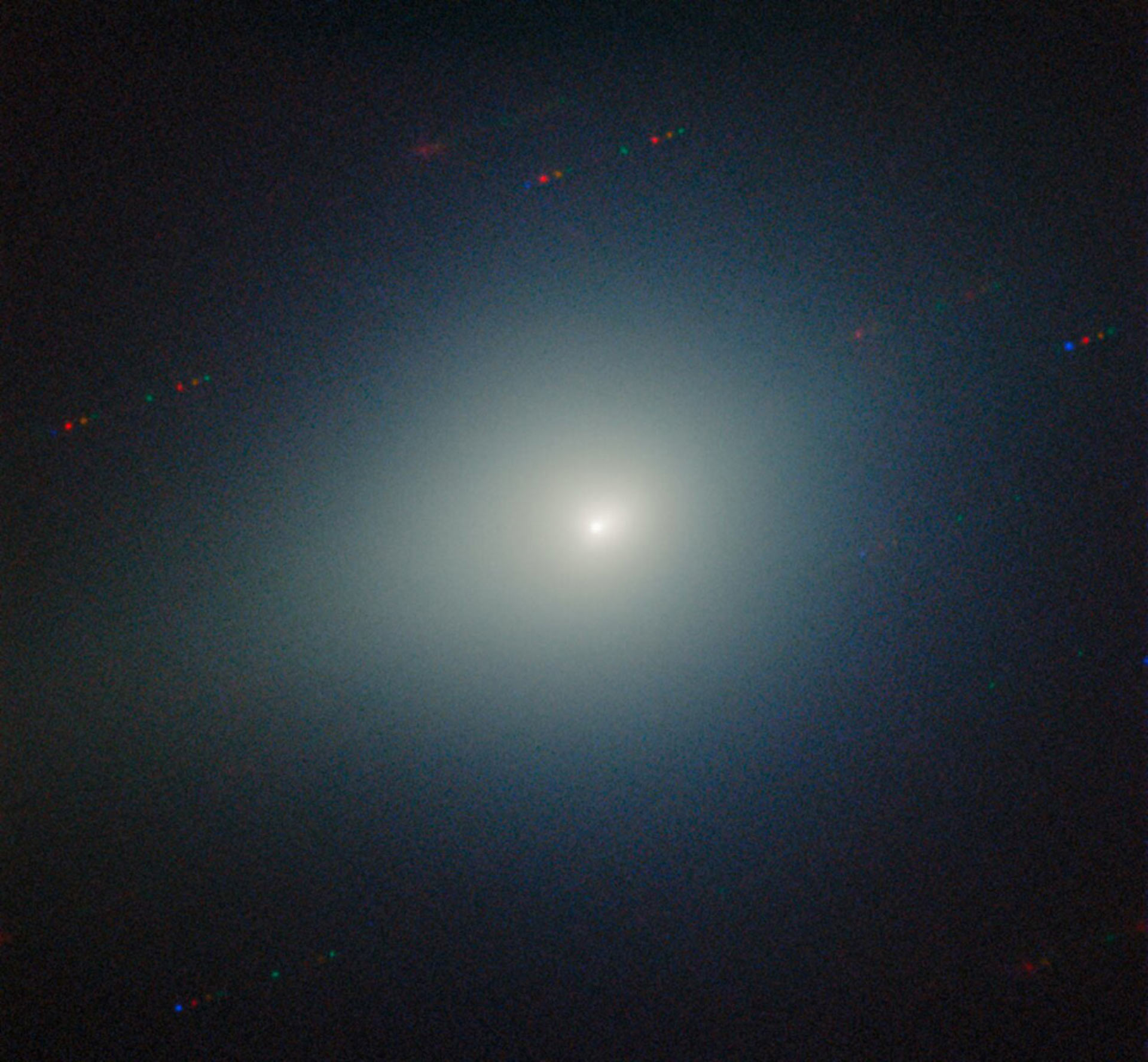
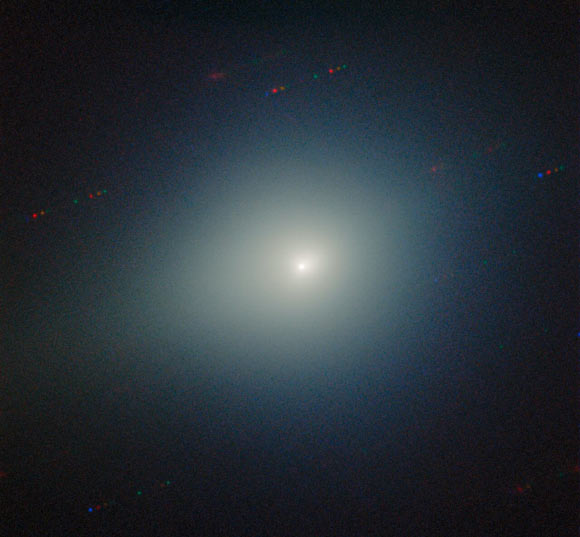
3I/ATLAS streaks across stars and galaxies in this image captured by the Gemini Multi-Object Spectrograph (GMOS) on the Gemini North telescope on Maunakea in Hawai’i, one half of the International Gemini Observatory, partly funded by NSF and operated by NSF’s NOIRLab. Image credit: International Gemini Observatory / NOIRLab / NSF / AURA / B. Bolin / J. Miller & M. Rodriguez, International Gemini Observatory & NSF’s NOIRLab / T.A. Rector, University of Alaska Anchorage & NSF’s NOIRLab / M. Zamani, NSF’s NOIRLab.
The object designated 3I/ATLAS achieved its closest proximity to the Sun, a point termed perihelion, on October 30, 2025.
Upon re-emerging from obscured visibility behind the Sun, this extraterrestrial visitor became observable once more in the celestial sphere, in close alignment with Zaniah, a triple-star system situated within the Virgo constellation.
On November 26, 2025, an observational campaign was undertaken by Eureka Scientific researcher Bryce Bolin and his cohort. They successfully acquired the latest imagery of the comet as a component of a public engagement initiative, jointly orchestrated by NSF NOIRLab in partnership with Shadow the Scientists.
“Providing access to an observational experience under some of the most favorable conditions available offers the public an unparalleled, firsthand perspective of our visitor from beyond the solar system,” stated Dr. Bolin.
“Permitting the public to witness our astronomical endeavors and methodologies not only serves to demystify the scientific processes and data acquisition procedures but also enhances the transparency surrounding our investigation into this captivating celestial body.”
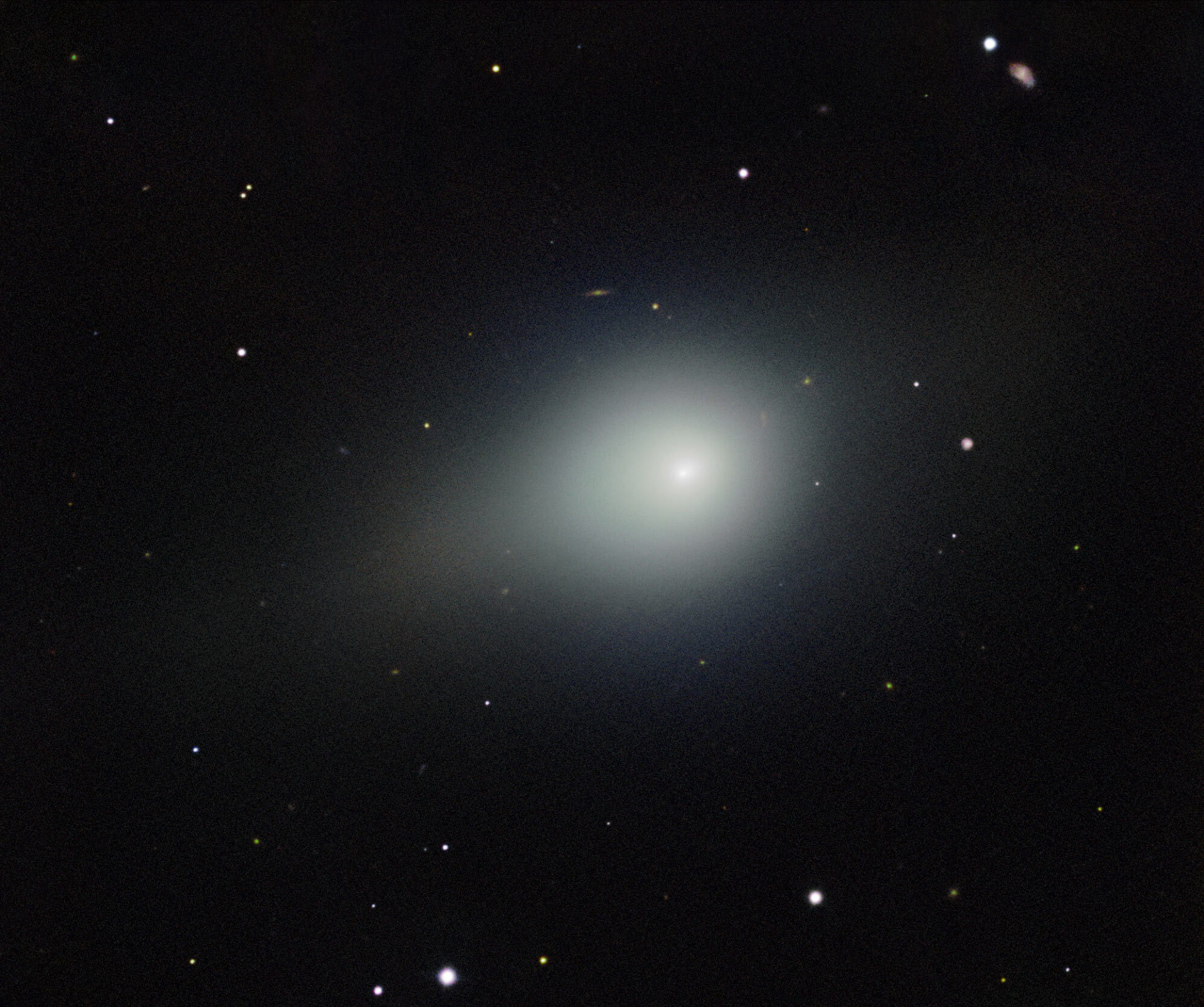
The image of 3I/ATLAS, captured by the Gemini Multi-Object Spectrograph (GMOS) on the Gemini North telescope, showcases the comet’s coma—a nebulous envelope of gas and dust that envelops the comet’s frozen nucleus when it is in proximity to the Sun. Image credit: International Gemini Observatory / NOIRLab / NSF / AURA / B. Bolin / J. Miller & M. Rodriguez, International Gemini Observatory & NSF’s NOIRLab / T.A. Rector, University of Alaska Anchorage & NSF’s NOIRLab / M. Zamani, NSF’s NOIRLab.
The most recent GMOS imagery is a composite of exposures acquired through four distinct spectral filters: blue, green, orange, and red.
“As data acquisition progresses, the comet is maintained centrally within the telescope’s viewing field,” the scientific team reported.
“Concurrently, the stellar positions in the background shift in relation to the comet, resulting in their appearance as vibrantly streaked formations within the final depiction.”
“Earlier photographic records of the comet, obtained during a Shadow the Scientists session hosted at Gemini South in Chile, suggest a predominant reddish coloration.”
“However, in the newly released imagery today, a subtle greenish luminescence is discernible.”
“This chromatic shift is attributable to photonic emissions originating from gases within the comet’s coma, which are vaporizing as the comet’s temperature escalates. Among these is diatomic carbon, a highly reactive molecular compound consisting of two carbon atoms, known to emit light within the green spectral range.”
“A notable unknown remains the comet’s behavior as it recedes from the Sun’s influence and subsequently cools.”
“Numerous cometary bodies exhibit a latent response to solar thermal energy due to the temporal lag inherent in heat propagation through their internal structure.”
“Such a delay has the potential to initiate the volatilization of novel chemical compounds or precipitate a cometary outburst event.”