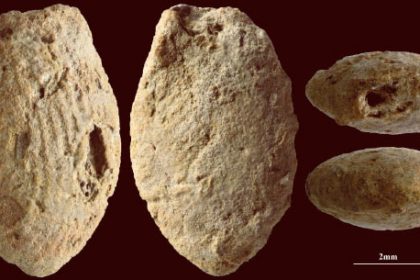
An international consortium of archaeologists has scrutinized a collection of 85 ceramic fragments exhibiting significant food residues, sourced from thirteen distinct archaeological locales spanning Northern and Eastern Europe, with temporal origins from the sixth to the third millennium BCE. From this assemblage, fifty-eight fragments yielded sufficiently preserved plant tissues for successful identification, encompassing specimens such as wild grasses and legumes, various fruits, and the vegetative parts (roots, tubers, leaves, and stems) of herbaceous flora. The investigative outcomes underscore a pronounced selectivity in the selection of plant-based sustenance, indicating that hunter-gatherer societies deliberately favored particular plant species and specific botanical components, often in conjunction with curated animal-derived ingredients.

Prehistoric Europeans approached plant foods selectively, consciously choosing certain species over others, and combining these with specific animal ingredients; such practices would have created new esthetics, tastes, flavors and textures that would be hard to achieve without pottery technology and may have contributed to the motivation for its invention/adoption.
The procurement of wild botanical resources constituted an integral element of prehistoric sustenance methodologies; however, concrete evidence detailing this practice, specifying the varieties of gathered flora, and delineating their precise applications, frequently remains elusive.
A prevalent methodology employed for the interpretation of ancient dietary patterns involves the examination of lipid residues embedded within archaic ceramic vessels. This analytical approach, however, is constrained by its capacity to furnish insights predominantly concerning animal-derived remnants.
Within the scope of this recent investigation, Lara González Carretero, a researcher affiliated with the University of York, in conjunction with her esteemed colleagues, integrated a suite of analytical techniques. These included detailed microscopic observation and sophisticated chemical analyses, designed to identify the remnants of plant materials consumed by early European hunter-gatherer populations.
The researchers meticulously analyzed organic residues recovered from fifty-eight ceramic artifacts unearthed at thirteen archaeological sites situated across Northern and Eastern Europe, with the dating of these sites placing them between the sixth and third millennia BCE.
This comprehensive analytical strategy successfully recovered botanical tissue samples representing a diverse array of plant life, such as grasses, berries, leaves, and seeds.
In numerous instances, plant residues were discovered in close association with animal remains, predominantly those of piscine and marine origin.
The specific compositions of these culinary mixtures and their constituent ingredients exhibited regional variations, a phenomenon most plausibly attributable to the differential availability of local resources and the influence of indigenous cultural traditions.
The findings from this study prominently highlight the significant contribution of plant matter and aquatic foodstuffs to the diets of early European peoples.
Furthermore, the results lend credence to the hypothesis that these ancient communities routinely employed ceramic technology for the preparation of food, and that distinct cultural groups possessed their own elaborate gastronomic traditions.
“Our findings unequivocally demonstrate that the selection of plant-based foods was characterized by a remarkable degree of discernment, with hunter-gatherers exhibiting a preference for particular plant species, and even specific parts thereof, which were then combined with carefully chosen animal ingredients,” the researchers stated in their conclusions.
“The outcomes also indicate that our comprehension of plant processing within pottery contexts is likely to be significantly underestimated when solely relying on lipid residue analysis.”
Their scholarly publication is now available online in the esteemed journal PLoS ONE.
_____
L. González Carretero et al. 2026. Discriminatory culinary utilization of botanical resources by Northern and Eastern European hunter-gatherer-fishers. PLoS One 21 (3): e0342740; doi: 10.1371/journal.pone.0342740