The extinction of the Tasmanian tiger (Thylacinus cynocephalus) and the Tasmanian devil (Sarcophilus harrisii) from mainland Australia is thought to have occurred approximately three millennia ago. Prior to recent findings, a mere 23 known rock art representations of the Tasmanian devil and around 150 paintings and petroglyphs of the Tasmanian tiger, primarily at rock art locales in northern Australia, constituted the archaeological record. However, researchers have now identified fourteen previously undocumented depictions of the Tasmanian tiger, also referred to as the thylacine, and two images of the Tasmanian devil. These newfound artworks, situated in two distinct areas of northwest Arnhem Land within Australia’s Northern Territory, include some that may date back fewer than one thousand years.
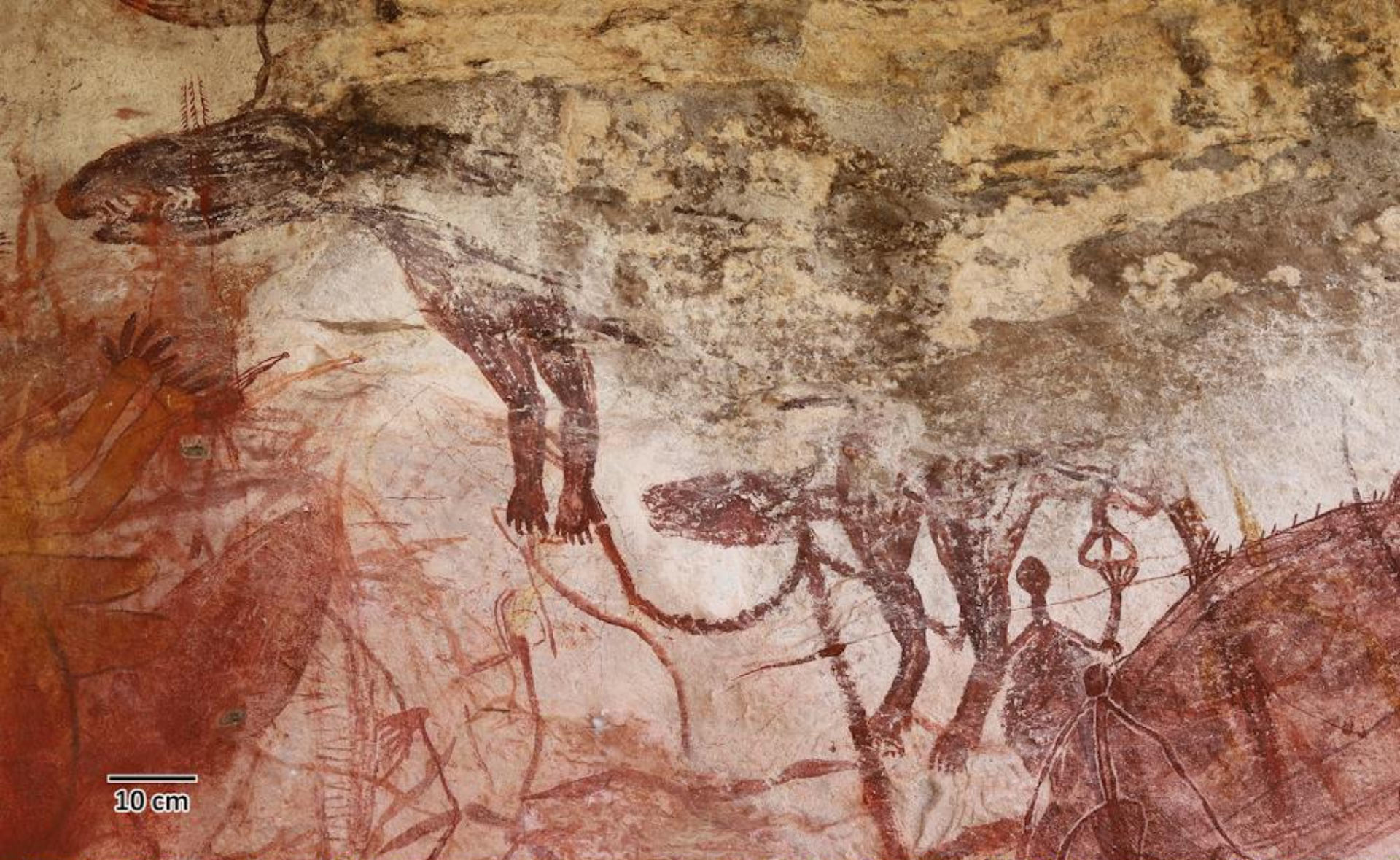
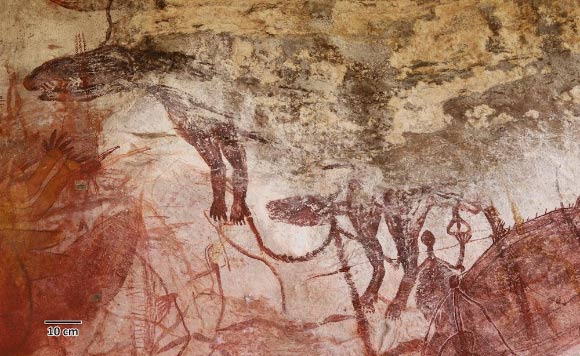
Large naturalistic style thylacine with sharp teeth from Injalak Hill, Northern Territory, Australia. Image credit: Craig Banggar.
These newly cataloged representations of the Tasmanian tiger and devil are rendered in a variety of Aboriginal art styles, created using pigments derived from red and sometimes yellow ochre, with artistic traditions in the region extending back as far as 15,000 years.
The ancient artists also employed white pipe clay for their creations. Because this material does not adhere to rock surfaces or leave as lasting an imprint as red ochre, it was generally presumed that artworks featuring white pigments were less than 1,000 years old.
“Thylacines were more widely distributed and held greater cultural significance across mainland Australia compared to Tasmanian devils, with only 25 Tasmanian devil images having been documented versus over 160 thylacine depictions,” stated lead author Professor Paul Taçon, a researcher affiliated with Griffith University.
“It is plausible that the artists responsible for the more recent paintings may have personally encountered living thylacines, and that these creatures potentially persisted for a longer duration in Arnhem Land.”
“Alternatively, it is conceivable that the artists drew their inspiration from earlier existing artworks.”
“Irrespective of the precise origin, the thylacine continues to hold cultural importance to this day, with some contemporary artists producing thylacine paintings on bark, paper, and canvas. This animal is even known by a specific name: Djankerrk.”
“The presence of retouched paintings within the area underscored the profound significance of these animals across multiple generations,” commented co-author Dr. Andrea Jalandoni, also of Griffith University.
“The rock art depicting thylacines provides invaluable and uncommon insights into the historical human relationship with this particular animal.”
“These visual records indicate that the thylacine occupied a meaningful position within the daily lives and local knowledge systems long before its eventual disappearance.”
According to oral traditions from the region, Tasmanian tigers were considered companions to the Rainbow Serpent and resided in rock pools.
These animals were frequently associated with aquatic environments and the act of swimming.
“These creatures were an integral part of his ancestors’ existence,” shared co-author Joey Nganjmirra, a Djalama man hailing from Western Arnhem Land.
“They recounted narratives of participating in hunts alongside thylacines.”
“Our investigation demonstrated that the thylacine maintained contemporary relevance within the region, not only for the scientific community but also for members of the traditional community,” Professor Taçon remarked.
“Within western Arnhem Land, the thylacine endures not as a spectral remnant of the past, but as a significant being that continues to hold relevance in the present day.”
This significant discovery is detailed in a publication released today in the esteemed journal Archaeology in Oceania.
_____
Paul S. C. Taçon et al. The Devil Is in the Detail: Tasmanian Devil and Tasmanian Tiger Paintings from Awunbarna and Injalak Hill, Northern Territory, Australia. Archaeology in Oceania, published online March 30, 2026; doi: 10.1002/arco.70024