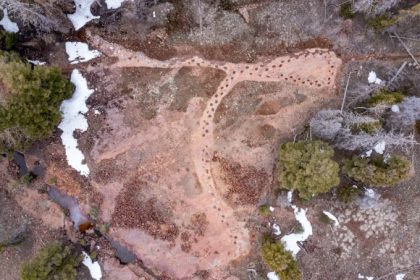
The analysis of ancient genetic material has proven invaluable in resolving intricate evolutionary connections and understanding the adaptive strategies of elephants and their kin in response to environmental shifts. Recent investigations involved the sequencing of mitochondrial genomes from multiple mastodon specimens. These included five from Nova Scotia and the adjacent eastern seaboard, with one potentially dating back approximately half a million years. Furthermore, for the first time, a distinctive Pacific mastodon from Tualatin, Oregon, was examined, alongside a partial mitochondrial genome recovered from Northern Ontario. The findings indicate that Pacific mastodons represent a profoundly divergent mitochondrial lineage, thereby expanding the known geographical distribution of this species into western Canada and suggesting potential further extension into Mexico. The research also uncovered evidence pointing to at least three discrete periods of expansion into the northeastern coastal regions and identified two novel mastodon groupings, characterized by specimens that, while distinct, were found in geographically proximate areas.
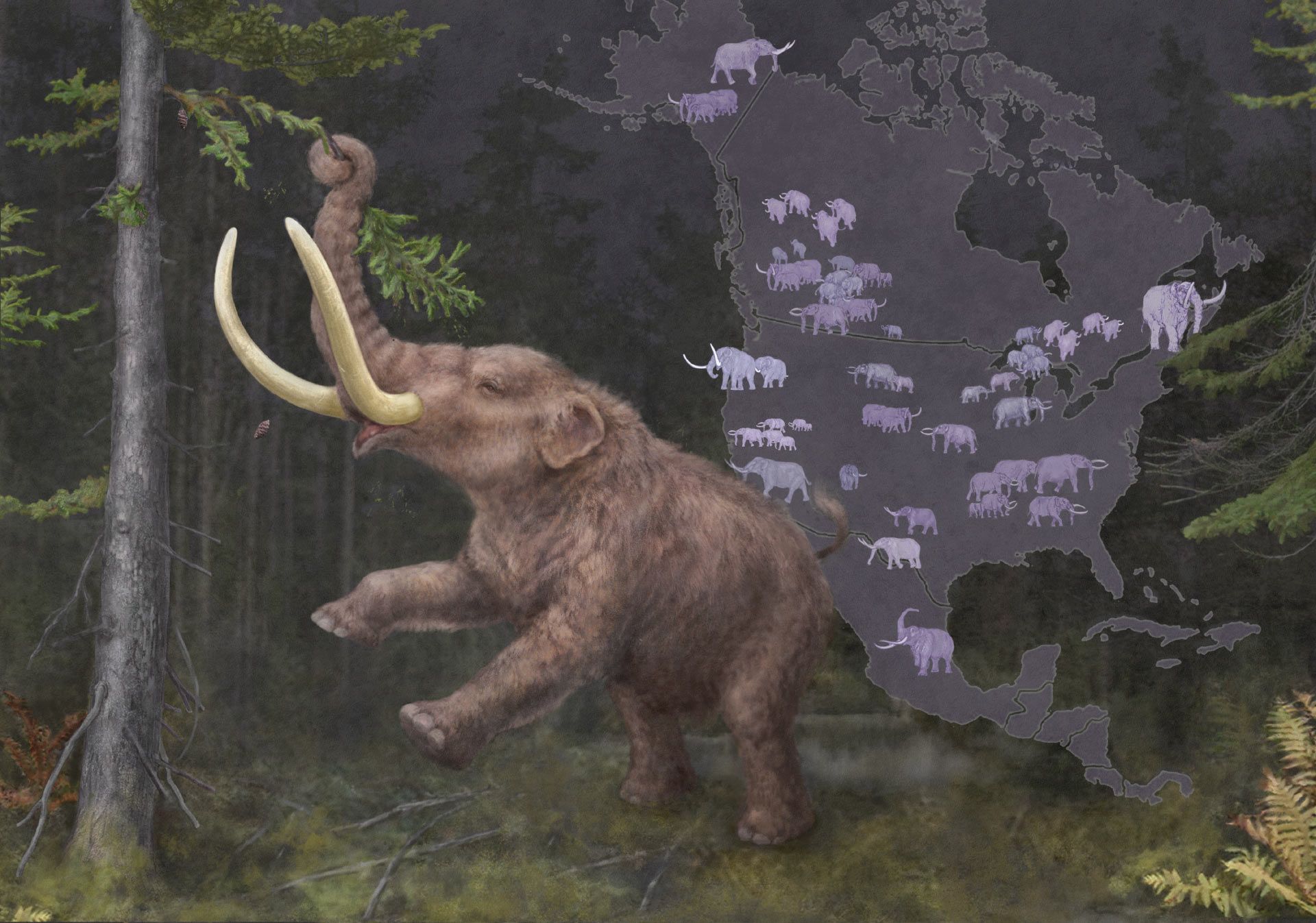
Initially, mastodons were categorized into a multiplicity of distinct species, a classification that was subsequently consolidated into a singular entity: the American mastodon (Mammut americanum).
More recently, this taxonomic framework has undergone revision, with the suggestion that at least two separate species might be involved: the American mastodon and the Pacific mastodon (Mammut pacificus), though the validity of this division has remained a subject of ongoing scientific discourse.
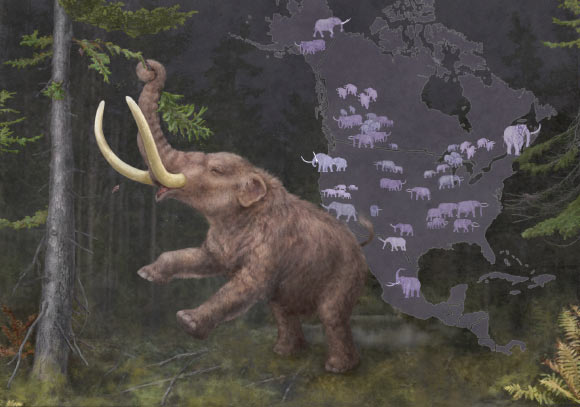
The genetic investigations provide corroboration that Pacific mastodons belong to a very ancient, well-established, and separate evolutionary branch. Their geographical range extended considerably further than previously understood, encompassing the Pacific Northwest and potentially reaching south to Mexico, as well as extending northward to Alberta.
Intriguingly, Alberta appears to have served as a significant nexus, a location where Pacific and American mastodons converged, migrated northward, and potentially engaged in interbreeding.
Specimens from the East Coast and Northern Ontario have illuminated the existence of two previously unrecognized and distinct genetic lineages, referred to as clades, of mastodons that inhabited the same geographical areas but at different temporal periods.
The mastodon populations in the eastern regions exhibited a surprising degree of genetic heterogeneity, having arrived in discrete migratory waves on at least three separate occasions. This migratory pattern was evidently driven by recurrent cycles of climatic amelioration, which facilitated glacial melt and consequently opened up new territories for northward expansion.
Conversely, as the climate deteriorated and glacial ice sheets advanced, mastodons were compelled to retreat southward or faced localized extinction.
“These findings fundamentally alter our perception of the region currently identified as Alberta and the broader northern territories, shifting it from a peripheral habitat to a migratory corridor that was repeatedly occupied, and a significant landscape for mastodon populations, possibly including instances of interbreeding,” stated Dr. Hendrik Poinar, the director of the McMaster Ancient DNA Centre at McMaster University.
The research team also identified a distinctive and genetically unique mastodon lineage from Mexico, which they posit could represent a deeper evolutionary branch of the western species, the Pacific mastodon (pacificus), or potentially constitute an entirely new, third species of mastodon.
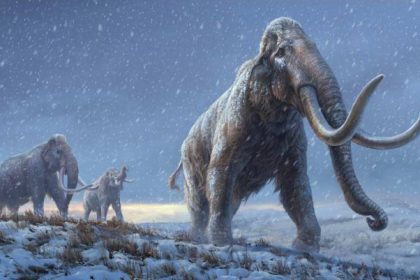
During the Pleistocene Epoch, the mastodon was among the largest terrestrial fauna on Earth, its range extending from Beringia (encompassing present-day Alaska and the Yukon) eastward to Nova Scotia and southward to Central Mexico.
These animals were predominantly herbivores, subsisting on shrubs and low-hanging tree branches, and inhabited marshy environments. Their ecological niche differed substantially from that of their distant relatives, the iconic woolly mammoths of the Ice Age, which typically roamed across open grasslands and tundra.
“This study marks several significant ‘firsts,’ including our work on the Pacific mastodon,” remarked Emil Karpinski, a researcher affiliated with Harvard Medical School.
“It also gives rise to numerous new inquiries. For instance, how did these geographically separated mastodon species interact within Alberta?”
“Did they engage in competition for resources, or did they interbreed, as our laboratory has previously demonstrated for mammoths?”
“These novel discoveries, in conjunction with the findings presented in the team’s 2020 publication, collaboratively construct a more comprehensive understanding of mastodon dispersal patterns and diversification across North America. This is crucial for contemporary conservation efforts aimed at preparing for an increasingly warming Arctic and the migratory movements of species in northern regions,” the scientists commented.
Their research paper was officially published on September 12, 2025, in the esteemed journal Science Advances.
_____
Emil Karpinski et al. 2025. Repeated climate-driven dispersal and speciation in peripheral populations of Pleistocene mastodons. Science Advances 11 (37); doi: 10.1126/sciadv.adw2240