In a significant archaeological revelation at Barnham, Suffolk, in the United Kingdom, researchers have unearthed evidence of heated sediments and flint handaxes exhibiting signs of fire-cracking, dating back approximately 400,000 years. Crucially, the site also yielded two fragments of pyrite, a mineral historically employed for igniting sparks with flint. This groundbreaking discovery suggests that the controlled manipulation of fire by hominins predates previously accepted timelines by an estimated 350,000 years.
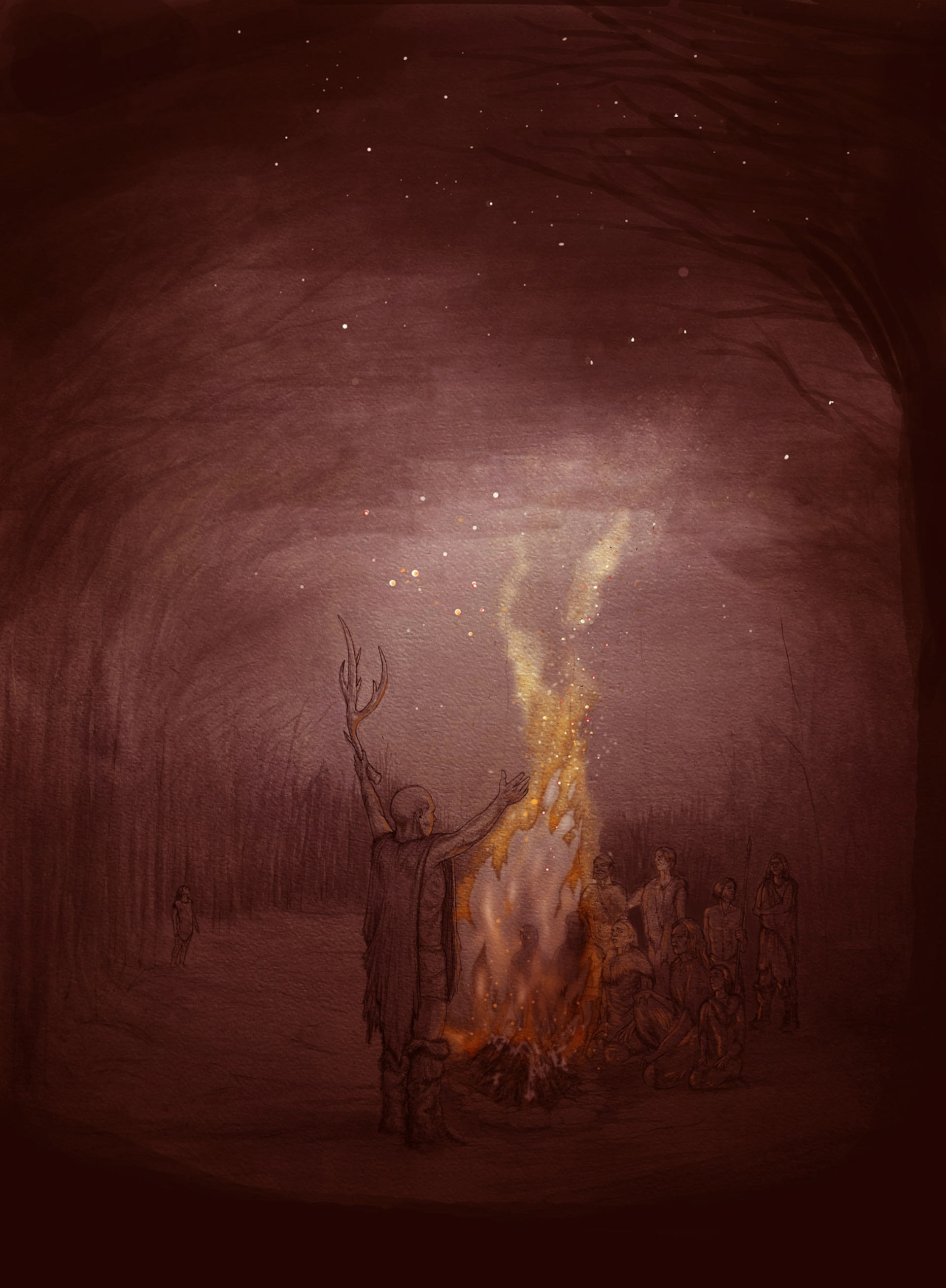
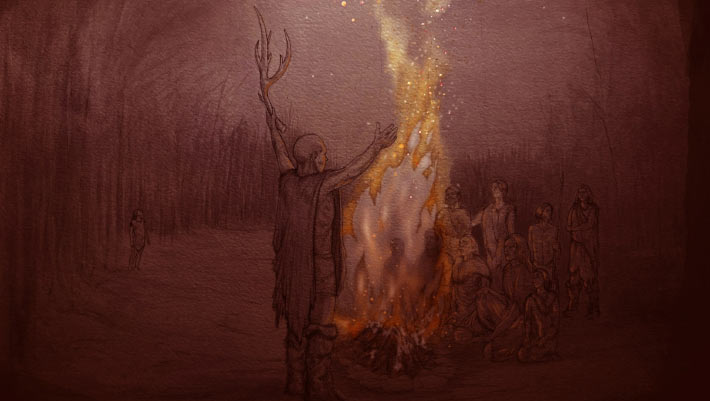
An artist’s impression of fire at Barnham around 400,000 years ago. Image credit: Craig Williams / The Trustees of the British Museum.
The capacity for generating and sustaining fire represents a pivotal advancement in hominin evolution. The presence of fire offered profound advantages, including enhanced thermoregulation, a defense mechanism against predatory fauna, and the facilitation of cooking, thereby broadening the spectrum of edible resources.
Existing archaeological records indicate the presence of fire in human-occupied locales extending back over a million years.
Nonetheless, pinpointing the precise epoch when hominins acquired the ability to actively produce fire has presented considerable analytical difficulties.
It is widely theorized that the initial engagement with fire likely involved the opportunistic utilization of naturally occurring wildfires, preceding the mastery of intentionally igniting flames.
Prior indications of early fire-making techniques were discovered at Neanderthal settlements in France, with artifacts dated to 50,000 years ago. These sites featured handaxes believed to have been employed in striking pyrite to produce sparks.
The novel findings, attributed to Professor Nick Ashton of the British Museum and the Institute of Archaeology at University College London, in collaboration with his esteemed colleagues, strongly imply that the practice of fire-making may have been prevalent at Barnham, within the United Kingdom, as early as 400,000 years ago.
The archaeological team identified heated sediments embedded within ancient soil strata, accompanied by flint handaxes bearing evidence of thermal fracturing.
While these geological indicators suggest the controlled application of fire within a hominin habitation, it is a third discovery that points towards deliberate fire ignition.
Two fragments of pyrite were recovered from the excavation area. The relative scarcity of this mineral in the region has led the investigative team to posit that its presence at Barnham was intentional, intended for the specific purpose of fire generation.
Collectively, these discoveries illuminate sophisticated behavioral patterns exhibited by the ancient hominins inhabiting the Barnham site.
For instance, these early peoples may have possessed an understanding of pyrite’s properties, integrating it into a rudimentary fire-making apparatus.
The development of such a capability would have conferred substantial benefits, including the capacity for enhanced food preparation and potentially fostering the evolution of technologies such as the production of adhesives for hafting tools, thereby contributing to significant leaps in hominin cognitive and behavioral development.
“The individuals responsible for fire production at Barnham 400,000 years ago were likely early Neanderthals, drawing inferences from the morphology of fossil remains from contemporaneous sites like Swanscombe in Kent and Atapuerca in Spain, which have even yielded ancient Neanderthal DNA,” commented Professor Chris Stringer, a paleoanthropologist at the Natural History Museum in London.
“This represents the most extraordinary discovery of my professional tenure, and I am exceptionally proud of the collaborative effort that culminated in this monumental conclusion,” stated Professor Ashton.
“It is truly astonishing that some of the earliest Neanderthal groups possessed knowledge concerning the properties of flint, pyrite, and tinder at such a remote period.”
“The ramifications of this find are profound,” articulated Dr. Rob Davis, a project curator at the British Museum.
“The ability to generate and manage fire stands as one of the most transformative milestones in human history, bestowing practical and social advantages that fundamentally reshaped human evolution.”
“This exceptional discovery effectively extends the timeline of this pivotal turning point by approximately 350,000 years.”
The findings of this study are detailed in a publication released today in the esteemed journal Nature.
_____
R. Davis et al. Earliest evidence of making fire. Nature, published online December 10, 2025; doi: 10.1038/s41586-025-09855-6