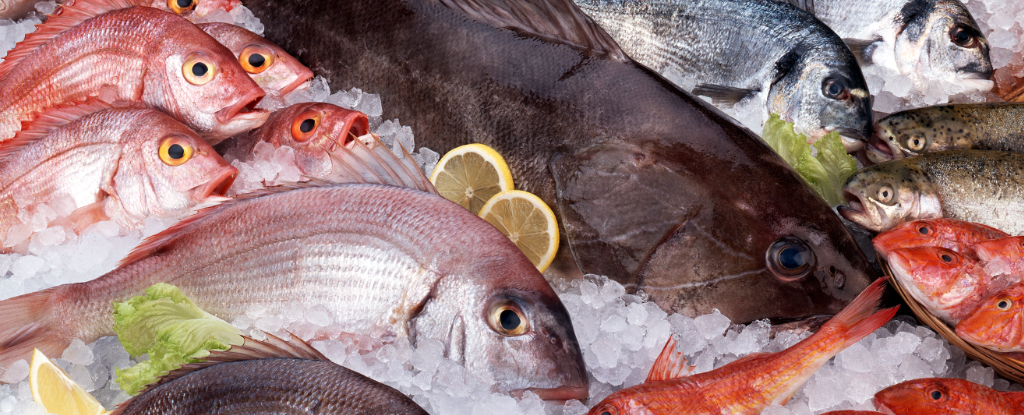
Individuals who consume seafood may inadvertently be partaking in species designated as endangered, owing to the prevalent issue of seafood misidentification. This phenomenon, known as fish mislabelling, represents a global concern where the nomenclature applied to a seafood product fails to correspond with its actual biological origin.
The process of verifying the provenance of seafood from its point of origin to the consumer’s plate is an undertaking fraught with logistical complexities, as fishery products frequently traverse the supply chains of multiple international jurisdictions. During these extensive transit periods, items can be erroneously identified as different species or deliberately rebranded with deceptive designations to enhance profit margins.
For instance, a more economical fish such as tilapia might be marketed under the appellation of a premium-priced fish, like red snapper, or a species on the brink of extinction could be deceptively presented as a more viably sourced alternative.
Beyond jeopardizing vulnerable marine populations, the practice of seafood mislabelling impedes consumers’ capacity to make well-informed and ethically sound dietary selections.
Investigating Seafood Deception in Calgary
To scrutinize this issue within the Canadian context, our recent scholarly investigation meticulously analyzed instances of mislabelling and the employment of ambiguous market nomenclature within both invertebrate and finfish categories – species possessing fins, such as cod, salmon, and tuna – sourced from Calgary between 2014 and 2020. This study marked a pioneering effort in Canada to conduct a comparative analysis between shellfish and finfish mislabelling.
Undergraduate students collected 347 finfish product samples and 109 shellfish samples, encompassing items like shrimp, octopus, and oysters, from various eateries and retail outlets in Calgary. These samples subsequently underwent genetic analysis utilizing a species-specific identifier known as a DNA barcode.
In Canada, governmental oversight of seafood nomenclature is managed by the Canadian Food Inspection Agency, which maintains an official Fish List. This directory delineates the permissible common appellations for the commercial labelling of fish products within Canada.
A seafood commodity was officially deemed mislabelled if it was marketed under a designation not corroborated by the Fish List for its genetically confirmed species. As an illustration, only one specific species is authorized for sale under the designation “salmon”: Atlantic salmon. Consequently, if sockeye salmon were offered for sale simply as “salmon,” without further qualification, it would be classified as mislabelled.
Prevalence of Mislabelling: One in Five Seafood Products Affected
Our findings revealed that mislabelling is pervasive within the Calgary marketplace, and that certain product names are disproportionately associated with species facing conservation challenges. The outcome indicated that one in five finfish samples and one in five shellfish samples did not align with their advertised identification. These statistics fall within the globally anticipated rates of seafood mislabelling.
The identification of mislabelled products by students was a frequent occurrence. Significant discoveries included:
- A complete absence of accurate labelling for 100 per cent of snapper and red snapper products. These were identified as either tilapia (accounting for 79 per cent) or a species of rockfish or snapper not legally permitted under those labels (representing 21 per cent).
- Nine samples designated as salmon were genetically identified as rainbow trout, a less expensive alternative.
- Three Pacific cod samples were determined to be Atlantic cod, a species currently classified as vulnerable by the International Union for Conservation of Nature.
- Two samples labelled as eel were identified as the critically endangered European eel.
- Cuttlefish, squid, and octopus were frequently misidentified as one another.
Conversely, certain seafood items demonstrated a higher degree of labelling accuracy. All examined samples of Atlantic salmon, basa, halibut, mackerel, sockeye salmon, and Pacific white shrimp were accurately represented.
The Detrimental Consequences of Mislabelling
The incidence of mislabelled seafood in Calgary carries profound and well-documented ramifications for public health, ecological conservation efforts, and the overall economic landscape.
As a notable illustration, a student procured “white tuna” at an establishment offering all-you-can-eat sushi, only to discover it was, in fact, escolar. Escolar, sometimes infamously referred to as the “laxative of the sea,” is known for its capacity to induce digestive distress due to its specific fatty acid composition affecting bodily functions. This particular fish has been implicated in instances where individuals have required hospitalization.
Numerous cases of mislabelling involved the substitution of a less valuable species for a more expensive product: tilapia being presented as snapper, or rainbow trout as Atlantic salmon. While corporate entities in locations such as Miami and Mississippi have faced penalties for such deceptive practices, the inherently globalized nature of fisheries presents significant obstacles to legal enforcement.
European eels are classified as critically endangered; however, these species were identified twice within the Calgary market by student researchers. A substantial global illicit trade network exists for European eels, and a Canadian firm was subjected to a fine in 2021 for the unlawful importation of these eels.
Although red snapper populations are experiencing significant decline in natural habitats, substituting them with tilapia does not contribute to the conservation objectives for snapper. Instead, it perpetuates a false impression of snapper’s abundance.
The situation becomes even more ambiguous when dealing with invertebrates such as shrimp, squid, and octopus. Unfortunately, the limited data available regarding their conservation status precludes any meaningful risk assessment.
Empowering Consumers: Steps to Mitigate Mislabelling Risks
For individuals who consume seafood, the possibility of being misled as a customer and unknowingly consuming threatened species exists. To diminish these risks, the following actions are recommended:
- Prioritize the purchase of whole, head-on finfish whenever feasible, as these are considerably more challenging to misrepresent in terms of species.
- Opt for seafood products that bear sustainable certifications, as these have demonstrated lower incidences of mislabelling.
- Select products that explicitly and precisely identify the species being offered.
- Advocate for legislative changes by contacting your parliamentary representatives to support the implementation of regulations designed to track seafood from its origin to the consumer. While Canada has made advancements in its regulatory framework, there remains room for further improvement.
This approach may necessitate an enhancement of one’s proficiency in fish identification; however, this represents a minor investment in exchange for safeguarding marine ecosystems, achieving potential cost savings on food purchases, and circumventing unexpected gastrointestinal emergencies.
Ambiguous Appellations Obscure At-Risk Species
To facilitate market operations, the official Fish List [permits the utilization of ambiguous terminology], a practice that allows a single name to be associated with multiple distinct species. For instance, “snapper” can encompass up to 96 different species, “tuna” can refer to 14, and “cod” to two. This provision is intended to assist vendors when closely related species are difficult to differentiate and is presumed to reduce mislabelling incidents.
Our observations indicated that seafood products carrying ambiguous designations were equally susceptible to mislabelling as those identified with precise names. This observation prompted an inquiry: which factor poses a greater detriment to conservation efforts, mislabelling or the use of ambiguous nomenclature? It is pertinent to note that the designation “tuna” could legally encompass both yellowfin tuna (classified as of least concern) and southern bluefin tuna (an endangered species).
A comprehensive statistical analysis demonstrated that ambiguous naming conventions played a more significant role in concealing threatened species than outright mislabelling. This finding is advantageous, as it suggests a viable avenue for consumer intervention.
Analogous to refusing a “mammal sandwich” at a dining establishment, why should consumers accept generic terms like “fish and chips?” By exercising informed purchasing decisions, such as opting for Pacific cod over generic “cod,” or yellowfin tuna over “tuna,” consumers can contribute to ensuring they are not inadvertently consuming species that are the marine equivalent of the giant panda.