Even if you’ve experienced the unfortunate sensation of a smartphone taking an unintended plunge into a toilet bowl, rest assured that such occurrences have historical parallels stretching back centuries.
However, unlike a modern mobile device, a small, personal journal believed to have belonged to a medieval German merchant found its way into a location that ensured its preservation in remarkably pristine condition for an extended period.
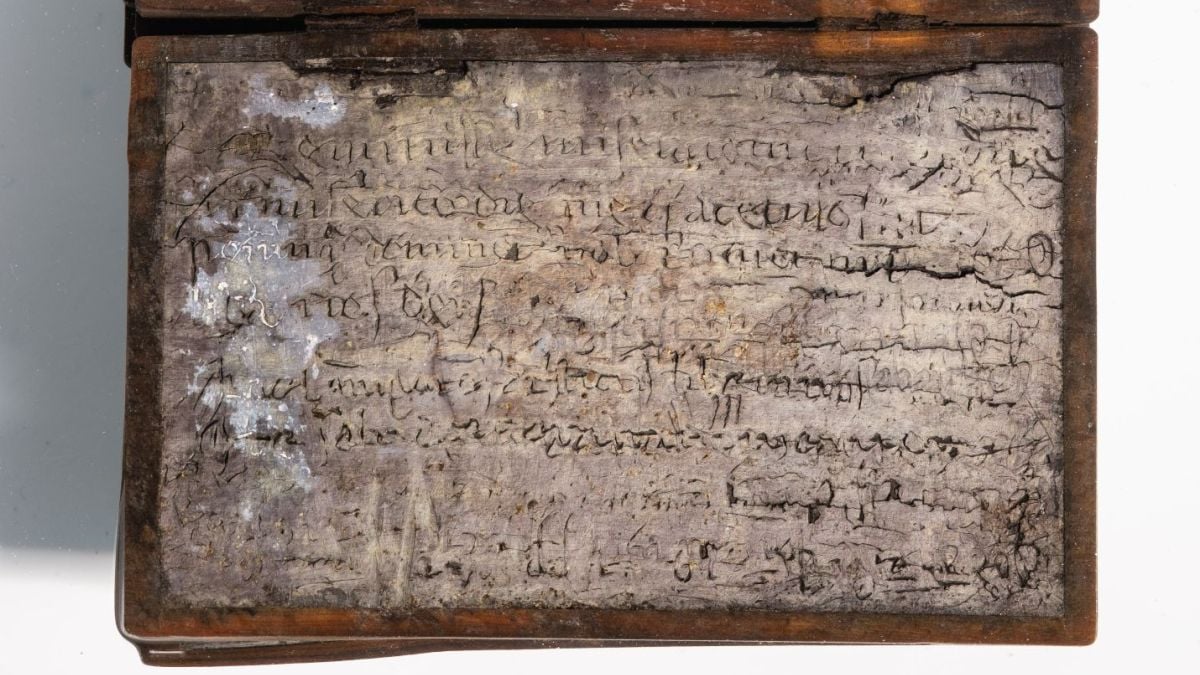
Initial assessments indicate that this diminutive ledger originates from approximately 700 to 800 years ago. Its extraordinary state of preservation leads researchers to anticipate that the inscriptions on its wax-coated leaves will be decipherable.
“While it may sound unconventional, latrines frequently prove to be veritable treasure troves for us archaeologists,” commented archaeologist Barbara Rüschoff-Parzinger, a cultural affairs officer with LWL in Germany.
“Comparable medieval artifacts have been unearthed in Lübeck and Lüneburg, where similarly saturated soil conditions contributed to their preservation. Nevertheless, no prior archaeological discovery has yielded an entire book in such a complete state as this instance.”
Organic materials such as wood and leather typically succumb to the erosive effects of time.
Their decomposition is usually hastened by exposure to oxygen and the action of bacteria that degrade biological matter, preventing their survival until preservation conditions can be met.
Waterlogged refuse sites, including cesspits, middens, and latrines, represent a notable exception. In these environments, reduced oxygen levels can inhibit the decay processes that would otherwise occur more vigorously in an oxygen-rich setting.
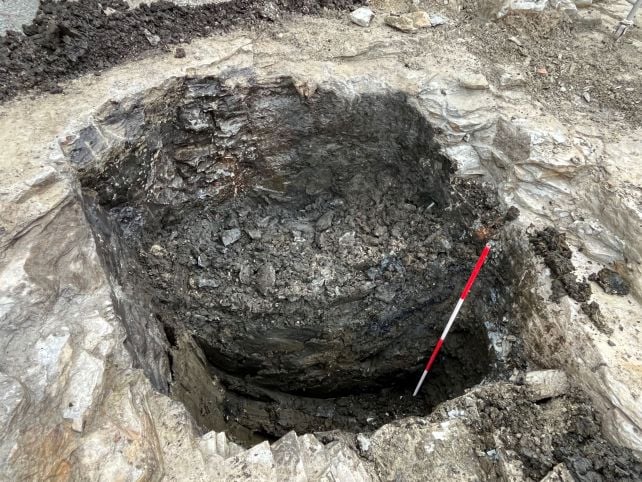
Though excavating a medieval bog might not epitomize a glamorous profession, it is precisely for this reason that ancient toilets can serve as archaeological goldmines.
This particular waste receptacle was uncovered during archaeological investigations in Paderborn, Germany, and is estimated to date from circa the 13th or 14th century.
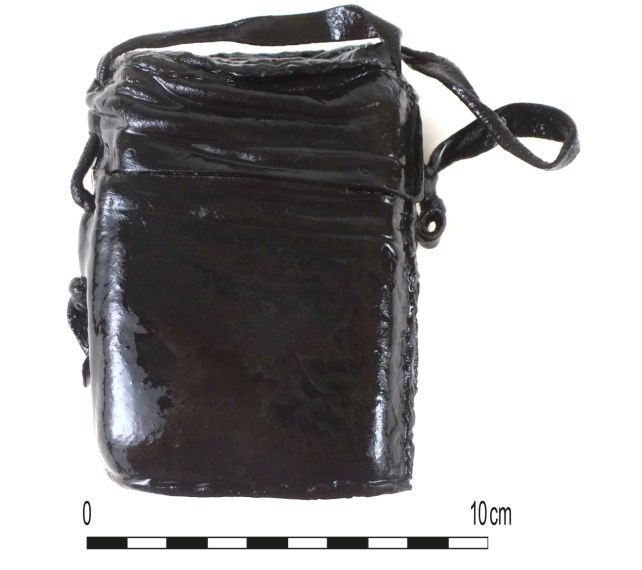
Emerging from the still noticeably malodorous remnants of numerous medieval digestive processes was a compact, oblong artifact measuring 10 by 7.5 centimeters (4 by 3 inches).
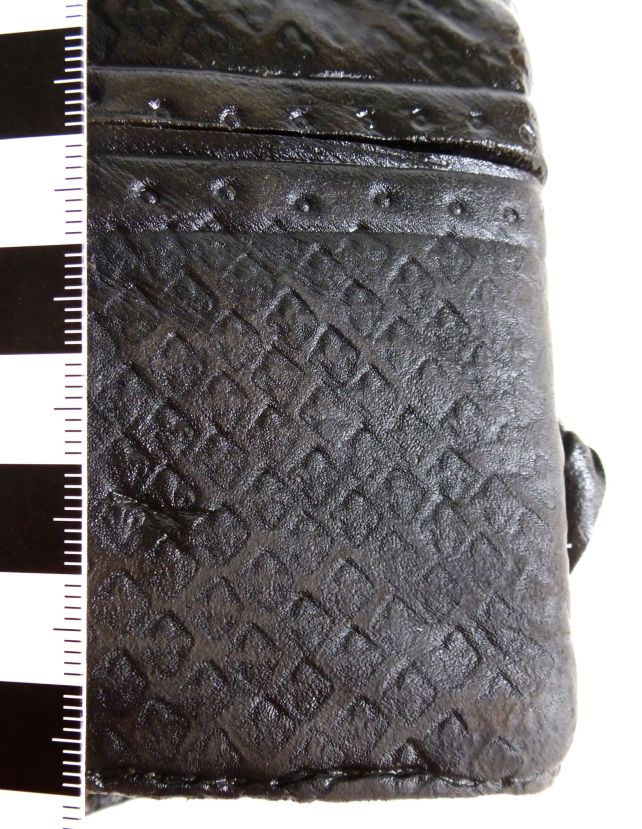
Upon closer scrutiny, it was identified as a wax tablet book, a customary medieval instrument for recording brief notations, characterized by a cover crafted from exquisitely embossed leather enclosing a series of wooden pages coated with wax.
A sharp stylus was employed to etch characters into the pliable wax; conversely, the opposite end of the stylus featured a blunted, spatula-like implement designed to eradicate the wax, thereby preparing a clear surface for subsequent entries.
“The authorship of this manuscript and its intended function remain subjects of inquiry. Preliminary hypotheses suggest that a merchant from Paderborn might have been the author, documenting commercial dealings and capturing thoughts in a concise format,” stated archaeologist Sveva Gai of LWL.
“Individuals involved in trade possessed a degree of education; unlike the broader populace, they possessed literacy skills.”
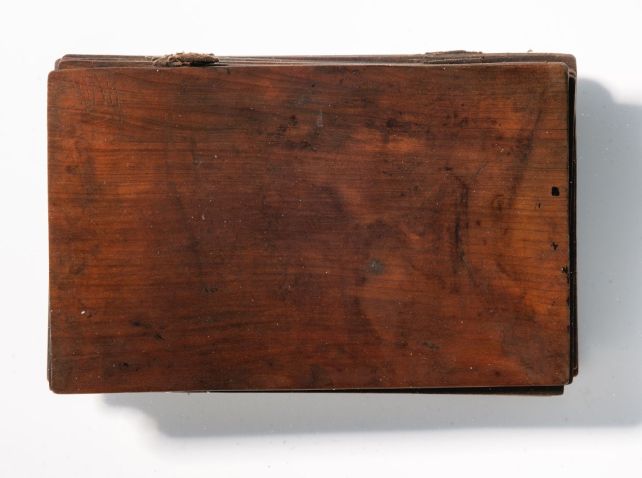
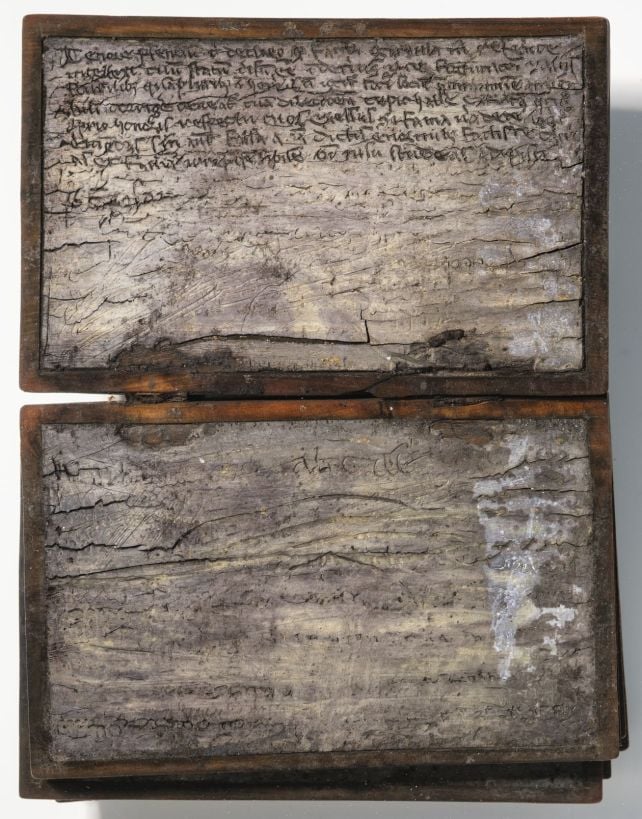
Following meticulous cleaning, the full extent of the discovery became apparent. The volume comprises 10 pages; eight of these are double-sided, with the two terminal pages being single-sided.
And on numerous pages within, the compact chirography of the original proprietor is still discernible.
“Only the exterior of the book necessitated cleaning, as the interior leaves were so tightly secured that they remained free of detritus,” observed conservator Susanne Bretzel from LWL.
“Furthermore, the wood had not warped, ensuring the wax remains intact and the written content is readily legible.”
An examination of the script indicated that it was likely inscribed by a single individual, who apparently exhibited a degree of carelessness in their erasures, as some passages are superimposed over the faint impressions of an antecedent text.
Concurrently, the leather binding, adorned with an elegant fleur-de-lis design, and the script’s language—Latin—suggest an author of a more elevated social stratum.
The researchers face a significant undertaking. They aim to ascertain more about the book’s owner by determining its precise age and the constituent materials employed in its fabrication.
In the interim, despite its excellent legibility and exceptional condition, deciphering the content of the pages will also demand considerable meticulous effort.
“The transcription presents considerable challenges, even for seasoned specialists in the field,” elaborated Rüschoff-Parzinger.
“While individual terms are recognizable, the complete transcription will necessitate substantial time, as certain words may have undergone alteration due to erroneous spellings.”
Ongoing work continues at the excavation site, but additional indicators suggest the lavatory might have belonged to a more affluent establishment; it contained fragments of silk, which the researchers posit were utilized as bidets by the upper echelons of society.
Meanwhile, we modern commoners contend with accumulations of wet-wipe fatbergs.