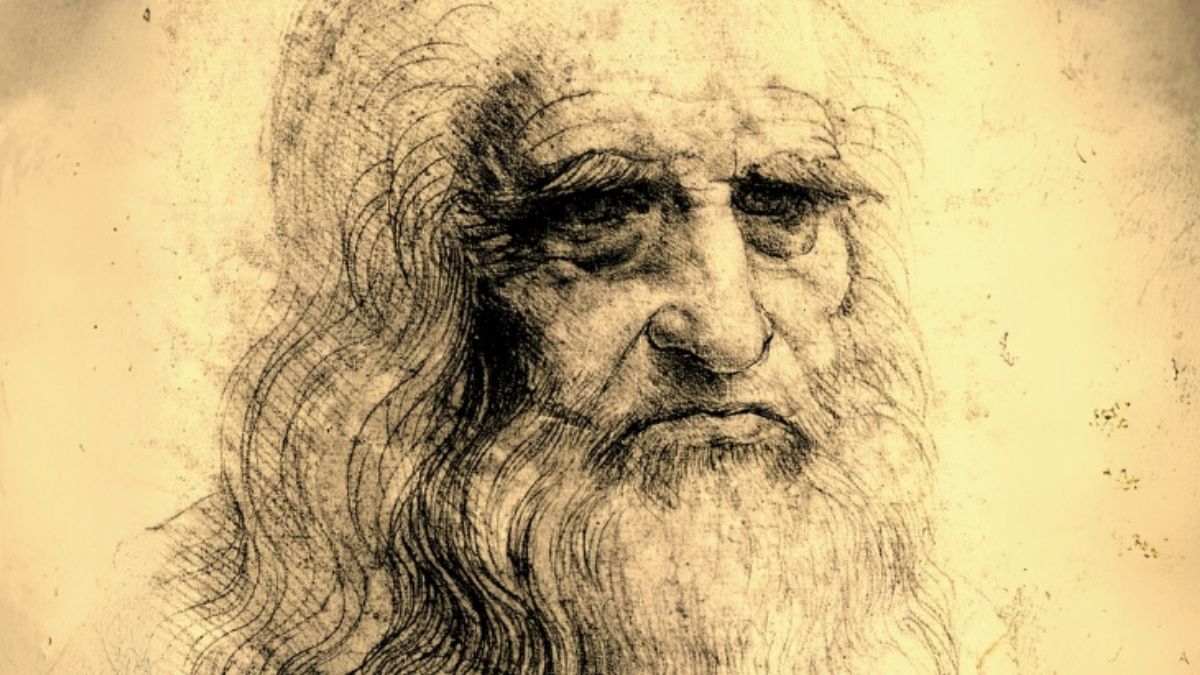
Researchers affiliated with the ambitious Leonardo da Vinci DNA Project believe they may have successfully obtained a DNA sample originating from the renowned artist and inventor himself.
These preliminary findings have been documented in a preprint paper, and additional analyses are requisite to ascertain if this indeed represents da Vinci’s genetic material from over five centuries past.
The published work purports to offer “clues, not conclusions,” as stated by the investigation team, yet it undeniably demonstrates the feasibility of isolating significant biological traces from venerable and delicate historical artifacts.
The innovative methodology developed by the scientific team possesses the capability to retrieve DNA from a diverse array of sources—including humans, flora, microbial organisms, fauna, viruses, and parasites—from the wax seals found on antique correspondence and by leveraging the inherent porous nature of paper.
A statement from the Leonardo DNA Project’s press release asserts, “In essence, items previously presumed to be devoid of biological information have been discovered to function as living imprints of their surroundings.”
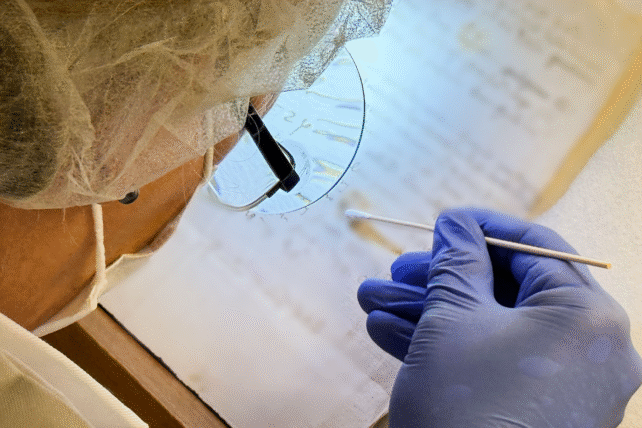
Within the scope of the new preprint study, the investigators detail their meticulous process of gently swabbing a chalk drawing attributed to da Vinci, titled the Holy Child.
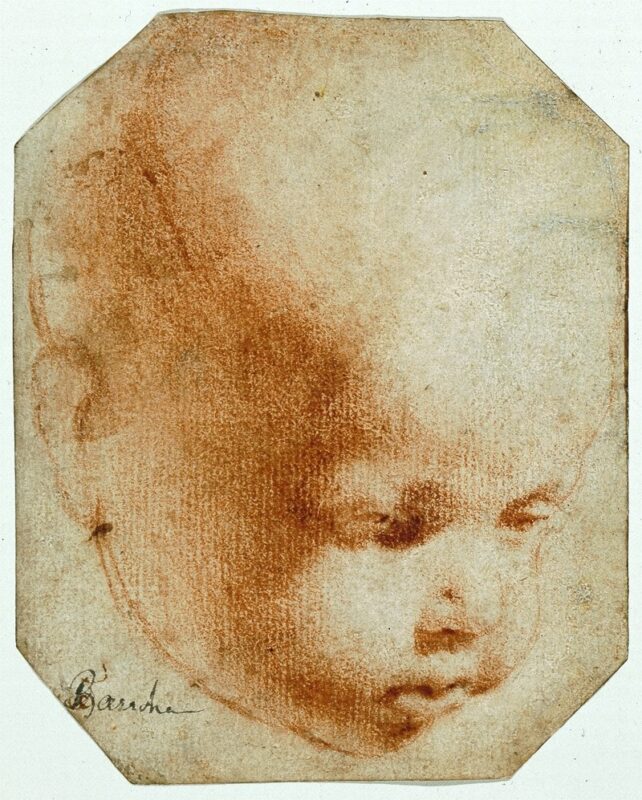
Subsequently, employing advancements in next-generation sequencing technologies, they succeeded in isolating biological data, encompassing that of citrus trees cultivated within the Medici gardens of Tuscany, alongside human DNA exhibiting suboptimal quality.
The precise origin of this extracted DNA remains indeterminate. It is plausible that it belongs to the Renaissance master himself, or perhaps to individuals who subsequently interacted with the artwork.
What has been definitively established is that a portion of the recovered DNA contains Y chromosome markers, signifying that the genetic material originated from a male individual. This individual appears to have belonged to a genetic lineage prevalent in the Mediterranean basin, particularly concentrated in central and southern Italy, which aligns with Tuscany, the region from which Leonardo hailed.
Upon swabbing other objects associated with da Vinci, such as a 500-year-old letter penned by a relative, the researchers identified “a shared Y-chromosomal signal.” Notably, this specific signal was not detected in artworks created by other prominent European masters of that era, as detailed in their findings. This discovery is documented.
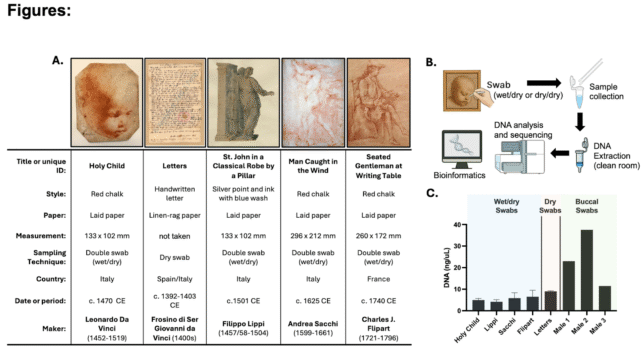
These outcomes suggest a common genetic thread connecting da Vinci-related artifacts, meriting more extensive investigation. The research contingent now intends to swab additional artworks and objects demonstrably linked to da Vinci for comparative analysis.
Subsequently, these genetic profiles will need to be correlated with confirmed living descendants of the celebrated Renaissance artist.
The overarching objective of the DNA project is to definitively identify da Vinci’s final resting place and to meticulously reconstruct his genome from centuries ago.
Jesse Ausubel, Chair of the project and affiliated with The Rockefeller University, has stated, “Even though confirmed DNA matches with Leonardo are still on the horizon, success is now an inevitability in the sense that a critical threshold has been surpassed.”
For a period approaching a decade, project investigators have diligently pursued the tracing of da Vinci’s ancestral lineage through preceding and subsequent generations. They have recently identified a small number of living descendants and have successfully charted a familial lineage extending back to the year 1331.
Historical accounts indicate that da Vinci’s remains are interred in a modest chapel situated in France’s Loire Valley; however, not all scholarly consensus supports this as his ultimate burial site. Currently, researchers are engaged in the excavation of a da Vinci family tomb located in Italy, with the express purpose of obtaining genetic material from his relatives. This excavation is underway.
Ausubel further commented, “The project has successfully established a robust ‘scaffold,’ serving as a foundational reference for the identification of microbial or DNA ‘signatures’ present on antiquated artworks or documents.”
“The insights and pioneering techniques advanced by this initiative possess the capacity, and indeed will undoubtedly be applied, to illuminate the lives of other significant historical figures.”
The preprint manuscript is accessible on bioRxiv.