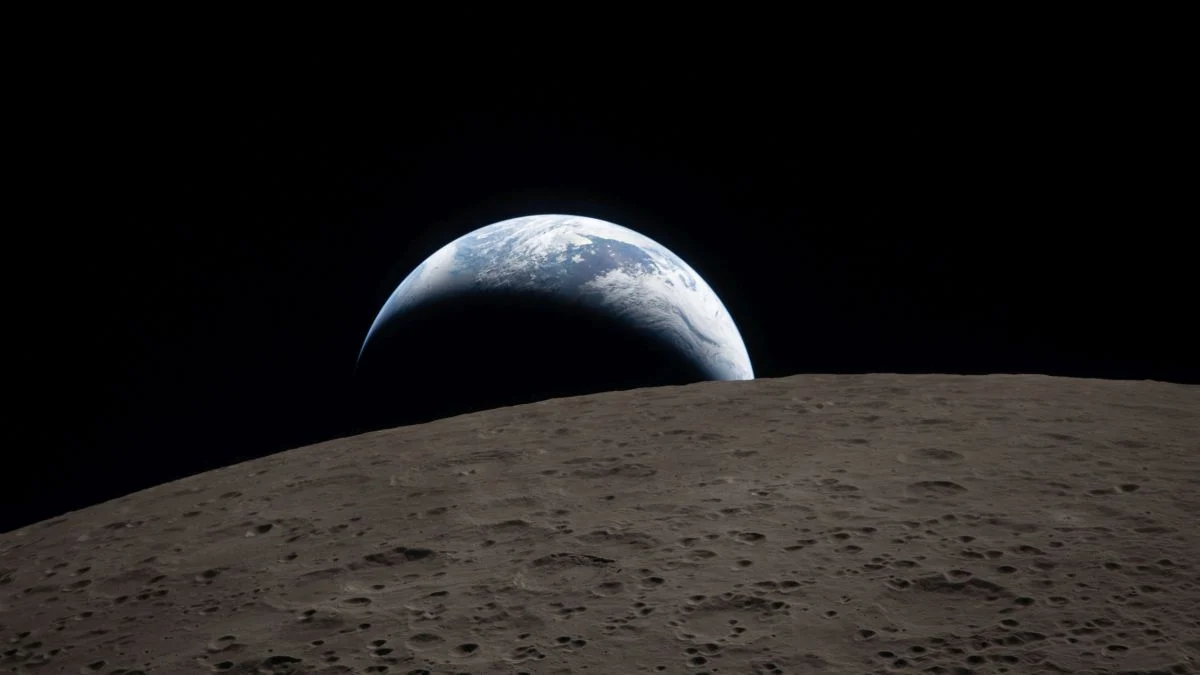
Following an unprecedented circumlunar trajectory that propelled four astronauts to the furthest points from Earth ever reached by humankind, the Artemis II contingent has transmitted remarkable photographic records of the Moon’s hidden hemisphere.
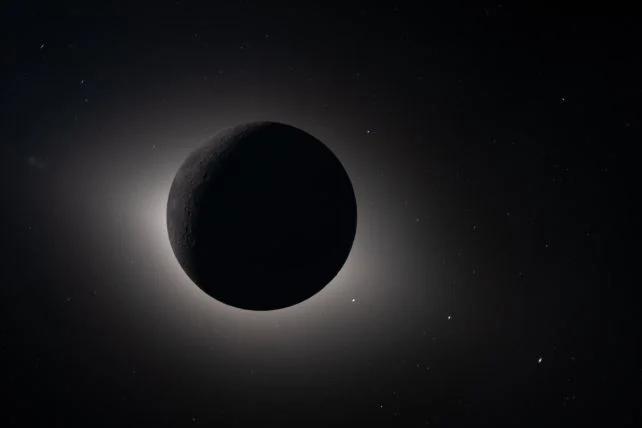
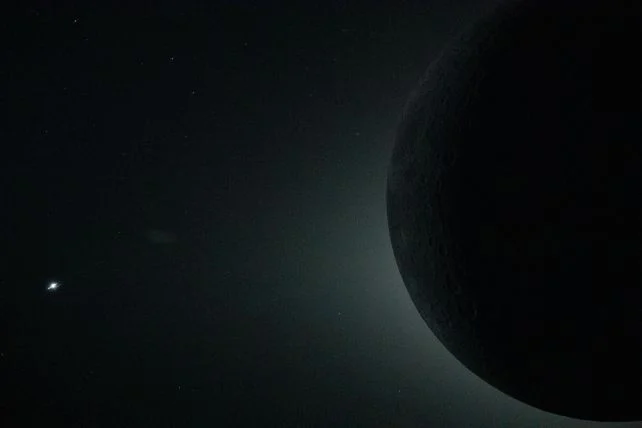
These captured visuals present compelling depictions of Earth emerging from behind the lunar disk at both its descent and ascent; a seldom-observed celestial phenomenon manifesting as an in-space solar eclipse when the Moon interposed itself between the Orion spacecraft, designated Integrity, and the Sun; and highly detailed portrayals of the far side’s geological features, which are extensively marked by impact craters in stark contrast to the relative absence of such formations on the near side.
The orbital maneuver, spanning seven hours, was executed on Monday, April 6, 2026. This period encompassed a significant 40-minute communication interruption, attributed to the Moon’s physical obstruction of the signal pathway.
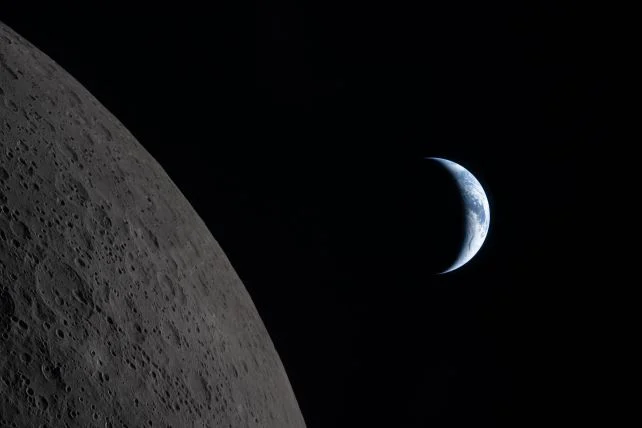
During Integrity‘s passage on the far side of the Moon, the four members of the crew – Commander Reid Wiseman, Pilot Victor Glover, and Mission Specialists Christina Koch and Jeremy Hansen – engaged in the documentation of the lunar far side through photography.
It was during this specific phase of the expedition that the spacecraft achieved its closest proximity to the Moon, a mere 6,545 kilometers (4,067 miles) from its surface, preceding its ultimate departure to a maximum distance of 406,771 kilometers from Earth.

Furthermore, absent the Sun’s intense glare, the crew was afforded the opportunity to observe the subtle scintillations from six meteoroid impacts on the lunar terrain.
The lunar far side represents a region of profound scientific intrigue due to its striking divergence from the near side. The near hemisphere is characterized by extensive expanses of large, flat, dark plains composed of volcanic basalt, which originated from subsurface magma flows millions of years ago. In contrast, the far side exhibits minimal basaltic resurfacing and is extensively marred by impact craters.
The underlying causes for this disparity remain an unresolved enigma, awaiting further investigation. The deployment of advanced observational technologies may prove instrumental in uncovering clues to this geological puzzle.
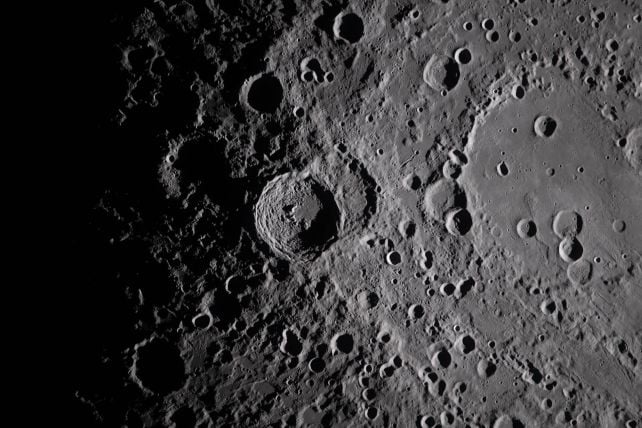
Experts on Earth, according to NASA, are presently engaged in the meticulous analysis of the transmitted imagery.
“Throughout the lunar flyby, the crew meticulously documented impact craters, ancient volcanic flows, and surface fissures that will significantly contribute to scientists’ understanding of the Moon’s evolutionary geology,” NASA stated in a recent communiqué on April 7.
“They systematically monitored variations in color, brightness, and texture across the lunar landscape, observed an earthset and earthrise phenomenon, and captured photographic records of the Sun’s corona during the solar eclipse event.”
The Orion spacecraft is presently en route back to Earth, with a planned splashdown anticipated at 00:07 UTC on Saturday, April 11, 2026, contingent upon favorable environmental conditions. This particular phase is poised to be the most perilous aspect of the mission, involving a high-velocity atmospheric reentry and subsequent ocean landing in the Pacific, off the coast of San Diego.
The data acquired during this mission will serve as a crucial foundation for the subsequent phases of the Artemis program. Lunar observations will enhance our comprehension of the celestial body itself, while the nearly ten-day transit will facilitate the refinement of spacecraft and mission parameters for future astronautical endeavors.
The subsequent phase of the program, Artemis III, is currently projected for the year 2027. This mission will be conducted in closer proximity to Earth, involving the ascent of a crew within the Orion spacecraft atop the Space Launch System (SLS) rocket to low Earth orbit for the rigorous testing of rendezvous and docking procedures with commercial spacecraft slated for future lunar landing operations.
Artemis IV, the fourth iteration of the program, is presently targeting an early 2028 timeframe. NASA indicates that this mission’s objective is to achieve a crewed landing in the vicinity of the Moon’s south pole, where astronauts will undertake scientific investigations and gather material samples.
Irrespective of these forthcoming stages, the scientific yield generated by the Artemis II crew represents an exceptionally valuable collection of data and insights.
“Our four Artemis II astronauts – Reid, Victor, Christina, and Jeremy – embarked on an extraordinary voyage around the Moon, bringing back imagery of such exceptional quality and scientific richness, that they are destined to inspire countless future generations,” stated Nicky Fox, associate administrator for NASA’s Science Directorate.