The realm of solid-state chemistry has yielded a remarkable array of materials possessing characteristics absent in the natural world. A prime illustration is high-temperature superconductivity observed in copper-oxide compounds, known as cuprates. This phenomenon diverges significantly from the superconductive behavior of naturally occurring metals and alloys, and is frequently categorized as unconventional. Beyond cuprates, unconventional superconductivity is also manifested in other synthetically engineered substances, including iron-based and heavy-fermion superconductors. Researchers at Ames National Laboratory have now identified compelling evidence indicating unconventional superconductivity within synthetic Rh17S15 samples. Intriguingly, this same compound exists in nature as the mineral miassite.

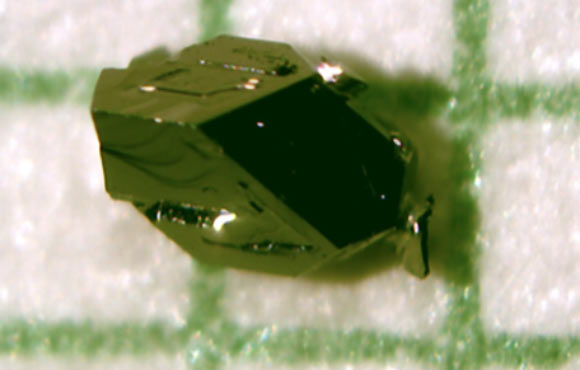
Miassite stands out as one of a select group of only four minerals found in the natural environment that exhibit superconductive properties when cultivated in a laboratory setting. Furthermore, it is currently the sole mineral identified capable of demonstrating unconventional superconductivity in its pure, synthetic form. The image is credited to Paul Canfield.
Superconductivity is defined as a material’s capacity to conduct electrical current without any dissipation of energy.
The utility of superconductors extends to diverse applications, encompassing medical imaging apparatuses like MRI machines, the transmission of electrical power through cables, and the development of quantum computing systems.
While the principles governing conventional superconductors are well-established, they are characterized by relatively low operating temperatures.
The critical temperature denotes the uppermost thermal threshold at which a substance can exhibit superconductive behavior.
The discovery of unconventional superconductors emerged in the 1980s, with many of these materials operating at significantly elevated critical temperatures.
“All these materials are grown in the lab,” stated Ruslan Prozorov, a researcher affiliated with Ames National Laboratory.
“This fact has led to the general belief that unconventional superconductivity is not a natural phenomenon.”
“Identifying superconductors within the natural world presents challenges, as most superconducting elements and compounds are metallic in nature and possess a propensity to interact with other elements, such as oxygen.”
“Miassite presents itself as a noteworthy mineral for a multitude of reasons, one of which is its intricate chemical composition.”
“One might intuitively assume that such a material would be the product of deliberate synthesis during a targeted investigation, and could not possibly occur naturally. However, it has been found that it does indeed exist in nature.”
The cultivation of miassite crystals was integral to a broader initiative aimed at identifying compounds that merge refractory elements (such as Rh, or rhodium) with volatile elements (like S, or sulfur).
“In contrast to the inherent characteristics of their pure elemental forms, we have refined our techniques for utilizing mixtures of these elements, facilitating low-temperature crystal growth with minimal vapor pressure,” explained Professor Paul Canfield, a physicist at Ames National Laboratory and Iowa State University.
“It is akin to discovering a secluded fishing locale teeming with abundant, large fish. Within the Rh-S system, we identified three novel superconductors.”
“Furthermore, through meticulous analysis, we ascertained that miassite exhibits unconventional superconductivity.”
The research team employed a trio of distinct experimental methods to ascertain the fundamental nature of miassite’s superconductivity.
The principal diagnostic technique utilized is known as the London penetration depth. This measurement quantifies the extent to which a faint magnetic field can permeate the bulk of the superconductor from its surface.
In the case of conventional superconductors, this penetration depth remains essentially constant at low temperatures.
Conversely, for unconventional superconductors, this depth demonstrates a linear variation with temperature.
The results of this diagnostic test indicated that miassite functions as an unconventional superconductor.
An additional experimental procedure undertaken by the team involved the intentional introduction of imperfections into the material.
“This method constitutes a signature technique that his team has consistently applied over the past decade. It entails exposing the material to high-energy electrons,” remarked Dr. Prozorov.
“This process dislodges ions from their lattice positions, thereby generating defects within the crystalline structure.”
“Such structural disorder can induce alterations in the material’s critical temperature.”
Conventional superconductors display a lack of sensitivity to non-magnetic disorder, meaning this particular test would yield negligible or no discernible changes in the critical temperature.
Unconventional superconductors, however, exhibit a pronounced susceptibility to disorder; the introduction of defects leads to modifications or suppression of the critical temperature. This phenomenon also influences the material’s critical magnetic field.
In the case of miassite, the researchers observed that both the critical temperature and the critical magnetic field responded in a manner consistent with the predicted behavior of unconventional superconductors.
The in-depth investigation of unconventional superconductors enhances scientific comprehension of their underlying operational mechanisms.
“This is a significant development, as elucidating the fundamental principles governing unconventional superconductivity is paramount for the realization of economically viable applications of superconductors,” commented Dr. Prozorov.
This groundbreaking discovery has been documented in a scientific publication featured in the journal Communications Materials.
H. Kim et al. 2024. Nodal superconductivity in miassite Rh17S15. Commun Mater 5, 17; doi: 10.1038/s43246-024-00456-w