

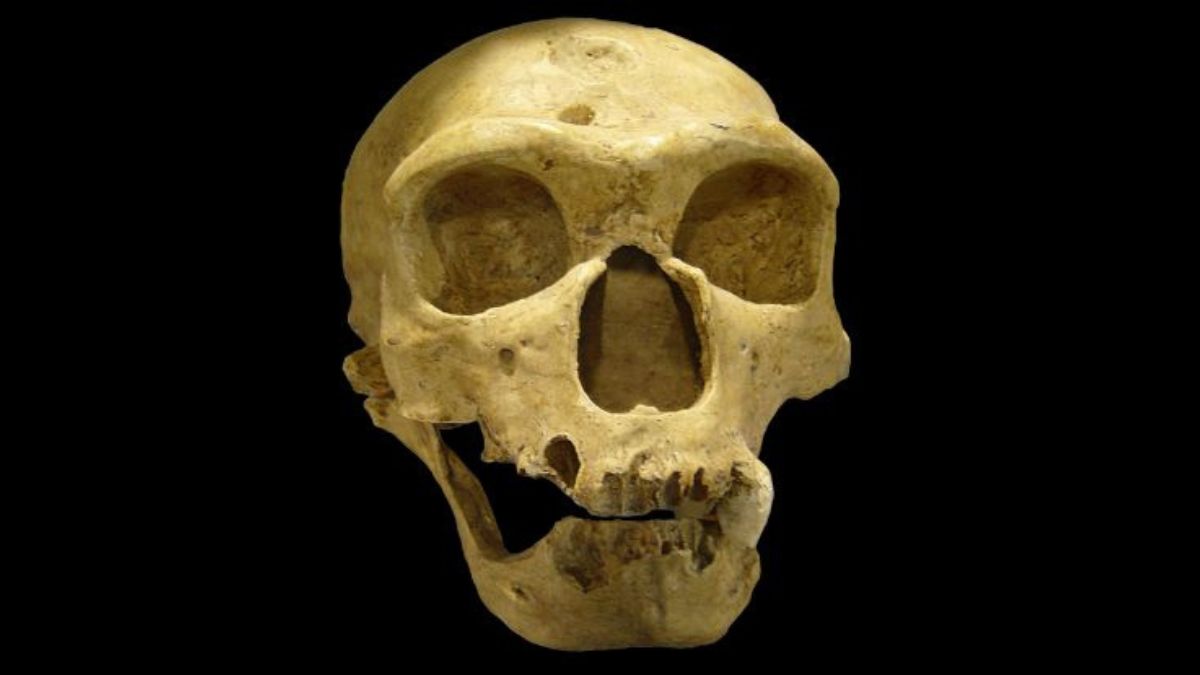
Evidence indicates that Neanderthals might not have faced a complete cessation of existence, particularly from a genomic perspective, according to recent scholarly investigations.
A novel computational framework has examined a compelling hypothesis: the gradual disappearance of Neanderthals was not a definitive extinction event, but rather a process of genetic assimilation into a more populous hominid group.
That group, of course, is us.
The findings suggest that the prolonged period of interspecies interaction between Homo sapiens and Neanderthals could have culminated in near-total genetic subsumption over a span of 10,000 to 30,000 years.
While this model is generalized and not geographically specific, it furnishes a “well-supported rationale for the observed decline of Neanderthals,” assert computational chemist Andrea Amadei from the University of Rome Tor Vergata and his collaborators in their published work.
The notion that Neanderthals and Homo sapiens engaged in interbreeding was once considered a fringe idea. However, contemporary genomic studies and archaeological findings now provide substantial corroboration that our distinct lineages engaged in reproductive activities across Eurasia for millennia.
Current data reveals that individuals of non-African descent carry approximately 1% to 4% of their deoxyribonucleic acid originating from Neanderthals.
The precise reasons behind the Neanderthals’ disappearance from Earth’s stage around 40,000 years ago remain unknown. Nevertheless, prevailing expert consensus points to a confluence of contributing elements, potentially including shifts in environmental conditions, a reduction in genetic variability, or competitive pressures exerted by Homo sapiens.

Amadei and his co-authors, evolutionary geneticist Giulia Lin from the Swiss Federal Institute of Aquatic Science and Technology, and ecologist Simone Fattorini from the University of L’Aquila in Italy, have put forth a model that does not invalidate these other potential factors.
However, their model posits that genetic drift played a significant role, even under the assumption that the Neanderthal genetic material incorporated by our species offered no evolutionary advantage.
As is characteristic of all theoretical models, this latest one is predicated on certain inherent limitations in its assumptions. It employs the reproductive rates observed in contemporary hunter-gatherer societies to project the rate at which smaller Neanderthal groups might have been integrated into the much larger Homo sapiens population, considering the frequency of past interbreeding.
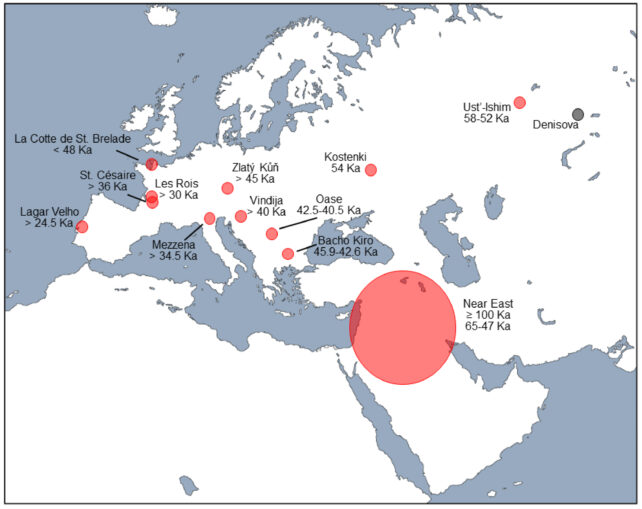
The outcomes derived from this model are congruent with recent archaeological findings and support a growing body of evidence suggesting that the Neanderthal decline in Europe was a drawn-out process rather than an abrupt event.
It now appears that Homo sapiens began their exodus from Africa considerably earlier than previously theorized, with multiple migration waves reaching Europe, potentially commencing over 200,000 years ago.
With each successive wave of migration, the incoming populations assimilated indigenous Neanderthal communities, progressively diluting their genetic distinctiveness, akin to grains of sand being drawn into the vast ocean.
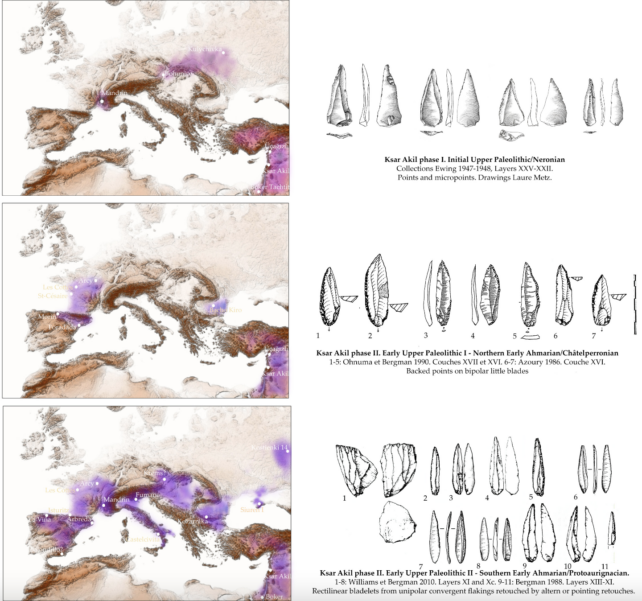
Presently, certain scholars propose that the commonalities between Homo sapiens and Neanderthals outweigh their divergences. These researchers advocate for classifying our lineages not as separate species, but as distinct populations within a unified “common human species.”
Neanderthals demonstrated remarkable adaptability and sophisticated cognitive abilities. Their repertoire included the creation of intricate tools, the production of cave art, and the proficient use of fire. Regarding communication, it is highly probable that their vocalizations and symbolic expressions extended far beyond rudimentary sounds.
While Neanderthal societies and cultures may have ceased to exist as distinct entities, their genetic heritage persists within our own DNA.
They are not merely our ancient relatives; they are also foundational to our lineage.
The findings of this investigation have been disseminated in the journal Scientific Reports.

_based_on_fossil_samples_from_indicated_sites.jpg)