
A novel daily oral therapeutic agent has demonstrated superior efficacy in managing weight and glycemic control compared to existing pharmaceutical options, according to findings from a recent clinical investigation. This compound, identified as orforglipron, holds the potential to significantly alter the landscape of the burgeoning oral medications market for weight management.
The introduction of semaglutide, an injectable medication for weight loss marketed under brand names such as Wegovy and Ozempic, signified a pivotal transformation in the weight-loss drug sector upon its market debut a few years prior.
Semaglutide belongs to the class of glucagon-like peptide-1 (GLP-1) receptor agonists. These pharmacological entities function by replicating the effects of the endogenous gut hormone GLP-1, which is naturally released shortly after a meal.
Notwithstanding the widespread clinical application of semaglutide, a primary limitation of this drug lies in its administration via subcutaneous injection, typically in the abdomen, thighs, or upper arm. This mode of delivery can present considerable challenges for individuals with a phobia of needles or those hesitant to self-administer due to perceived inconvenience.
An additional logistical drawback associated with injectable GLP-1 medications pertains to their stringent requirement for refrigeration throughout the entire supply chain. This aspect can introduce substantial obstacles, particularly in resource-limited settings within low- and middle-income nations.
It is precisely these inherent difficulties that have prompted researchers and pharmaceutical developers to explore the therapeutic potential of orally administered formulations of semaglutide.
Current investigational data suggests that oral semaglutide exhibits considerable effectiveness. However, its administration necessitates strict adherence to taking the medication on an empty stomach, followed by a mandatory waiting period of 30 minutes before consuming any food or beverages.
Beyond its substantial manufacturing costs, oral semaglutide also presents issues related to suboptimal bioavailability when contrasted with its injectable counterpart. This translates to a minimal absorption rate, with only approximately 1% of the ingested dose becoming available to exert its intended physiological effects.
Nevertheless, a recently concluded phase 3 clinical trial has provided compelling evidence that a new class of oral weight-loss pill may have successfully circumvented these limitations, demonstrating enhanced efficacy relative to presently available oral semaglutide products.
Oral weight-loss pill
The comprehensive 52-week phase 3 clinical study enrolled 1,698 adult participants diagnosed with type 2 diabetes, spanning across six different countries. The primary objective was to conduct a comparative analysis of the efficacy of extant oral semaglutide formulations against orforglipron, which is also administered as a once-daily tablet.
The principal efficacy endpoint the investigators sought to assess was the reduction in HbA1c levels. This specific blood test serves as a critical indicator of average blood glucose concentrations over a three-month period and is considered the standard metric for evaluating diabetes management. A diagnosis of diabetes is typically established when HbA1c readings are at or above 6.5%.
Beginning from a baseline average HbA1c of 8.3%, the trial data revealed that following a 52-week treatment duration, orforglipron successfully achieved an average reduction of 1.71–1.91% in HbA1c levels. In contrast, oral semaglutide resulted in a comparatively smaller reduction of 1.47%.
Orforglipron not only successfully met the study’s predetermined objective of demonstrating comparable efficacy to oral semaglutide but moreover exhibited superior performance in reducing blood sugar levels. Furthermore, participants receiving orforglipron experienced more significant weight loss, averaging between 6.1kg and 8.2kg, compared to the 5.3kg observed in the semaglutide treatment group.
However, a notable concern that emerged from the trial findings pertained to the issue of tolerability.
Adverse gastrointestinal effects, such as nausea, emesis, diarrhea, and constipation, are known potential side effects associated with GLP-1 receptor agonist medications. The findings from this recent investigation indicated that approximately 59% of participants treated with orforglipron reported experiencing such symptoms, a figure substantially higher than the 37–45% reported by those receiving semaglutide.
This disparity in reported side effects might be attributable to the more pronounced daily fluctuations in drug concentrations observed with orforglipron. Consequently, an estimated 10% of participants undergoing orforglipron treatment elected to discontinue their therapy due to adverse reactions. This discontinuation rate contrasts with the 4-5% observed among individuals receiving semaglutide.
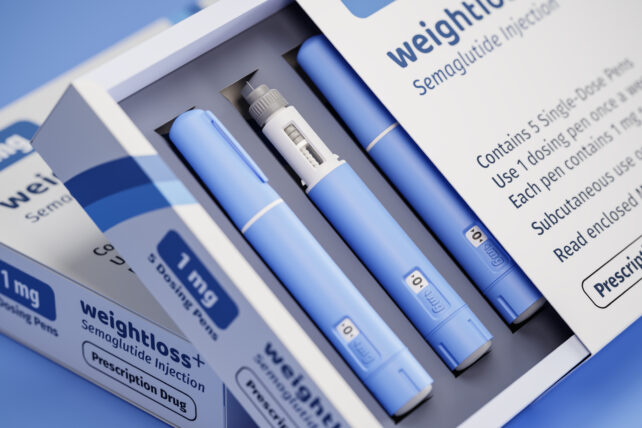
Direct comparative trials examining injectable GLP-1 medications against orforglipron have not yet been conducted. Nevertheless, the magnitude of weight loss observed in this study involving individuals with type 2 diabetes is generally consistent with the outcomes previously documented with injectable GLP-1 therapies.
Market implications
The outcomes derived from this clinical trial suggest that orforglipron, a product developed by Eli Lilly, can be regarded as a formidable competitor to semaglutide.
A particularly noteworthy characteristic of orforglipron is its classification within a novel drug category known as small-molecule therapeutics. This designation signifies that it is a synthetic chemical compound of sufficiently small size to facilitate direct absorption through the gastrointestinal tract lining. Subsequently, it gains the capacity to interact with GLP-1 receptors, despite its molecular structure not closely resembling that of the natural GLP-1 hormone.
In contrast, oral semaglutide is categorized as a peptide-based drug. This implies that its molecular architecture, composed of amino acids (fundamental protein constituents), closely mirrors the structure of the endogenous GLP-1 hormone.
Being a small-molecule drug, orforglipron offers advantages in terms of both reduced manufacturing costs and simplified production processes when compared to peptide-based pharmaceuticals like semaglutide.
Furthermore, similar to oral semaglutide, it does not necessitate refrigeration. This attribute confers a significant logistical advantage over injectable GLP-1 formulations, presenting a potentially crucial factor for enhancing accessibility in low- and middle-income regions where the integrity of cold chain infrastructure can be unreliable.
Nevertheless, empirical data on how orforglipron will fare against oral semaglutide within the broader marketplace remains to be established.
While this most recent trial has underscored its superiority in glycemic regulation and weight reduction, the elevated incidence of adverse effects and subsequent treatment discontinuations could potentially temper widespread enthusiasm. In a highly saturated and competitive therapeutic arena, sustained patient engagement—influenced as much by drug tolerability as by clinical effectiveness—is likely to be a decisive factor in market penetration.
Orforglipron is currently undergoing further clinical evaluation in patient populations experiencing obesity without a concurrent diagnosis of diabetes.