A military tunnel that delves into the Alaskan permafrost has yielded the resurrection of ancient life forms.
Microorganisms, preserved in these long-frozen soils for an astonishing 40,000 years, have been successfully revived.
“These are by no means dormant specimens,” states Tristan Caro, a doctoral candidate in microbiology and geochemistry at the University of Colorado Boulder (CU Boulder) and a key figure in this investigation.
“They retain a remarkable capacity to sustain complex life, capable of decomposing organic material and releasing it in the form of carbon dioxide.”
Caro and his associates are not merely reanimating ancient organisms for sensationalism.
As the global climate continues to be influenced by our reliance on fossil fuels, the Arctic permafrost—a vast expanse of frozen ground, ice, and rock covering nearly a quarter of the Northern Hemisphere’s landmass—is undergoing thawing. This process releases the greenhouse gases that have been sequestered within it.
With the thawing of these terrestrial layers, a multitude of microscopic organisms, akin to those recovered in the research team’s samples, will be reactivated. Possessing renewed metabolic activity, they will metabolize surrounding decaying matter, thereby emitting additional methane and carbon dioxide into the atmosphere, which will further exacerbate climate change.
“This represents one of the most significant uncertainties in climate projections,” observes Sebastian Kopf, a geomicrobiologist at CU Boulder. “The implications of thawing this immense volume of frozen ground, which is known to contain substantial carbon reserves, for regional ecosystems and the trajectory of climate change remain a critical question.”
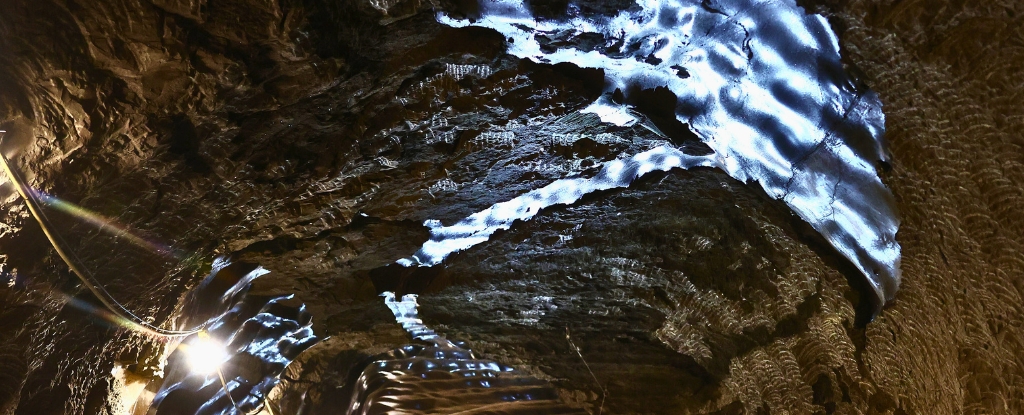
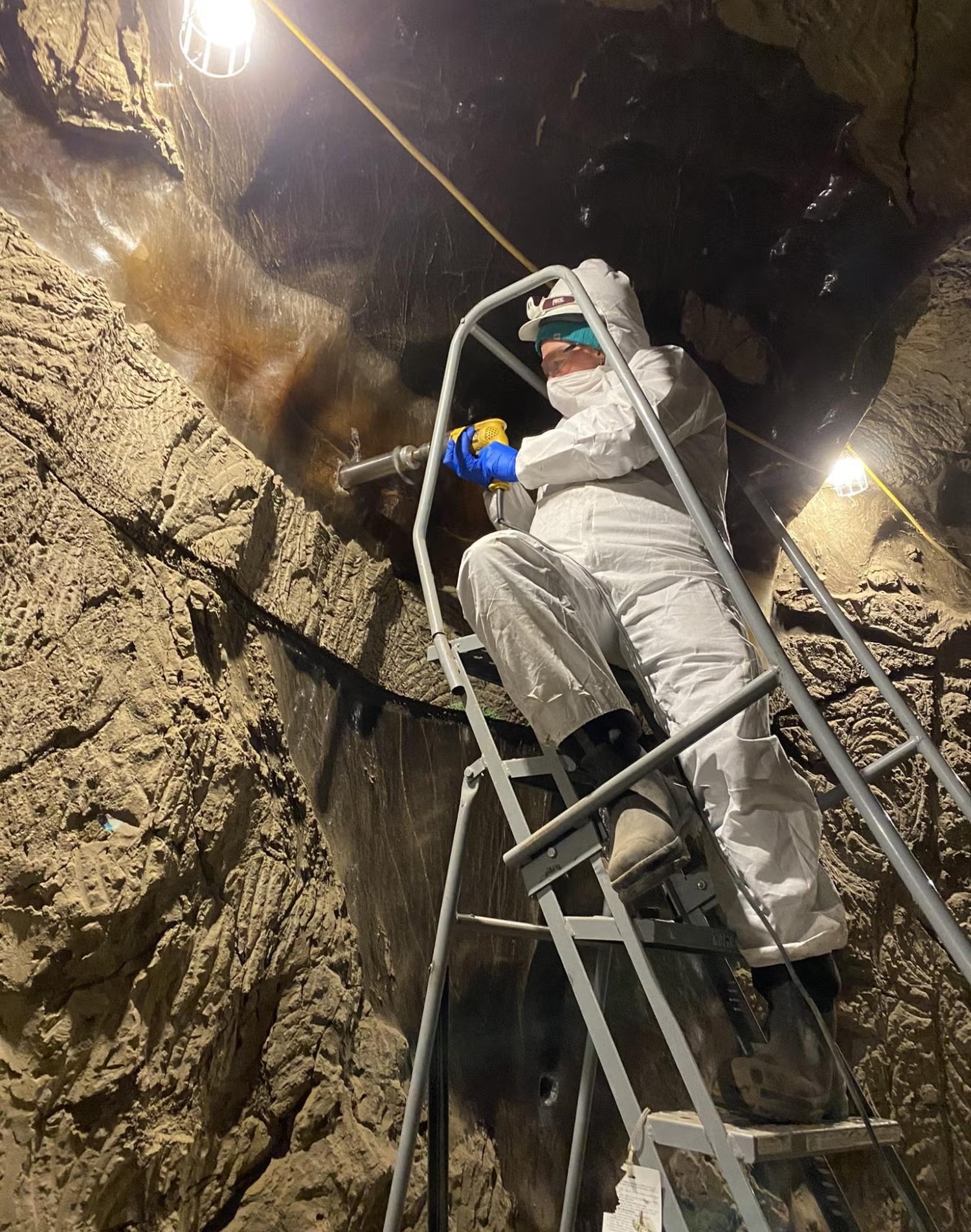
The researchers obtained frozen specimens from the intriguing Permafrost Tunnel Research Facility, operated by the US Army Corps of Engineers, which extends over 100 meters (350 feet) below the surface.
Subsequently, in a controlled laboratory environment, the microscopic life was cultured at temperatures of 39°F and 54°F (3.8°C and 12.2°C), replicating the anticipated conditions of an Alaskan summer under evolving climate scenarios.

Initially, the microbial proliferation was slow, with certain strains replacing only one in every 100,000 cells per day. For context, typical bacterial cultures maintained in laboratory settings usually undergo complete colony replication within a matter of hours.
However, after a six-month period, the permafrost microbes exhibited a significant surge in activity, as if finally roused from their prolonged dormancy.
This observed behavior suggests that following periods of elevated temperatures that lead to permafrost thaw, there might be a temporal delay before the microbes commence substantial emissions of greenhouse gases. Furthermore, it indicates that extended and warmer Arctic summers heighten the potential for a detrimental feedback loop of emissions involving both human activities and microbial processes.
“While a single exceptionally warm day in the Alaskan summer might occur, what holds greater consequence is the elongation of the summer season, extending warm temperatures into the autumn and spring periods,” explains Caro.
These research findings are instrumental in forecasting the contribution of microbes and thawing permafrost to Arctic warming, “particularly as the thawing process penetrates to deeper and more ancient permafrost strata,” the researchers postulate.