The ecological metamorphosis of Easter Island, known natively as Rapa Nui, stands as one of the most emblematic yet debated narratives in environmental archaeology. A focal point of this discussion revolves around the contribution of the Polynesian rat (Rattus exulans) to the island’s widespread deforestation. This progressive ecological decline is estimated to have led to the demise of between 15 and 19.7 million palm trees (Paschalococos disperta) over the period spanning roughly 1200 to 1650 CE.
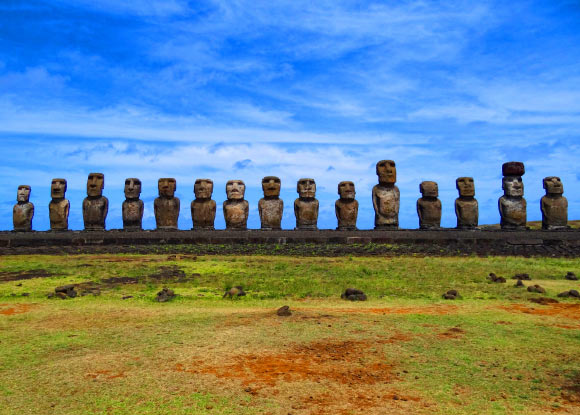
Known as Rapa Nui to its earliest inhabitants, Easter Island is one of the most remote inhabited islands in the world. It is located some 3,512 km from Chile’s west coast and its nearest inhabited neighbor, Pitcairn Island, located some 2,075 km to the west. For reasons still unknown early Rapa Nui people began carving giant statues out of volcanic rock. These monumental statues, called moai, are some of the most incredible ancient relics ever discovered. Image credit: Bjørn Christian Tørrissen / CC BY-SA 3.0.
Prior to human habitation, Rapa Nui was characterized by a dense population of large palm trees, a species now extinct but taxonomically related to the Chilean wine palm (Jubaea chilensis).
These venerable trees possessed a lifespan of up to 500 years and exhibited a protracted growth cycle, requiring approximately seven decades to reach maturity and commence fruiting.
By the advent of European exploration in 1722, only a sparse remnant of these palms persisted. Their complete absence was noted by the time Europeans initiated scrutiny into the island’s ecological condition.
“The Europeans essentially depicted an island devoid of trees, yet they also mentioned the presence of palms and palm fronds,” commented Professor Carl Lipo of Binghamton University.
“It remains ambiguous whether they employed the term to refer to a different arboreal species.”
Upon embarking on voyages to establish new settlements, Polynesian voyagers transported their essential provisions, which included taro, sweet potatoes, bananas, yams, alongside domestic animals such as dogs, chickens, and pigs. Inevitably, the Polynesian rat accompanied them.
In contrast to the Norway rats (Rattus norvegicus) that were introduced following European arrival, this diminutive, tree-dwelling rodent species exhibits a preference for habitats within the arboreal canopy. For researchers, these rats serve as an invaluable source of information.
“Due to their genetic makeup and the ‘founder’s effect,’ they possess unique haplotypes,” explained Professor Lipo.
“By examining the variability of these rats as they traversed the Pacific, we can infer patterns of human migration and, to a certain extent, the frequency of initial colonizations.”
The precise manner in which they found passage onto Polynesian outrigger vessels is a subject of ongoing inquiry: Were they unintentional stowaways, or were they intentionally transported as a supplementary food reserve? Available ethnographic accounts suggest the latter scenario.
“Following the arrival of Europeans, a naturalist engaged in specimen collection for the British Museum observed an individual proceeding along a pathway, carrying rats; this individual conveyed to the collector that the rats were intended for consumption as a meal,” recounted Professor Lipo.
Skeletal remains of rats have also been unearthed within midden deposits—essentially, ancient refuse accumulations—across numerous Pacific islands.
Upon the Polynesians’ arrival on Rapa Nui around 1200 CE, the rats encountered a pristine environment largely devoid of natural predators and abundant in their preferred sustenance.
With the capacity for multiple breeding cycles per year, their population experienced a rapid and exponential increase, reaching into the millions within a few years.
“Palm nuts represent a highly desirable food source for rats. The rodent population proliferated unchecked,” stated Professor Lipo.
Rapa Nui’s palm trees had evolved in conjunction with avian populations, consequently not developing a cyclical productivity pattern of boom and bust that would ensure a proportion of nuts survived rodent predation.
The rats consumed the palm nuts, thereby preventing the successful germination and establishment of subsequent generations of trees.
Concurrently, human inhabitants cleared substantial areas of woodland to cultivate their sweet potato crops. The synergistic effect of these two factors resulted in the extensive deforestation that characterizes the island today.
Beyond flora and fauna, the Polynesian subsistence strategy also encompassed practices such as slash-and-burn agriculture, employed to enhance soil fertility.
Older volcanic landmasses like Rapa Nui can be prone to nutrient-poor soils, with essential minerals leached away by rainfall.
The clearing and subsequent burning of forested tracts can temporarily enrich the soil with vital nutrients.
Once the nutrient reserves are depleted, agriculturalists would relocate to alternative sites, allowing the land to regenerate and trees to reestablish themselves.
“We observe this phenomenon in New Guinea and other regions throughout the Pacific,” Professor Lipo remarked.
“However, on Rapa Nui, the trees exhibit exceptionally slow growth, and their regeneration is inhibited by the pervasive predation of palm nuts by rats.”
Ultimately, the island’s inhabitants transitioned to an alternative agricultural methodology, utilizing stone mulch to augment the fertility of their crops.
While the disappearance of the palm forest constituted a significant environmental alteration, it did not precipitate a human catastrophe.
The islanders’ sustenance did not fundamentally rely on the palm trees; rather, their dietary sources were predicated on cleared agricultural land.
Furthermore, palms are not classified as hardwood trees; their botanical relation is closer to grasses, and they therefore do not provide suitable timber for crafting canoes, constructing dwellings, or for use as firewood.
“The loss of this palm forest is indeed regrettable, but it did not constitute a crisis for the human population,” asserted Professor Lipo.
“It was not an indispensable element for their survival.”
Although some palm trees might have persisted into the era of European settlement, the introduction of sheep farming in the 19th century may have delivered the final blow to their extinction; any surviving saplings would likely have been consumed by grazing sheep.
Ironically, the Polynesian rats encountered a fate mirroring that of the palms; on many islands, they were driven to extinction, either outcompeted by the more robust Norway rat or falling prey to introduced predators such as hawks.
While the dominant rodent species may have shifted, local narratives continue to recount cycles of rodent population surges and subsequent collapses—periods of explosive population growth followed by dramatic die-offs.
The narrative of Rapa Nui offers a compelling illustration of unforeseen repercussions, albeit one that also highlights resilience and adaptation on one of the planet’s most isolated inhabited landmasses, situated approximately 1,931 kilometers (1,200 miles) from its nearest neighbor.
“Our understanding of environmental transformations necessitates a more nuanced perspective,” stated Professor Lipo.
“We are intrinsically part of the natural world; we invariably reshape it, often to our advantage, but this does not inherently signify that we create an unsustainable existence for ourselves.”
The conclusions of this research are published in the Journal of Archaeological Science.
_____
Terry L. Hunt & Carl P. Lipo. 2025. Reassessing the role of Polynesian rats (Rattus exulans) in Rapa Nui (Easter Island) deforestation: Faunal evidence and ecological modeling. Journal of Archaeological Science 184: 106388; doi: 10.1016/j.jas.2025.106388