The now-extinct Eurasian cave lion (Panthera spelaea) and extant African and Asian lions (Panthera leo) are representatives of distinct evolutionary branches that diverged approximately 1.7 million years ago—a much earlier separation date than previously postulated, according to an extensive analysis of 12 cave lion genomes covering over 100,000 years of history.

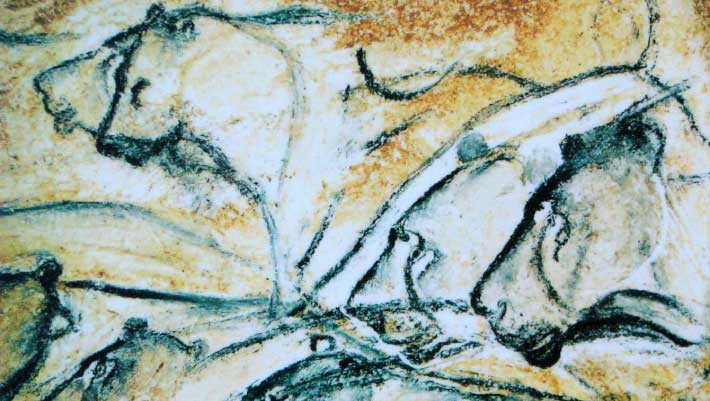
Cave lions painted in the Chauvet Cave, France.
Within the paleontological record of the last million years, lions are among the most prevalent and geographically dispersed apex predators, with fossil evidence unearthed across four continents, encompassing Africa, Europe, Asia, and the Americas.
Initial fossil finds exhibiting unambiguous lion characteristics emerge from East Africa dating back 1.9 million years, with evidence appearing outside of Africa by one million years ago in Syria.
In Europe, their presence is documented in the fossil record from Italy and England starting 700,000 years ago, and in North America from 300,000 years ago. By 130,000 years ago, they had extended their range to the southern regions of North America and possibly even South America.
Currently, lion populations are confined to a solitary, diminutive group in India and fragmented communities across Africa.
Archaeological findings from skeletal remains, preserved organic tissues, and Pleistocene-era cave paintings indicate that the extinct lions of the Late Pleistocene epoch, inhabiting the Northern Holarctic, possessed morphological traits that differentiated them from contemporary lions. These ancient felines were larger than their modern descendants and likely sported lighter-colored fur.
Despite their considerable abundance in the Holarctic fossil record throughout a significant portion of the later Pleistocene epoch, cave lions faced extinction approximately 13,000 to 14,000 years ago, marking them as among the earliest victims of the Late Pleistocene megafaunal extinction events.
During their zenith, they stood as some of the most influential predators in the Northern Hemisphere’s ecosystems.
“Cave lions have frequently been depicted as merely a larger, more robust iteration of modern lions,” commented lead author Dr. David Stanton, a lecturer at Cardiff University.
“However, genomic analysis reveals something far more extraordinary—a distinct lineage that has undergone independent evolution for over a million years, accumulating its own unique biological characteristics.”
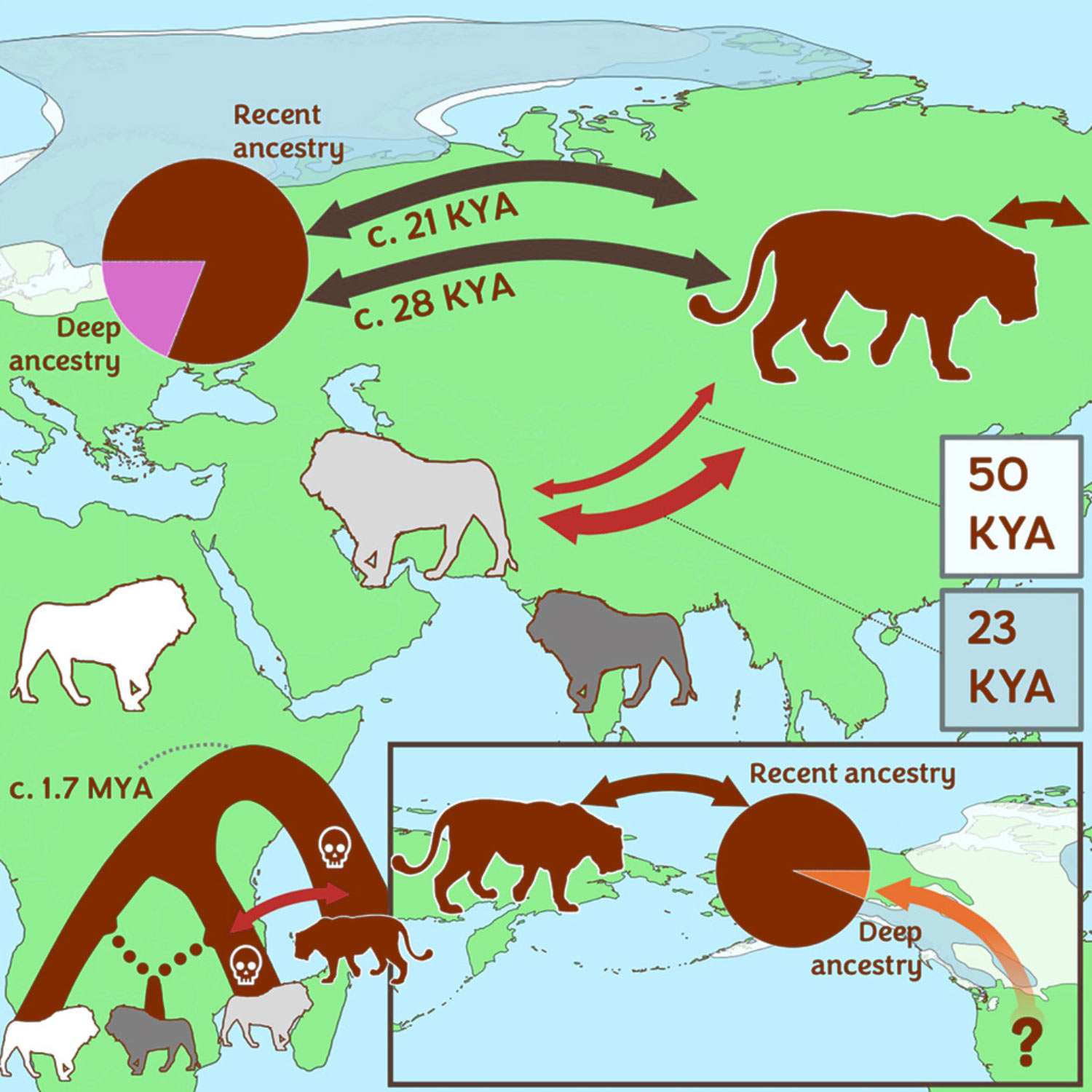
Using 12 cave lion genomes spanning more than 100,000 years, Stanton et al. show that modern and cave lions were distinct evolutionary lineages with separate demographic histories and unique non-synonymous variants. Image credit: Stanton et al., doi: 10.1016/j.cell.2026.05.007.
The investigative team meticulously examined 12 genomes from cave lions sourced from across Eurasia and the northernmost reaches of North America, spanning a temporal scope exceeding 100,000 years. These were subsequently contrasted with 20 genomes from contemporary lions residing in Africa and southern Asia.
The genetic material from cave lions was extracted from dental and skeletal remains, in addition to some samples of preserved soft tissues, including two remarkably well-preserved cave lion cubs discovered in Northern Siberia.
A comparative analysis of the genomes revealed that cave lions and modern lions constituted clearly delineated groups, signifying a prolonged period of evolutionary divergence.
While prior assessments have proposed a relatively recent evolutionary split, this research substantiates a significantly earlier divergence, potentially extending back as far as 1.7 million years.
Intriguingly, the scientists also uncovered evidence suggesting that these two lineages were not entirely isolated. During periods of intense glacial expansion, cave lions appear to have encroached southward into territories inhabited by modern lions, leading to instances of interbreeding.
A cave lion specimen from Central East Asia, estimated to be around 20,000 years old, exhibited between 3.2-4.4% of modern lion ancestry—this genetic contribution most likely originated from the now-extinct Southwest Asian lion population.
The researchers also identified dozens of protein-coding mutations exclusive to cave lions. These unique genetic variations were primarily concentrated in genes associated with neurological function, visual acuity, the circulatory system, and growth, suggesting profound biological adaptations to the cold, harsh Holarctic ecosystems these animals once inhabited.
“Our findings indicate that climatic shifts in the past did more than simply alter environments,” observed senior author Professor Love Dalén, a research group leader at the Centre for Palaeogenetics in Stockholm.
“They actively facilitated species encounters, creating fleeting opportunities for interbreeding that would not have otherwise presented themselves.”
The team’s findings are published in the esteemed journal Cell.
_____
David W.G. Stanton et al. Paleogenomes reveal the evolutionary relationship between modern and cave lions. Cell, published online June 3, 2026; doi: 10.1016/j.cell.2026.05.007