
While the initial documented emergence of syphilis in Europe can be traced to the dawn of the 16th century, the historical trajectory of the causative pathogen extends considerably further back on the vast continent of South America.
A skeletal remnant, dating back 5,500 years and unearthed at an archaeological excavation site in Colombia, has yielded genetic material from the spiral-shaped bacterium, specifically Treponema pallidum.
This particular strain, identified as TE1-3, is not currently prevalent, but its genomic composition places it within an ancient lineage, or an “early-diverging sister clade,” of T. pallidum.
It appears to have bifurcated from the ancestral line prior to the evolution and dissemination of subspecies responsible for conditions such as syphilis, yaws, bejel, and pinta across the globe.
This groundbreaking discovery, spearheaded by evolutionary genomics scholar Davide Bozzi, effectively recedes the timeline for treponemal diseases, as they are collectively known, by approximately three millennia.
Furthermore, it reinforces the hypothesis of an American origin for syphilis, rather than a European one, corroborating existing genetic evidence from various locales throughout South and Central America.
In Europe, the inaugural episodes of syphilis coincided with the return of the Italian navigator Christopher Columbus from his trans-Atlantic voyages, leading to a historical association between these two events—an association often exacerbated by prejudiced and xenophobic narratives concerning disease transmission.
Contemporary genomic research is meticulously unraveling these profound and intricate historical connections through the analysis of ancient DNA. An accumulating body of evidence derived from ancient skeletal remains suggests that syphilis-analogous afflictions were indigenous to the Americas well before their counterparts manifested in Europe.
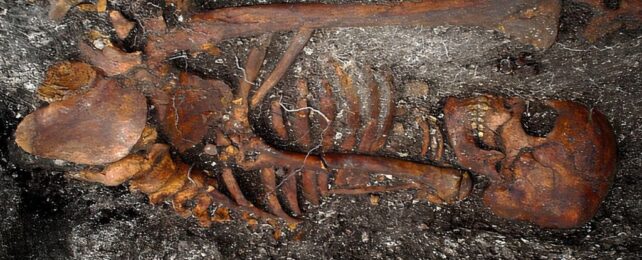
It remains uncertain whether the transmission of TE1-3 occurred between humans via sexual contact, akin to modern syphilis, or through direct skin-to-skin interaction, as observed in yaws, bejel, and pinta. However, based on its genetic makeup, this archaic strain possessed virulence genes comparable to those found in contemporary strains, indicating it was pathogenic or had at least adapted to infect human hosts.
The research conducted by Bozzi and his associates estimates that the evolutionary divergence between TE1-3 and other T. pallidum lineages occurred approximately 13,700 years ago, predating the widespread adoption of agriculture in the Americas.
These findings imply that infectious diseases were beginning to emerge within hunter-gatherer societies preceding the development of concentrated agrarian communities in close proximity to domesticated animals.
“Our findings demonstrate the profound impact a single ancient pathogen genome can have on reshaping current understandings of disease emergence,” the researchers state in their peer-reviewed publication.
Nonetheless, the discovery of the oldest known evidence of a syphilis-like illness in South America does not preclude its presence on other continents.
While a contentious viewpoint, a segment of the scientific community in Europe maintains that treponemal diseases and strains closely resembling syphilis were prevalent in Europe centuries prior to Columbus’s inaugural transatlantic voyage, suggesting that T. pallidum existed on both continents before their interconnectedness.
Furthermore, it is conceivable that the manifestation of syphilis and other treponemal diseases is influenced by environmental and societal factors. In essence, the bacterium might have been present across diverse populations but evolved distinct modes of spread and disease variations contingent upon prevailing ecological conditions.
This perspective suggests that the pathogen responsible for syphilis might not have been exclusively a sexually transmitted infection in pre-Columbian American populations; it could have subsequently acquired this mode of transmission—along with its associated stigma—during the 15th century in Europe.
In the absence of further corroborating evidence, all these hypotheses remain plausible.
In an accompanying commentary, anthropologists Molly Zuckerman from Mississippi State University and Lydia Bailey of the US National Museum of Natural History, who were not directly involved in the latest investigation, contend that these discoveries “facilitate a move beyond simplistic notions of the geographical origins of diseases.”
“Far from being static or confined to a specific human population or environment, pathogens are intricately linked to mobile human and animal hosts and reservoirs, shaped by human experiences and biosocial and environmental contexts, demonstrating adaptability and global reach.”
The findings of this study have been formally published in the esteemed journal Science.