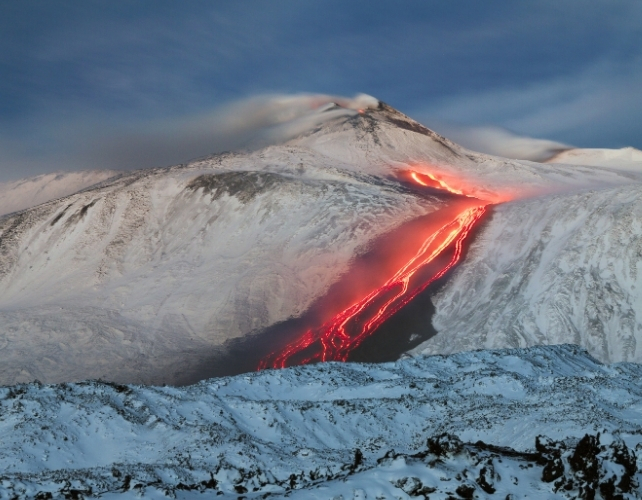
The next significant global volcanic catastrophe is more likely to originate from volcanoes perceived as dormant and receiving minimal oversight, rather than from well-known volcanic sites like Mount Etna in Sicily or Yellowstone in the United States.
These “concealed” volcanoes, frequently overlooked, exhibit eruptive activity with a frequency underestimated by the general populace.
In geographical zones such as the Pacific, South America, and Indonesia, an eruption from a volcano lacking a documented history transpires approximately every seven to ten years. The consequences of such events can be both unanticipated and extensive.
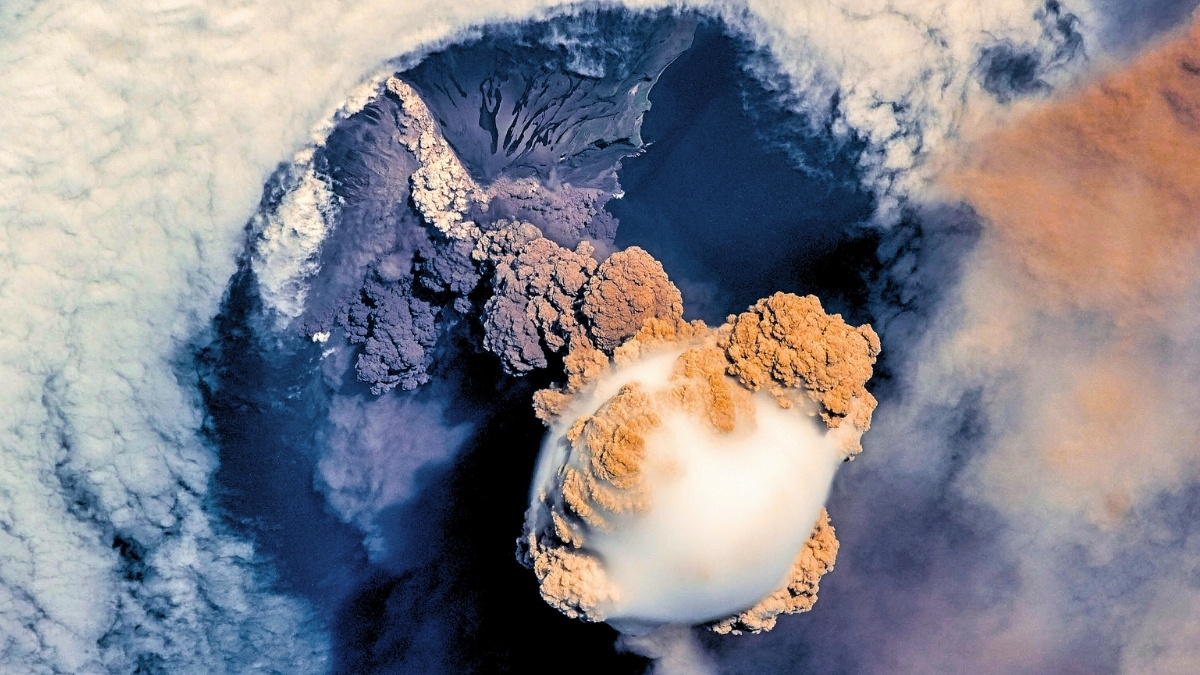
Most recently, a notable instance exemplified this pattern precisely. In November 2025, the Hayli Gubbi volcano in Ethiopia experienced an eruption for the first time in recorded history, spanning at least 12,000 years to our current knowledge.
This event propelled ash plumes to an elevation of 8.5 miles, with volcanic debris precipitating in Yemen and extending into the airspace over northern India.
🌋 #HayliGubbi — a once-dormant shield volcano in Ethiopia’s Afar Rift — has exploded to life. Its ash plume soared to 45,000 ft, signaling a rare, high-energy event in a volcano with no known eruptions for millennia.
Visualized: @NASAEarth
🛰 #NASA🌍 #worldview https://t.co/Tg217OWotj pic.twitter.com/BBPyaUjAzz— Worldview Earth Data 🌍🌱 (@WED_explorer) November 23, 2025
A review of historical records reveals another pertinent example. In 1982, the El Chichón volcano in Mexico, then little-known and unmonitored, underwent a violent eruption after centuries of quiescence.
This sequence of explosive events took authorities by surprise; pyroclastic flows comprising rock, ash, and gas devastated extensive forested areas. Rivers were dammed, structures were obliterated, and ashfall extended as far as Guatemala.
The catastrophe resulted in over 2,000 fatalities and the displacement of 20,000 individuals, marking it as Mexico’s most severe volcanic incident in contemporary times. Nevertheless, the repercussions of this disaster extended beyond Mexico’s borders.

The emission of sulfur from the eruption contributed to the formation of reflective particles in the upper atmosphere, leading to a cooling effect across the Northern Hemisphere and a southward shift of the African monsoon, precipitating severe drought conditions.
This environmental perturbation alone would present a formidable challenge to the resilience and adaptive capacities of any region. However, when compounded by a vulnerable populace already grappling with poverty and civil conflict, a devastating outcome became unavoidable.
The famine that affected Ethiopia and East Africa from 1983 to 1985 claimed the lives of an estimated 1 million people. This humanitarian crisis brought global attention to issues of poverty, galvanizing widespread support through initiatives such as Live Aid.
Few individuals, even within the Earth science community, apprehend the role that a remote, lesser-known volcano played in this tragic episode.
Notwithstanding these hard-learned lessons, global investment in volcanological research and monitoring has not commensurate with the prevailing risks: less than half of all active volcanoes are subjected to monitoring, and scientific inquiry continues to disproportionately concentrate on a select few prominent volcanoes.
There exists a greater volume of published research concerning a single volcano, Mount Etna, than the collective output for all 160 volcanoes situated in Indonesia, the Philippines, and Vanuatu put together. These areas represent some of the most densely populated volcanic regions globally, yet they are also among the least understood.
The most substantial volcanic eruptions exert influence far beyond the immediately affected vicinities. They possess the capacity to induce temporary planetary cooling, disrupt monsoon patterns, and diminish crop yields across entire geographical expansions.
Historically, such climatic and environmental shifts have been implicated in widespread famines, outbreaks of disease, and significant societal dislocations. Yet, a comprehensive global framework for anticipating or mitigating these future risks remains elusive for the scientific community.
To address this critical deficit, my colleagues and I have initiated the Global Volcano Risk Alliance, a charitable organization dedicated to proactive preparedness for high-impact volcanic events.
Our efforts involve collaboration with scientific experts, governmental bodies, and humanitarian organizations to underscore overlooked vulnerabilities, enhance monitoring capabilities in areas of greatest need, and provide support to communities preceding volcanic eruptions.
Adopting a proactive stance, as opposed to a purely reactive approach post-disaster, provides the most promising avenue for averting future covert volcanic events from escalating into global crises.
The Peril Associated with ‘Quiet’ Volcanoes
The question arises: why do volcanoes often command a level of attention incongruent with their inherent risks? A significant contributing factor lies in predictable human psychological tendencies. Many individuals are inclined to assume that a state of inactivity will persist indefinitely, a cognitive bias known as normalcy bias. When a volcano has remained quiescent for generations, it is frequently perceived as inherently safe.
The perceived probability of an event occurring is often influenced by how readily examples come to mind, a mental shortcut referred to as the availability heuristic.
Prominent volcanoes and their past eruptions, such as the 2010 Icelandic ash cloud, are familiar and may engender feelings of apprehension. Conversely, remote volcanoes with no recent eruptive history seldom register on public or scientific awareness.
These cognitive biases engender a detrimental pattern: substantial investment in disaster mitigation tends to occur only after an event has already transpired, a phenomenon termed response bias. El Chichón, for instance, only came under significant monitoring subsequent to its devastating 1982 eruption.
However, a substantial proportion, approximately three-quarters, of major volcanic eruptions (comparable to or exceeding El Chichón in scale) originate from volcanoes that have remained dormant for at least a century and, consequently, attract minimal scientific and public attention.
Effective volcanic hazard preparedness necessitates a proactive rather than reactive methodology. When volcanoes are adequately monitored, when communities are equipped with appropriate response protocols, and when communication and coordination between scientific institutions and governmental authorities are robust and efficient, the lives of thousands can be preserved.
Catastrophic outcomes have been successfully averted through such measures, notably in 1991 at Mount Pinatubo in the Philippines, in 2019 at Mount Merapi in Indonesia, and in 2021 at La Soufrière on the Caribbean island of Saint Vincent.
To bridge these critical gaps, a global paradigm shift is required, redirecting attention towards inadequately monitored volcanoes situated in regions like Latin America, Southeast Asia, Africa, and the Pacific. These areas are home to millions of individuals residing in proximity to volcanoes with limited or entirely absent historical eruptive records.
It is precisely in these locations that the most significant risks are concentrated, and where even modest investments in monitoring infrastructure, early warning systems, and community preparedness initiatives hold the greatest potential for saving lives.