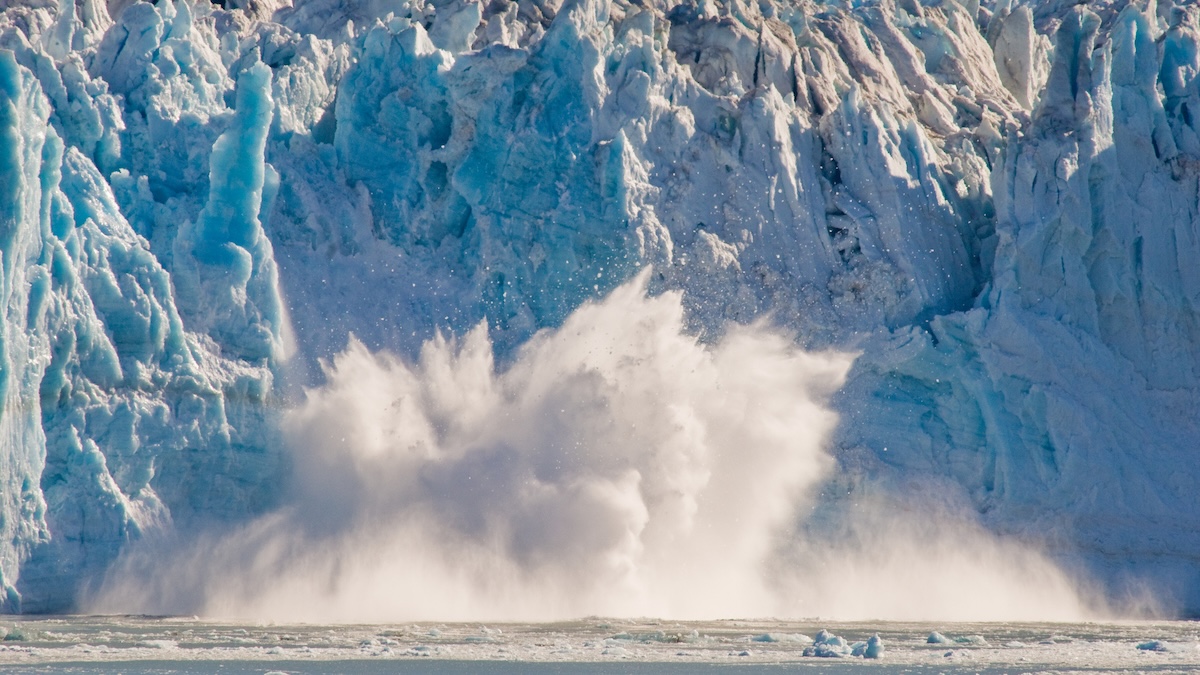
Encountering a glacier that is actively advancing towards you, with its colossal ice formations continuously fracturing as they inch forward, is an unforgettable experience. Although the movement is imperceptible in real-time, its progression becomes strikingly evident from one day to the next.
One of the authors, Harold, personally witnessed this phenomenon during field research in 2012 at Nathorstbreen, situated within the Arctic archipelago of Svalbard. This particular glacier was observed to advance at a rate exceeding 10 meters daily.
Such encounters are seldom observed. The vast majority of the planet’s glaciers are experiencing a rapid deglaciation due to escalating global temperatures, with projections indicating the potential disappearance of thousands within the coming decades.
Nevertheless, a select minority of glaciers exhibit contrary behavior, characterized by recurrent accelerations and advancements that persist for months or even years following extended periods of dormancy and recession. This phenomenon, known as glacier surging, has long presented a scientific enigma.
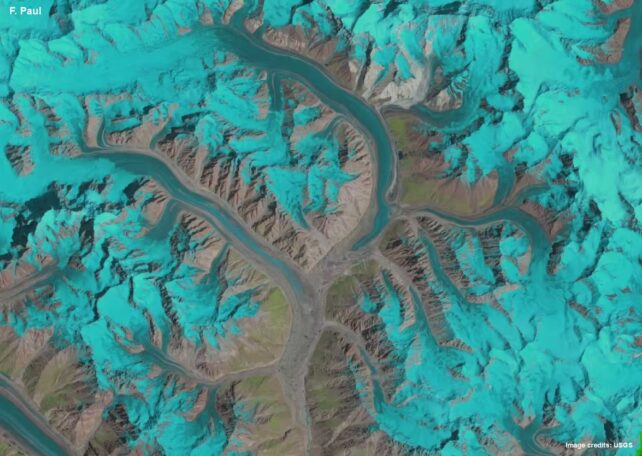
While the sight of advancing ice might offer a superficial counterpoint to the disquieting narrative of receding glaciers, the reality is quite the opposite. These surges can exacerbate ice loss, render glaciers more susceptible to climate change impacts, and pose significant perils to communities situated downstream.
We have recently concluded a comprehensive global investigation encompassing over 3,000 surging glaciers to elucidate the underlying causes of this dynamic behavior. Our research also synthesizes, for the first time, the associated hazards presented by these glaciers and analyzes how surging patterns are being influenced by climatic shifts.
The Genesis of Glacier Surges
During a surge, glaciers transition from a glacial pace to speeds of tens of meters per day, sometimes within a mere span of weeks. The peak velocity phase, during which ice can flow at over 60 meters daily, typically extends for a year or more, though certain glaciers have been documented to surge for up to two decades. The subsequent return to diminished speeds and even stasis can occur either rapidly over days or gradually over several years.
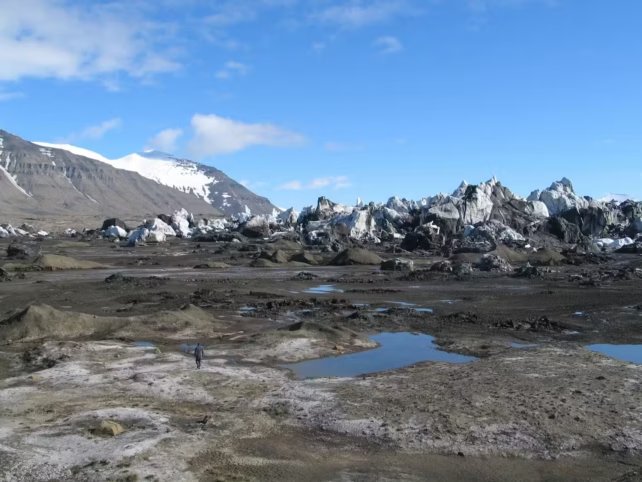
Nathorstbreen exhibited a remarkable substantial advance, covering more than 15 kilometers in approximately a decade during its surge, which commenced in 2008—radically reshaping the entire landscape within a few years.
The initiation of a surge is believed to be dictated by subsurface changes within the glacier. In surge-type glaciers, meltwater does not drain away efficiently but accumulates at the ice-bed interface. This phenomenon reduces the frictional resistance between the ice and the underlying bedrock, facilitating accelerated ice movement.
When this accumulated water eventually finds an egress, the glacier’s velocity diminishes. Some glaciers undergo cyclical surges, interspersed with periods of quiescent ice flow lasting years or decades; however, the precise timing of these surges remains elusive.
Global Epicenters of Surging Ice
Our investigation reveals that a minimum of 3,000 glaciers have experienced surges at some point in their history. While this constitutes only approximately 1% of all glaciers globally, their substantial size means they account for roughly 16% of the total glacierized area worldwide.
Significantly, these glaciers are concentrated in dense geographical clusters across the Arctic, the Himalayas, other major Asian mountain ranges, and the Andes, with their presence being notably sparse elsewhere. This distribution is primarily governed by climatic conditions; surges generally do not occur in regions with prevailing temperatures that are excessively warm, such as the European Alps or mainland Scandinavia, nor in environments that are excessively cold and arid, like Antarctica.
Additional determinants, including glacial dimension and the nature of the underlying geological substrate, also play a crucial role in identifying which glaciers within a given region are prone to surging and which are not.
Certain hotspots are situated in inhabited areas, where surging glaciers can transform into formidable threats. The advancing ice fronts possess the capacity to encroach upon built infrastructure and agricultural lands, and can obstruct waterways, leading to the formation of perilous glacial lakes that are susceptible to catastrophic outburst floods upon ice dam failure.
An unstable lake formed by the surge of the Shisper Glacier in the Karakoram mountain range discharged its contents multiple times between 2019 and 2022, inflicting extensive damage upon the Karakoram Highway, a vital transportation artery connecting Pakistan and China.
Rapidly mobile ice can generate deep fissures (crevasses), posing challenges for transit in areas like Svalbard, where glaciers serve as crucial pathways linking isolated human settlements. Furthermore, it disrupts recreational and tourism activities, such as those involving climbers who utilize glaciers for access to mountain summits. When glaciers surge into marine environments, they release a high density of icebergs over a short period, potentially creating navigational hazards for maritime traffic and affecting tourism.
Climatic Influence on Glacier Surging
The ongoing process of climate warming is actively altering the patterns and timing of glacier surges. In certain regions, surges are becoming more recurrent; conversely, in others, they are diminishing as glaciers thin and deplete the mass reserves required to initiate a surge.
Intense precipitation, periods of accelerated melting, or other extreme weather events have also been observed to precipitate surges occurring earlier than anticipated, and these factors may assume greater significance in a warming global climate.
Collectively, these observations delineate an emerging scenario of heightened unpredictability in glacier surge behavior. While some locales may witness a reduction in surging activity as global temperatures rise, others might experience an increase. It is plausible that glaciers previously exhibiting no surging behavior may initiate such activity, potentially including areas with no historical record of surges, such as the rapidly warming Antarctic Peninsula.
Surging glaciers serve as a potent reminder that ice dynamics do not always conform to simple, predictable responses to warming. Comprehending these anomalies and effectively managing the associated risks is of paramount importance in our era of rapid environmental transformation.