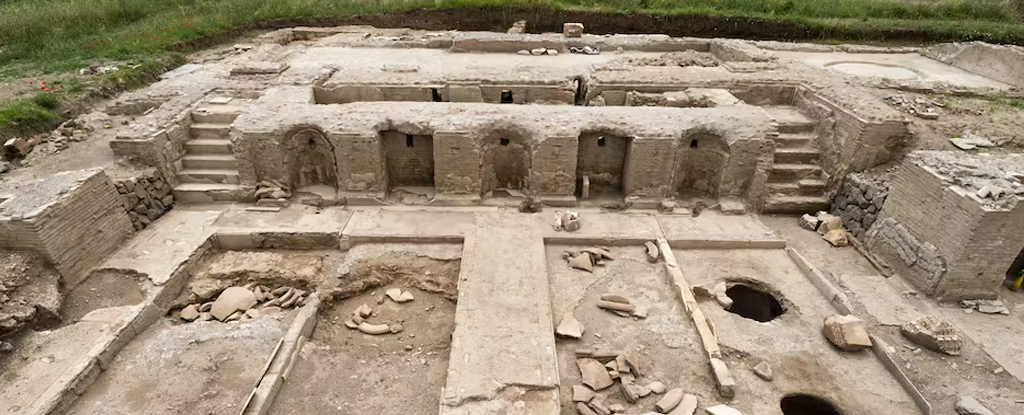
Recent archaeological investigations at the Villa of the Quintilii have brought to light the remnants of an extraordinary winery situated on the outskirts of Rome.
This edifice, dating to the mid-third century CE and positioned along the Via Appia Antica, exhibits a degree of grandeur and theatricality rarely observed at ancient production facilities.
This remarkable complex serves as a testament to how the Roman elite integrated practical utility with lavish embellishment and dramatic presentation to underscore their societal standing and political influence.
As one of the specialist archaeologists involved, I had the privilege of examining this newly unearthed site. The comprehensive details of this groundbreaking discovery are meticulously documented in our latest publication in the journal Antiquity.
The Villa of the Quintilii
Evidence derived from inscriptions on a lead water conduit indicates that the extensive 24-hectare Roman villa estate belonged to the affluent Quintilii brothers, who held the distinguished office of consuls in the year 151 CE.
The Roman emperor Commodus ordered the brothers’ execution in 182/3 CE.
Subsequently, he seized control of their holdings, including this villa, which then commenced a prolonged period of imperial ownership.
The site has long been recognized for its ornate architectural features, such as polychromatic marble facings, high-calibre statuary recovered over the past four centuries, and a grand thermal bath complex.
Less widely known is the presence of an immense circus, constructed during Commodus’ reign, which was dedicated to chariot racing.
During investigations conducted between 2017 and 2018, aimed at locating the circus’s starting mechanisms, the initial indications of a distinctive winery were uncovered.
A Sumptuous Roman Imperial Winery
This substantial complex was erected directly above the circus’s starting gates, thus dating its construction to a period subsequent to Commodus’ rule.
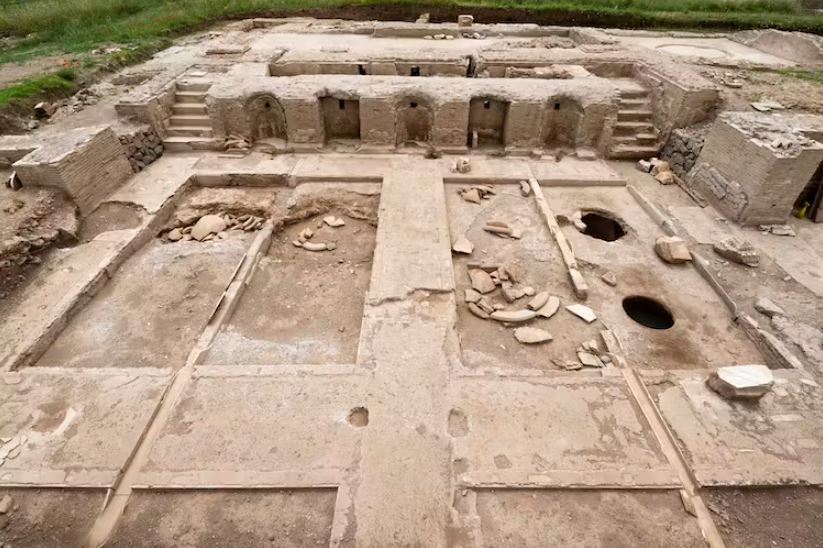
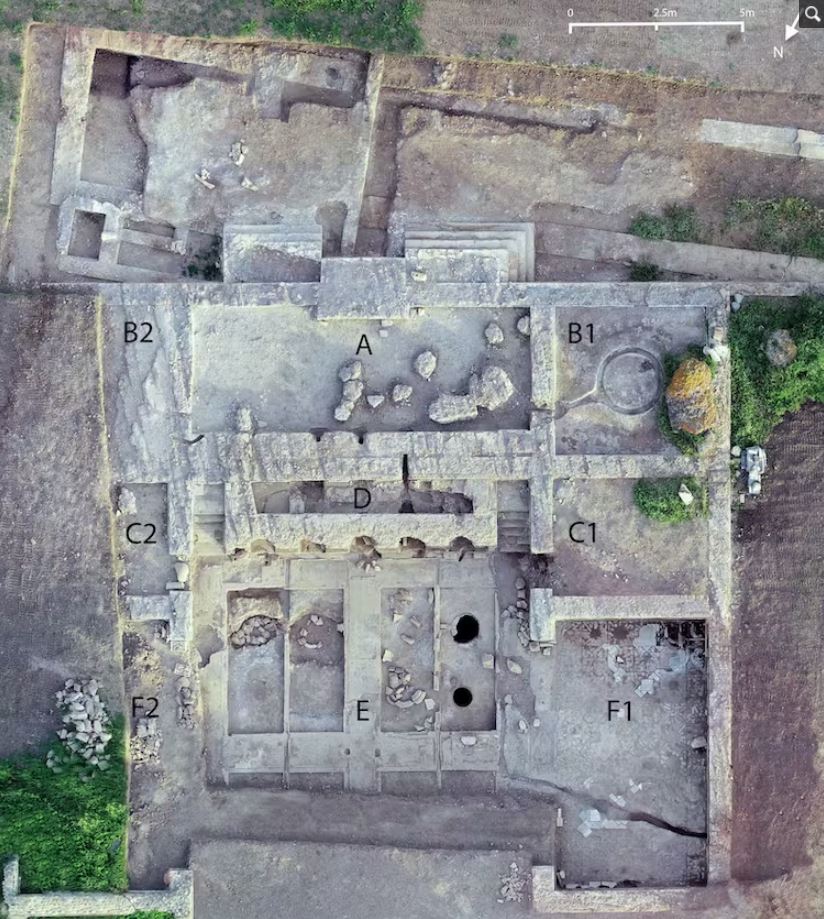
The facility incorporates elements commonly associated with ancient Roman viticulture: a designated area for grape stomping, two wine-pressing apparatuses, a reservoir for collecting grape must (the unfermented juice comprising skins, seeds, and stems), and an underground cellar equipped with large ceramic jars for storage and fermentation.
However, the decorative treatment and spatial organization of these functional components are virtually unprecedented in the ancient world.
Nearly every area dedicated to production has been adorned with marble veneer tiling. Even the treading floor, typically finished with waterproof cocciopesto plaster, is clad in red breccia marble. This opulent material, coupled with its inherent impracticality (it becomes exceptionally slippery when moist, unlike plaster), underscores the extraordinary level of luxury intended.
Two massive mechanical lever presses are strategically positioned on either side of the treading area, designed to extract juice from the pre-stomped grape pulp.
The sheer size and synchronized operation of these presses, moving in tandem, would have significantly enhanced the theatrical spectacle of the winemaking process.
The grape juice, yielded from both treading and pressing, was channeled from these work zones into a long, rectangular vat. An imprint from a stamp found within this vat indicated the emperor Gordian (who reigned briefly and was deposed in 244 CE), thereby corroborating the date of construction or subsequent refurbishment.
However, it is at this juncture that the truly dramatic display would have commenced.
The liquid grape must cascaded like an impressive fountain from the vat, flowing through a façade approximately one meter in height that strongly evokes the appearance of a Roman nymphaeum (an elaborately decorated fountain structure).
While the must emerged from the three central openings, water flowed from the flanking apertures, subsequently being conveyed back underground via an engineered system of lead conduits.
This façade, embellished with multiple niches, was originally faced with a decorative veneer of vibrantly colored white, black, grey, and red marble. Remnants of this material are still attached to some sections, and further fragments were discovered loose within the excavated strata.
A network of slender, open channels fashioned from white marble served to direct the grape must from the façade into an open-air cellar.
Within this area, the must was introduced into 16 subterranean clay jars (dolia defossa), each of a size sufficient to accommodate an adult human. Excavations have thus far yielded the remains of 8 such vessels.
Surrounding the cellar were three chambers, paved with elaborate geometric marble mosaics akin to those found in other sections of the villa.
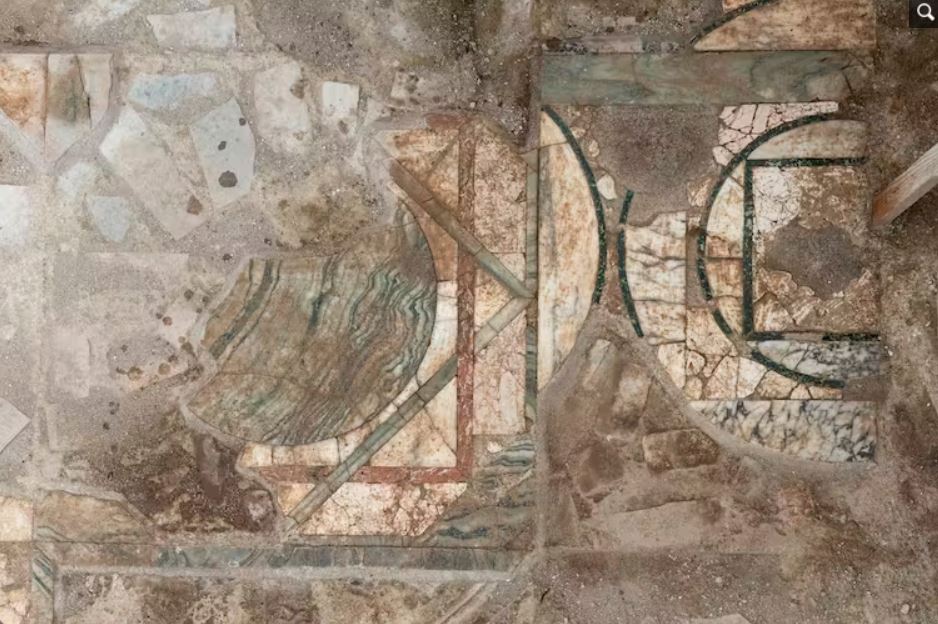
One can readily envision the emperor and his entourage reclining in these spaces, partaking in repasts while observing the spectacle of production and sampling the freshly extracted must.
Theatrical Vintage Ritual in Ancient Italy
The sole comparable facility of this nature has been identified at Villa Magna, situated approximately 50 kilometers southeast of Rome, near Anagni.
This similarly opulent winery, adorned with marble finishes, was operational slightly preceding the Villa of the Quintilii, from the early second to early third centuries CE, and featured a dedicated dining area that offered a vantage point over the production zones.
In the correspondence of Marcus Aurelius to his tutor Fronto, a rare insight is provided into the activities at Villa Magna around 140-145 CE. He recounts the imperial retinue feasting while observing and listening to laborers engaged in grape stomping.
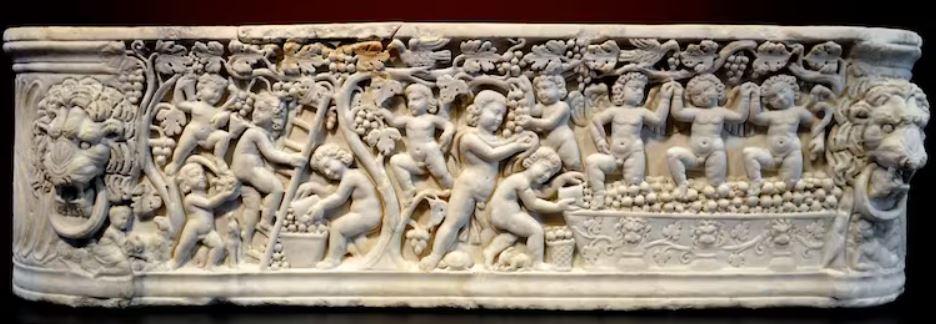
It is highly probable that this practice formed an integral part of a vintage ritual, associated with the ceremonial commencement of the grape harvest. This ritual may also have been observed at the somewhat later facility at the Villa of the Quintilii.
The sumptuously appointed, marble-clad spaces were designated for the imperial party, with the winery serving as the “stage” for this significant ceremonial occasion.
One intriguing question remains unresolved: was the emperor’s magnificent, ritualistic winery relocated in the early third century CE from Villa Magna to the Villa of the Quintilii?