
Despite a plethora of programmes and initiatives, the propensity to launch new ventures—a key indicator of entrepreneurial intent—has experienced a notable plateau.
However, could the blueprints for entrepreneurial triumph be found not within academic texts but deep within the human cerebrum?
Envision a pedagogical paradigm that transcends mere instruction in the operational aspects of launching a business, actively cultivating the proficiencies that underpin aspiring entrepreneurs’ success. It is well-established that these crucial attributes encompass sustained focus, innovative ideation, enduring resilience, cognitive adaptability, effective emotional regulation, and the capacity to formulate decisions amidst ambiguity.
Furthermore, what if these pivotal capabilities intrinsic to the entrepreneurial disposition could be nurtured through the principles of neuroscience? This foundational concept lies at the heart of a theoretical shift articulated in my recent publication, Entrepreneurship and neuroscience: Researching brain-driven entrepreneurship.
By integrating cutting-edge neuro-technologies into the investigative, instructional, and practical domains of entrepreneurship, our research proposes an alternative methodology for fostering entrepreneurial behaviour from its very inception.
The discourse surrounding entrepreneurship research has undergone several distinct evolutionary phases. The economic epoch (1870–1940) primarily scrutinized the market ramifications of entrepreneurial activity.
Concurrently, the social and psychological era (1940–1970) concentrated on identifying the inherent characteristics and intrinsic motivators that propel individuals into entrepreneurial pursuits.
More recently, the managerial era (1920-2022) conceptualized entrepreneurship as a systematic, sequential progression of stages.
Currently, I and other researchers are advocating for the dawn of a “brain-driven” era in entrepreneurship education. This paradigm shift prioritizes a fundamental re-evaluation of our comprehension and support mechanisms for achieving entrepreneurial success. Diverging from prior methodologies, this novel perspective places the cognitive enhancement of entrepreneurs at its forefront, leveraging profound insights derived from neuroscience.
For instance, investigations conducted by myself and colleagues have identified electroencephalography (EEG) and structured cognitive training regimens—both firmly rooted in neuroscientific principles—as highly promising instruments for the assessment of mental states. These tools are equally pivotal in augmenting cognitive functions intrinsically linked to entrepreneurial achievement.
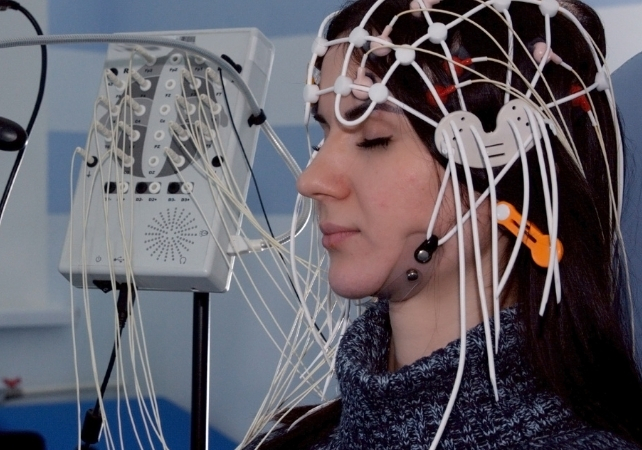
Whereas conventional assessment tools such as interviews, questionnaires, and behavioral observations provide insights into overt behaviors and self-reported experiences, EEG penetrates deeper, quantifying the brain’s electrical output. This capability facilitates a more granular exploration of attention, working memory capacity, cognitive load, and the nuances of emotional regulation.
Research originating from the University of Kobe suggests that EEG can discern the subtle interplay between affective states and the decision-making processes of entrepreneurs. In an experimental setting, participants were briefly exposed to emotionally charged vocabulary—words like “elated” or “dismal”—prior to engaging in a risk-oriented decision-making simulation. The objective was to ascertain whether emotional stimuli could subtly influence risk-taking tendencies.
Although the participants’ choices did not exhibit statistically discernible alterations, the neural data revealed a distinct narrative. Individuals with elevated levels of entrepreneurial drive demonstrated unique patterns of neural activation in response to emotional stimuli.
This phenomenon was particularly pronounced in cerebral regions associated with attentional mechanisms and the process of assigning meaning. This outcome implies that, even in the absence of observable behavioral shifts, the brain may be actively processing emotional information in ways that profoundly shape decision-making under conditions of uncertainty.
Cerebral activity within the frontal and parietal lobes further indicated that individuals possessing stronger entrepreneurial aspirations exhibited enhanced efficiency in processing emotional cues. This suggests a potential neurobiological predisposition in their brains for managing emotionally charged decisions with greater adeptness.
While cognitive faculties such as sustained focus, emotional equilibrium, and mental flexibility are increasingly acknowledged as indispensable for entrepreneurial success, EEG provides a powerful means to observe the dynamic operation of these abilities in real time.
These inherent capacities are fundamental to navigating unpredictable environments, adapting fluidly to evolving circumstances, and executing swift, high-consequence decisions.
Brain-Aligned Cognitive Enhancement
Emerging “brain-aligned methodologies” offer profound insights into how the brain can be gently cultivated to foster entrepreneurial growth. These approaches are meticulously designed to fortify the foundational cognitive functions that are increasingly correlated with entrepreneurial efficacy.

During a recent Technopreneurship Summer School held at Xi’an Jiaotong-Liverpool University, students engaged in targeted cognitive training exercises. These included activities such as maintaining visual tracking of moving objects to bolster sustained attention. Furthermore, students participated in condensed design challenges, such as constructing rudimentary robot prototypes, while articulating their cognitive processes aloud.
The application of neuroscientific principles within entrepreneurship education has also catalyzed innovation beyond traditional classroom settings. Although this field remains nascent, research in music neuroscience suggests that specific auditory patterns and frequencies possess the capacity to influence concentration levels, emotional states, and general cognitive performance.
A notable development known as cognitive performance music offers an initial glimpse into the potential for musical compositions to complement existing cognitive enhancement strategies. Fundamentally, this genre of music is engineered to sharpen cognitive focus, sustain profound motivation, and reinforce the cognitive facets of an entrepreneurial mindset.
A widely recognized example is Steve Reich’s minimalist composition, Piano Phase, which has been demonstrated to promote neural synchrony and prolonged attentional engagement among its listeners.
The inaugural album within this genre, Take the Leap, was meticulously produced utilizing a proprietary neuro-algorithmic system developed through my ongoing research into brain-driven approaches to entrepreneurial learning.
Another illustrative example is the utilization of structured pedagogical frameworks such as the WNYLE Method. This pioneering, brain-based approach to entrepreneurial training is engineered to enhance the cognitive and emotional proficiencies that are instrumental in driving entrepreneurial actions.
It synergistically integrates principles from neuroscience, cinematic narrative techniques, thematically aligned music, and guided mental exercises. Crucially, the method adheres to a precisely curated sequence that mirrors the brain’s natural processing of attention, emotion, and reflection to facilitate profound and enduring learning.
These pioneering advancements underscore the significant potential of neuroscience to elevate the manner in which students develop critical competencies, skills that are applicable and valuable both within and beyond academic settings.
As neuroscientific understanding transitions from the laboratory to the educational sphere, a novel frontier is progressively emerging—one where cognitive optimization is positioned as a cornerstone of entrepreneurial preparedness.
It is a long-established fact that learning fundamentally restructures both the architecture and functionality of the brain. This principle highlights the profound capacity of neuroscience to enrich entrepreneurship education. The objective extends beyond the mere transmission of information; it encompasses the cultivation of the cognitive agility necessary to flourish in an inherently volatile and unpredictable global landscape.
And perhaps the most exhilarating prospect? This represents merely the nascent stages of development.