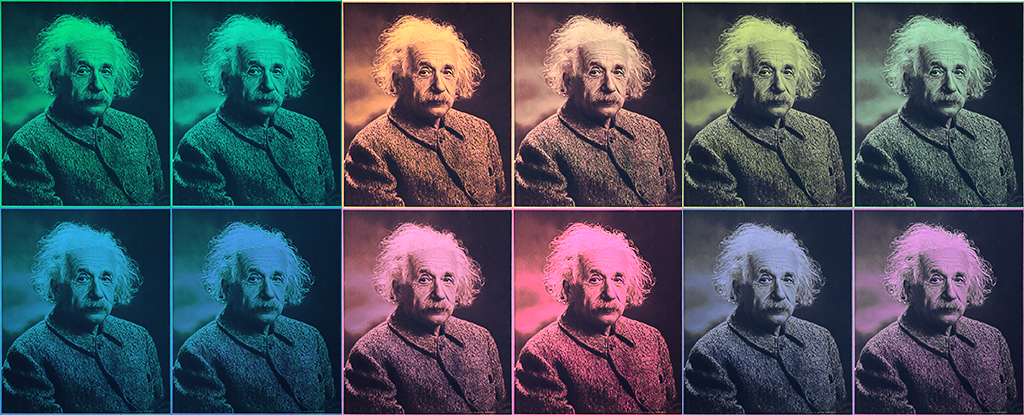
In a recent discourse with Lex Fridman, Jeff Bezos articulated an ambitious aspiration: a future necessitating the habitation of our Solar System by a trillion individuals. Bezos posited, “I would welcome a trillion humans inhabiting the Solar System. With such a multitude, we would, at any given moment, possess a thousand Mozarts and a thousand Einsteins.”
He further elaborated on the logistical necessity of this vision, stating, “The exclusive pathway to realizing this objective involves colossal orbital habitats. The surfaces of planets are simply inadequate in scale.”
The prospect of a trillion souls, yielding a thousand prodigious intellects like Mozart and Einstein, represents a significant return on investment, considering the potential gains.
However, if we are to embrace Bezos’ theorem of two thousand geniuses per trillion inhabitants, it is prudent to also contemplate the less desirable corollary: the proliferation of serial offenders.
According to data from 2018, the most recent year for which figures on active serial killers in the United States are available, compiled by academics from Radford and Florida Gulf Coast Universities, there were 12 such individuals. The US population during that year was 326.8 million, translating to approximately one serial killer for every 27 million people. This statistic implies that the odds of becoming a serial killer are still more favorable than winning the Powerball lottery.
The research conducted by these professors also indicated a sustained reduction in the number of serial killers, a trend likely attributable to advancements in sophisticated surveillance technologies, particularly since the peak in active serial killings observed in the late 1980s.
Should humanity venture to colonize celestial bodies such as the asteroid belt and construct numerous O’Neill-type space stations to accommodate a trillion inhabitants, and assuming Jeff Bezos’ involvement, it is reasonable to infer that advanced surveillance capabilities will be maintained. Extrapolating from the 2018 statistics to a population of one trillion humans, one could anticipate approximately 37,000 active serial killers within the observable universe. (One might ponder the existence of serial killers in the unobserved cosmos; that, however, presents a quandary for extraterrestrial counterparts of Bezos.)
To frame this differently, for every Mozart and Einstein who emerge, assuming a prevalence rate of one per billion individuals, the statistics suggest the emergence of roughly 37 serial killers.
Yet, a more disquieting possibility exists: the emergence of an “Einstein of serial killing.”
Let us utilize the 2018 figures for active serial killers and Bezos’ heuristic of “one Einstein per billion people.” We will further assume that the propensity for serial killing and possessing Einsteinian brilliance are independent variables (meaning that being a serial killer does not enhance one’s likelihood of being an Einstein, and vice versa).
Performing the necessary calculations based on the prevalence rates for both phenomena, we arrive at a probability of an individual being an actively “Einsteinian” serial killer—that is, someone so exceptionally adept at serial homicide that they fundamentally redefine our comprehension of the phenomenon—of one in 27 quintillion.
While this figure might appear reassuringly improbable, it is essential to acknowledge the impact of scale. Expansive populations invariably increase the likelihood of even exceedingly rare events.
If Bezos’ envisioned “Imperium of Man” commences with one trillion inhabitants and experiences a population growth rate of 2.2% annually—comparable to the rate observed in 1963 during the apex of the Green Revolution—it would take approximately 800 years to reach a population of 27 quintillion humans.
Regrettably, current methodologies do not permit an assessment of the prevalence of traumatized yet resolutely determined FBI agents—evocative of Clarice Starling clad in moon boots—within such a theoretical demographic landscape. Perhaps this is a challenge Mr. Bezos might address in the future.
This content was initially disseminated through Business Insider.
More from Business Insider: