The enduring commitment of a life partner for the purpose of raising offspring has historically been regarded as a predominant reproductive strategy within our species. However, the practice of exclusive pair-bonding for procreation is not uniformly adopted across the diverse tapestry of human societies and their sub-groups.
“There exists a distinguished tier of monogamy, wherein humanity finds itself comfortably situated, while the overwhelming majority of other mammalian species exhibit a considerably more indiscriminate approach to mating,” states Dyble.
Notably, humanity secured the seventh position, with an average of 66 percent of progeny stemming from the identical parental duo.
Dyble’s methodology involved an examination of the prevalence of half or full siblings across more than 100 distinct human populations, juxtaposed with analogous data from 34 other mammal species.
While this analytical framework serves as an approximation for reproductive monogamy, Dyble posits that it offers a more direct avenue for quantifying monogamous patterns across a spectrum of species and societal structures than prior investigative techniques.
The human-centric information was derived from ancient genetic material recovered from nine disparate archaeological locales spanning Europe and Asia, predominantly dating back to the Neolithic and Bronze Age periods. Additionally, data was sourced from genealogical records meticulously compiled by ethnographers for 94 pre-industrial human communities.
For the investigation into animal behavior, Dyble curated a compendium of mammal species for which contemporary genetic information was available with sufficient granularity to elucidate factors such as reproductive skew—a phenomenon where specific individuals contribute disproportionately to reproduction—and kinship composition, which refers to the structural organization of a family group’s relatedness.
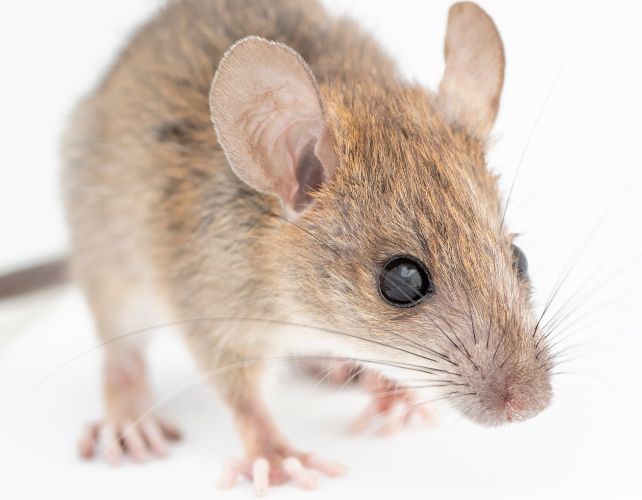
Perhaps unexpectedly, the creature exhibiting the highest degree of monogamy within the studied cohort was a rodent species: the California deermouse (Peromyscus californicus), which demonstrated a 100 percent incidence of full siblings.
Within the human societies examined in the study, encompassing both pre-industrial and prehistoric eras, an average of 66 percent of siblings shared the same biological parents.
This figure is commensurate with the observed rates in ten other socially monogamous mammal species included in the research, which tend to form long-term pair bonds for reproduction, such as meerkats and Eurasian beavers.
“The revelation that human rates of full sibling pairings align with the spectrum observed in socially monogamous mammals further fortifies the perspective that monogamy constitutes the predominant reproductive pattern for our species,” asserts Dyble.
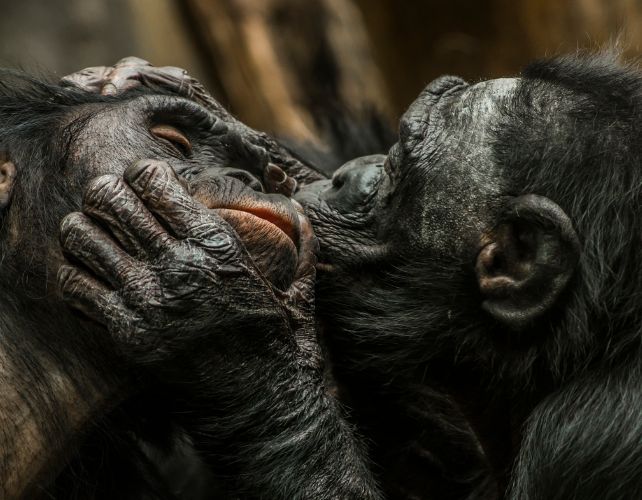
We, however, surpassed many of our closest primate relatives in this regard: Mountain gorillas (Gorilla beringei beringei) exhibited a full sibling rate of a mere 6 percent, while chimpanzees registered only 4 percent—a level of non-monogamy comparable to that of the notoriously promiscuous dolphin species.
Three macaque species also ranked near the lower end of the survey.
“Considering the mating behaviors of our nearest living relatives, such as chimpanzees and gorillas, human monogamy likely originated from a foundation of non-monogamous group living, a transition that is exceptionally rare among mammals,” Dyble explains.
It is important to acknowledge that sharing an identical set of progenitors with one’s siblings does not fully encompass the myriad forms of non-monogamy that both humans and other animal species are capable of exhibiting.
Genetic records are incapable of accounting for sexual liaisons that do not result in childbirth, and genealogical investigations are constrained by the information individuals elect to document, which may exclude extramarital affairs or illegitimate offspring. Conversely, more comprehensive documentation might have been maintained in societies where polygamy is culturally sanctioned and formally recognized.
“In the majority of mammalian species, the acts of mating and reproduction are intrinsically intertwined. In the human context, the advent of birth control methodologies and evolving cultural practices effectively decouples these two phenomena,” Dyble elaborates.
“Humanity engages in a diverse array of partnerships that foster conditions conducive to a blend of full and half-sibling relationships, coupled with significant parental commitment, ranging from serial monogamy to entrenched polygamous structures.”
An exhaustive examination of the complete rankings is presented below.
Dyble’s ‘monogamy league’
- California deermouse (100 percent full siblings)
- African wild dog (85 percent full siblings)
- Damaraland mole rat (79.5 percent full siblings)
- Moustached Tamarin (77.6 percent full siblings)
- Ethiopian wolf (76.5 percent full siblings)
- Eurasian beaver (72.9 percent full siblings)
- Humans (66 percent full siblings)
- Lar (white-handed) gibbon (63.5 percent full siblings)
- Meerkat (59.9 percent full siblings)
- Grey wolf (46.2 percent full siblings)
- Red fox (45.2 percent full siblings)
- Black rhinoceros (22.2 percent full siblings)
- European badger (19.6 percent full siblings)
- African lion (18.5 percent full siblings)
- Long-tailed macaque (18.1 percent full siblings)
- Feral cat (16.2 percent full siblings)
- Banded mongoose (15.9 percent full siblings)
- Rock wallaby (14.3 percent full siblings)
- Ringtailed coati (12.6 percent full siblings)
- Spotted hyena (12 percent full siblings)
- Eastern chipmunk (9.6 percent full siblings)
- White-faced capuchin (8.5 percent full siblings)
- Mountain gorilla (6.2 percent full siblings)
- Olive baboons (4.8 percent full siblings)
- Common chimpanzee (4.1 percent full siblings)
- Bottlenose dolphin (4.1 percent full siblings)
- Vervet monkey (4 percent full siblings)
- Savannah baboon (3.7 percent full siblings)
- Killer whale (3.3 percent full siblings)
- Antarctic fur seal (2.9 percent full siblings)
- Black bear (2.6 percent full siblings)
- Japanese macaque (2.3 percent full siblings)
- Rhesus Macaque (1.1 percent full siblings)
- Celebes crested macaque (0.8 percent full siblings)
- Soay sheep (0.6 percent full siblings)
The findings of this investigation were disseminated in the journal Proceedings of the Royal Society of London Biological Sciences.