The practice of achieving uninterrupted slumber is a contemporary behaviour, rather than an ingrained evolutionary predisposition, which may account for the prevalent experience of nocturnal awakenings around 3 a.m. and the subsequent concern that something is amiss. Understanding this phenomenon as a fundamentally human occurrence could be reassuring.
Throughout the vast majority of human history, the expectation of an unbroken eight-hour period of sleep was not the prevailing norm. Instead, it was common for individuals to engage in sleep in two distinct phases each night, frequently referred to as a “first sleep” and a “second sleep.”
Each of these sleep intervals would typically last for several hours, punctuated by a period of wakefulness lasting an hour or more in the middle of the night. Historical documentation originating from Europe, Africa, Asia, and other regions chronicles how, after dusk, families would retire early, only to awaken around midnight for a duration before resuming slumber until the advent of dawn.
The bifurcation of the night likely altered the subjective perception of time. This quiet interlude provided a distinct midpoint to the night, which could render extended winter evenings seemingly less protracted and more manageable.
The interval around midnight was not merely a void; it was a period of conscious awareness, thereby influencing the perceived length of the night.
Certain individuals would rise to attend to domestic obligations, such as tending to the hearth or inspecting livestock. Others remained in bed for prayer or to reflect upon recent dreams. Correspondence and personal journals from pre-industrial eras frequently mention the utilization of these tranquil hours for activities like reading, writing, or even engaging in hushed social interactions with family or neighbours. Many couples availed themselves of this mid-night wakefulness for conjugal intimacy.
Literary works dating as far back as those of the ancient Greek poet Homer and the Roman poet Virgil contain allusions to an “hour which terminates the first sleep,” underscoring the widespread prevalence of the biphasic sleep pattern.
The Demise of the ‘Second Sleep’
The cessation of the second sleep occurred over the last two centuries, directly attributable to considerable societal transformations.
One significant factor was the advent of artificial illumination. During the 18th and 19th centuries, the progressive implementation of oil lamps, followed by gas lighting, and ultimately electric light, began to extend the boundaries of usable waking hours after sunset. Rather than retiring shortly after dusk, individuals started extending their evening activities under the glow of artificial light sources.
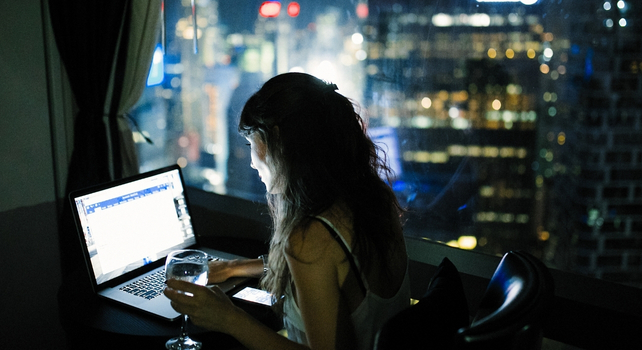
From a biological standpoint, exposure to intense light during nocturnal hours also recalibrated our internal biological clocks (our circadian rhythm), reducing our propensity to awaken after a few hours of sleep. The timing of light exposure is critically important. Even ambient indoor lighting prior to retiring suppresses and postpones the release of melatonin, consequently delaying the onset of sleep.
The Industrial Revolution brought about profound shifts not only in the nature of human labour but fundamentally altered our sleep patterns. The structured demands of factory schedules promoted a consolidated period of rest. By the early 20th century, the concept of eight continuous hours of sleep had supplanted the age-old rhythm of biphasic slumber.
In controlled sleep studies lasting multiple weeks, which replicate the conditions of long winter nights in darkness and eliminate external time cues or evening light, participants in laboratory settings often revert to a pattern of two distinct sleep periods, separated by a period of quiet wakefulness. A 2017 investigation conducted within a Madagascan agricultural community devoid of electricity revealed that the population predominantly maintained a biphasic sleep pattern, with awakenings occurring around midnight.
The Subjective Experience of Extended Darkness
Light plays a crucial role in synchronizing our internal biological clock and influences our perception of time’s passage. When these environmental signals diminish, as is characteristic of winter or prolonged exposure to artificial light, our internal timing mechanisms can become less precise.
During the winter months, the reduced intensity and later onset of morning sunlight create challenges for maintaining circadian alignment. Morning light is particularly vital for regulating our circadian rhythms due to its higher concentration of blue light, the most effective wavelength for stimulating the body’s cortisol production and inhibiting melatonin release.
In controlled environments designed for time-isolation studies and within cave experiments, individuals have resided for weeks without access to natural light or temporal markers, or in conditions of perpetual darkness. A significant proportion of participants in these studies exhibited inaccuracies in their estimation of daily passage, illustrating the ease with which temporal awareness can become desynchronized in the absence of light-based cues.
Analogous temporal distortions manifest during the polar winter, where the absence of distinct sunrise and sunset phenomena can create an experience of time seeming to be in suspension. Indigenous populations in high-latitude regions and long-term residents with established routines often adapt more effectively to polar light cycles than transient visitors, though this adaptability can vary among different demographic groups and contexts.
Residents tend to exhibit greater adaptation when their community adheres to a consistent daily schedule. For instance, a 1993 study focusing on Icelandic populations and their descendants who had migrated to Canada indicated that these individuals demonstrated notably low rates of winter seasonal affective disorder (SAD). The research posited that genetic factors might contribute to this population’s resilience in coping with the prolonged Arctic winters.
Investigations conducted at the Environmental Temporal Cognition Lab at Keele University, which I direct, provide compelling evidence of the profound connection between light, mood, and the perception of time.
Within a 360-degree virtual reality environment, we meticulously matched UK and Swedish visual scenes for their contextual setting, luminous cues, and the time of day depicted. Participants were presented with six video segments, each approximately two minutes in duration.
The participants estimated the two-minute intervals to be longer when viewing scenes depicting evening or low-light conditions in comparison to those representing daytime or brighter environments. This temporal alteration was most pronounced among participants who reported experiencing lower moods.
A Novel Perspective on Insomnia
Sleep specialists observe that transient awakenings are a common physiological event, frequently occurring during transitions between sleep stages, including those adjacent to REM sleep, which is closely associated with vivid dreaming. The critical determinant is not the awakening itself, but rather the individual’s response to it.
The brain’s perception of temporal duration is mutable: states of anxiety, boredom, or exposure to dim lighting tend to exacerbate the subjective experience of time passing slowly, whereas states of engrossment and mental serenity can lead to a perception of time accelerating.
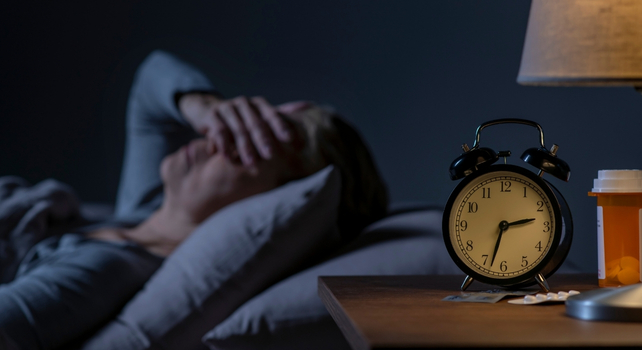
In the absence of the historical interlude where one might rise and engage in a quiet activity or converse with a partner, awakening at 3 a.m. frequently results in a protracted perception of time. In such scenarios, attentional resources are primarily directed towards the passage of time, causing each minute that elapses to feel significantly longer.
Cognitive behavioural therapy for insomnia (CBT-I) advises individuals to vacate their bed after approximately 20 minutes of wakefulness, engage in a quiet, low-light activity such as reading, and then return to bed once drowsiness returns.
Sleep professionals also advocate for concealing timekeeping devices and relinquishing the practice of time monitoring when experiencing difficulty falling asleep. Cultivating a state of tranquil acceptance of wakefulness, coupled with a comprehension of how our cognition processes temporal experience, may offer the most reliable pathway to regaining restful sleep.
Darren Rhodes, Lecturer in Cognitive Psychology and Environmental Temporal Cognition Lab Director, Keele University, Keele University