In 2017, a patient presented for consultation with Mark Supiano due to familial concerns regarding her recent episodes of short-term memory loss.
During the patient’s medical history and vital sign assessment, Supiano, a specialist in geriatrics at the University of Utah, observed a concerning indicator: her blood pressure registered at 148/86. This reading was elevated beyond the normal range, despite her current regimen of two medications prescribed to reduce it. “It was undeniably too high,” he stated recently.
A confluence of elements may have contributed to this elevated reading. These included the anti-inflammatory medication the 78-year-old woman was taking for her arthritis discomfort, a dietary pattern high in sodium, and a deficiency in regular physical activity. Furthermore, she had informed Supiano that her nightly routine involved consuming a couple of glasses of wine.
Following a discussion with Supiano regarding strategies to mitigate her health risks, the patient and her spouse enrolled in a local fitness center. She discontinued the anti-inflammatory drug, reduced her intake of salt and alcohol, and subsequently saw her systolic blood pressure readings stabilize within the 130-to-140 range. Although this range still indicated hypertension by the prevailing guidelines established by the American Heart Association and the American College of Cardiology later that year, it was considered more manageable. (The systolic measurement, representing the higher number in a blood pressure reading, holds greater clinical significance.)
By 2019, however, the patient had received a diagnosis of mild cognitive impairment. Concurrently, emerging medical evidence began to highlight a correlation between hypertension, medically defined as elevated blood pressure, and the development of dementia. “My therapeutic approach was not as assertive as it ought to have been,” Supiano reflected. He subsequently augmented the woman’s medication by introducing a third drug for hypertension, bringing her readings down to 120 or less.
The evolving standards for blood pressure management might evoke recollections for individuals of advanced years of a past dance craze, the limbo. To paraphrase a popular refrain, “How low can you go?”
For over a quarter of a century, a blood pressure reading of 140/90 or lower was universally recognized as normal, according to the guidelines from the AHA/ACC. However, the 2017 update instituted significant modifications, substantiated by the outcomes of the groundbreaking SPRINT trial. This study involved adults exceeding the age of 50 who were identified as having a high risk for cardiovascular complications.
The SPRINT trial revealed that intensive treatment protocols aimed at achieving a systolic pressure below 120 resulted in a substantial reduction in the incidence of heart attacks, strokes, other cardiovascular ailments, and overall mortality. The magnitude of these benefits was so profound that the researchers made the decision to conclude the study prematurely.
It was deemed ethically inappropriate, they concluded, to withhold the advantages of intensive treatment from one half of the trial participants. Consequently, the 2017 guidelines advocated for pharmacological intervention in individuals exhibiting systolic blood pressure exceeding 130.
The most recent updates, disseminated last year, advocate for even more stringent control measures. These directives propose that patients with cardiovascular risk factors should aim for systolic readings below 120. Moreover, this target is deemed “reasonable” even for individuals without elevated cardiovascular risk. Readings that were considered within the normal spectrum not long ago are now classified as indicative of hypertension.
Age-related arterial stiffening necessitates the heart exerting greater force to pump blood, leading to a natural increase in blood pressure with advancing years, according to Erica Spatz, the director of the preventive cardiovascular health program at the Yale School of Medicine. Data from 2021 to 2023 indicated that approximately two-thirds of adults older than 65 had hypertension, based on the prevailing definition at that time.
“This could result in a significantly larger population being classified as hypertensive,” observed Rita Redberg, a cardiologist affiliated with the University of California-San Francisco.
Supiano posits that recent investigations originating from both the United States and China, which demonstrate cognitive advantages associated with lower blood pressure readings, have “tipped the scales” for elderly individuals. “What benefits the cardiovascular system also benefits the brain,” he asserted, characterizing these findings as a “lever to encourage greater attention to blood pressure management. While an extended lifespan may not be their primary objective, preserving cognitive function for a longer duration is.
Virtually all major medical organizations, including the American Geriatrics Society (of which Supiano serves as the chairman of the board), have formally endorsed the latest guidelines.
“In the past, I tended to be more lenient with many of my elderly patients,” disclosed John Dodson, a cardiologist and researcher at NYU Langone Health. “The potential for adverse outcomes if I excessively treated their high blood pressure was a significant concern.”
A drastic reduction in blood pressure, known as hypotension, can precipitate symptoms such as dizziness and fainting, and can also lead to injuries sustained from falls.
Currently, Dodson notes, “I am adopting a more aggressive treatment strategy for my older patients.” Research has substantiated that managing hypertension yields benefits even for frail elderly individuals. While the SPRINT trial did record a higher incidence of fall-related injuries among its older participants, the rate was comparable between those undergoing intensive treatment and those receiving standard care. Specifically, among individuals over the age of 75, approximately 5% experienced falls in both treatment groups.
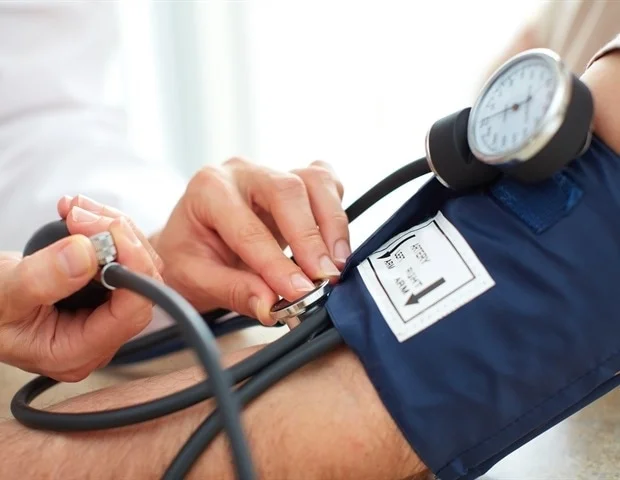
Another noteworthy alteration: the updated guidelines now recommend self-monitoring of blood pressure at home.
“Blood pressure is inherently variable,” Spatz highlighted. “It fluctuates throughout the day, influenced by factors such as the time of day, recent food intake, or ambient temperature.” Systolic measurements can exhibit variability of 30 points or more within a 24-hour period.
Furthermore, readings are almost consistently elevated in a clinical setting. “I am hesitant to place too much reliance on a single measurement,” Spatz commented.
“It is possible the patient is experiencing ‘white-coat syndrome’,” she added, referring to the anxiety often associated with medical appointments and diagnostic procedures, “or perhaps they encountered an unpleasant interaction with the parking attendant” en route to the clinic.
She instructs patients to record their blood pressure readings twice daily for a period of one to two weeks preceding their appointments. Some clinicians opt to prescribe a 24-hour ambulatory blood pressure monitoring device.
Will patients embrace home monitoring and more assertive treatment regimens? Cardiologists contend that high blood pressure, which is typically asymptomatic, continues to be inadequately managed despite the introduction of the newer guidelines.
Financial considerations are unlikely to pose a significant barrier. While many patients require a combination of two or three medications to effectively manage their blood pressure, these are widely available as generics at a nominal cost, approximately “$5 per month,” and rarely exhibit interactions with other medications commonly prescribed for older individuals, according to Supiano. A home blood pressure monitoring device can be purchased for around $35, with higher-end models offering digital data transmission capabilities.
While certain adverse effects can be serious—a fall, for instance, can have life-altering consequences—the majority of complications are “fortunately transient and reversible, and rather mild,” he remarked.
Nevertheless, the guidelines have encountered skepticism. Redberg, for example, advises her older patients on lifestyle modifications such as diet, exercise, and weight reduction but refrains from urging them to commence pharmacological treatment to reduce a systolic reading of 135 to below 120.
She believes they already exhibit excessive preoccupation with their blood pressure, adding, “I encourage them to go out and enjoy themselves.”
“Participate in a class! Visit a museum!” she suggested enthusiastically. “One cannot engage in such activities if one is at home monitoring their blood pressure five times a day.”
Although clinical trials and guidelines focus on population-level benefits—even modest reductions in dementia incidence would represent a substantial public health achievement—they are not effective in predicting individual patient outcomes. The PREVENT calculator, utilized to assess the likelihood of cardiovascular benefits from hypertension treatment, has not been validated for individuals above the age of 79 and does not incorporate the potential cognitive advantages, Supiano pointed out.
For individuals managing other serious medical conditions, such as cancer patients or frail nursing home residents with dementia, blood pressure control is likely to be a considerably lower priority.
The temporal aspect also plays a role in weighing potential risks against benefits. A meta-analysis involving elderly patients, conducted by Sei Lee, a geriatrician at UCSF, and his colleagues, determined that for every 200 patients undergoing intensive hypertension treatment, it would require an average of 1.7 years to avert a single stroke.
Addressing severely elevated blood pressure is a more straightforward and critical objective compared to striving to lower a reading of 130 to below 120, Lee elaborated. “It would necessitate considerably greater effort, the addition of a third or fourth medication, and an increased susceptibility to adverse effects.”
Supiano’s 78-year-old patient achieved the target blood pressure and maintained good health for a period of six to seven years. Subsequently, as is common with many individuals diagnosed with mild cognitive impairment, her condition began to deteriorate, and she was eventually diagnosed with Alzheimer’s disease.
Considering the research findings that highlight the cognitive benefits of managing high blood pressure, “perhaps it afforded her an additional couple of years of good quality life,” he mused. “It might have postponed the progression of her illness.” Alternatively, he conceded, it is possible that initiating intensive treatment at an earlier stage could have yielded better results.
The New Old Age is a collaborative initiative with The New York Times.