The escalating threat of elevated sea levels may jeopardize a significantly larger segment of the global population than previously estimated by scientific bodies and governmental agencies, a consequence stemming from flawed foundational research concerning current coastal water elevations, according to a recent investigation.
An extensive review encompassing hundreds of academic publications and hazard assessments revealed that approximately 90% of these initiatives underestimated the baseline elevation of coastal waters by an average of one foot (30 centimeters), as detailed in a study published in the journal Nature on Wednesday.
This systemic underestimation is notably more prevalent in the Global South, the Pacific region, and Southeast Asia, with less frequency observed in Europe and along the Atlantic coastlines.
The root cause, as elucidated by study co-author Philip Minderhoud, a professor of hydrogeology at Wageningen University & Research in the Netherlands, lies in an incompatibility between the methodologies employed for measuring sea and land altitudes.
He further elaborated that this disparity constitutes a “methodological gap” arising from the divergent approaches used to ascertain these two distinct elevation benchmarks.
While each measurement technique accurately assesses its designated domain, critical factors often go unaddressed at the land-sea interface when satellite data and terrestrial models are incorporated, he noted.
Studies that project the ramifications of sea-level ascent typically “do not take into account the actual observed sea level, thus they have employed this zero-meter datum” as their starting point, explained lead author Katharina Seeger from the University of Padua in Italy. In certain areas of the Indo-Pacific, this discrepancy can approach three feet (one meter), Minderhoud added.
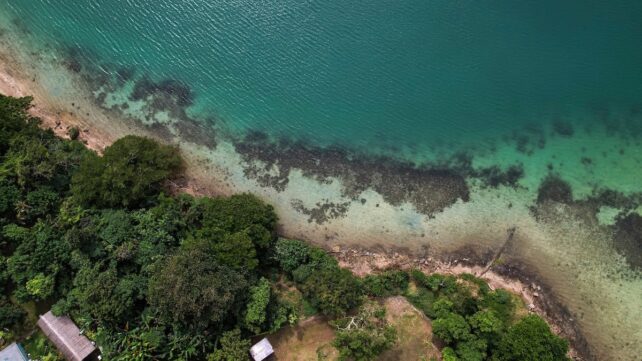
A straightforward analogy to comprehend this issue is that many assessments operate under the assumption of calm seas, devoid of wave action or currents. However, the reality at the water’s edge is that oceans are perpetually agitated by meteorological conditions, tidal forces, oceanic currents, thermal variations, and phenomena such as the El Niño effect, according to Minderhoud and Seeger.
The implications of recalibrating to a more precise coastal elevation baseline are significant: if sea levels increase by slightly over three feet (one meter) – a scenario some projections indicate could occur by the close of the current century – coastal inundation could expand by as much as 37%, potentially exposing an additional 77 million to 132 million individuals, the study posits.
Such a recalibration would invariably introduce complexities in strategizing and financing adaptation measures for a world undergoing climatic warming.
Populations at Elevated Risk
“A substantial number of people reside in regions where the probability of severe flooding is considerably higher than previously apprehended,” stated Anders Levermann, a climatologist at the Potsdam Institute for Climate Impacts Research in Germany, who was not affiliated with the study.
He further noted that Southeast Asia, identified by the research as the region exhibiting the most pronounced discrepancies, is already home to the largest populations vulnerable to sea-level rise.
Minderhoud highlighted island nations in this geographical area as prime examples where the tangible consequences of this measurement mismatch are acutely felt.
For 17-year-old climate activist Vepaiamele Trief, these projections are not merely abstract figures. On her home island in the South Pacific archipelago of Vanuatu, the coastline has undeniably receded during her lifetime, marked by beach erosion, uprooted coastal vegetation, and homes now situated mere feet from the sea at high tide.
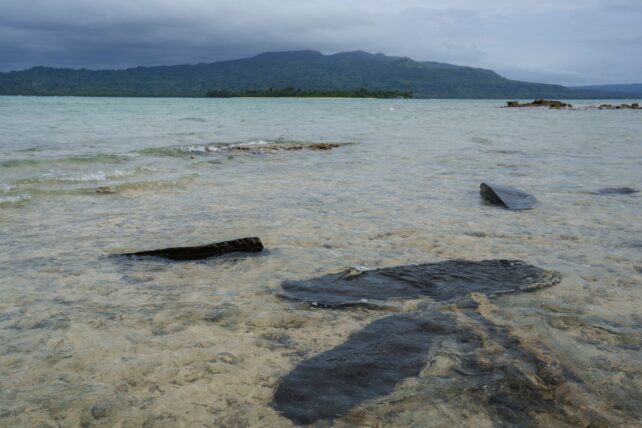
On Ambae, her grandmother’s island, a coastal road connecting the airport to her village has necessitated an inland rerouting due to the encroaching ocean. Burial sites have been inundated, and entire traditional lifestyles are now precarious.
“These academic analyses are not merely textual content or numerical data. They represent the concrete realities of people’s existence,” Trief emphasized. “Imagine yourselves in the position of our coastal communities – their very ways of life are on the precipice of being irrevocably transformed by sea-level rise and the broader effects of climate change.”
Vigilance Regarding the Point of Origin
This recent investigation fundamentally addresses the veracity of on-the-ground conditions.
Seeger and Minderhoud asserted that while computations may be accurate for oceanic expanses or terrestrial areas individually, they falter at the critical juncture where water meets land. This is particularly true in the Pacific region.
“To ascertain the elevation differential between a landmass and the water, one must accurately determine both the land altitude and the water altitude. What this paper indicates is that the vast majority of studies have simply assumed that the zero point in their land elevation datasets corresponds to the water level. In reality, this is not the case,” stated Ben Strauss, CEO of Climate Central and an expert in sea-level rise. His 2019 research was among the select few acknowledged in the new paper for its accuracy.
“The fundamental issue is with the initial baseline assumption, which researchers are getting incorrect,” remarked Strauss, who was not involved in the current research endeavor.
Potential for Exaggeration, Some Experts Suggest
Conversely, certain external scientific commentators contend that Minderhoud and Seeger might be overstating the gravity of the issue.
“I believe they may be somewhat exaggerating the downstream impacts on risk assessment studies. The problem is generally well-understood, although its treatment could certainly be refined,” commented Gonéri Le Cozannet, a researcher with the French geological survey.
Robert Kopp, a sea-level rise specialist at Rutgers University, indicated that most local planning authorities possess a nuanced understanding of their specific coastal challenges and formulate strategies accordingly.
Minderhoud acknowledged that this is indeed the case in Vietnam, an area identified as highly susceptible. He confirmed that they have a precise comprehension of local elevations.
These findings emerge concurrently with a new report from UNESCO, which highlights substantial deficiencies in understanding the ocean’s capacity for carbon absorption. The report indicates that model estimations for the magnitude of this carbon sink vary by 10% to 20%, thereby casting doubt on the precision of global climate projections that depend on them.
Collectively, these studies suggest that governmental bodies might be formulating plans for coastal and climatic risks based on an incomplete comprehension of oceanic transformations.
“When the ocean encroaches, it takes more than just the land we once enjoyed,” observed Thompson Natuoivi, a climate advocate for Save the Children Vanuatu.
“Sea level rise is not merely altering our coastlines; it is fundamentally reshaping our lives. We are not discussing a future threat – we are confronting an present-day emergency.”