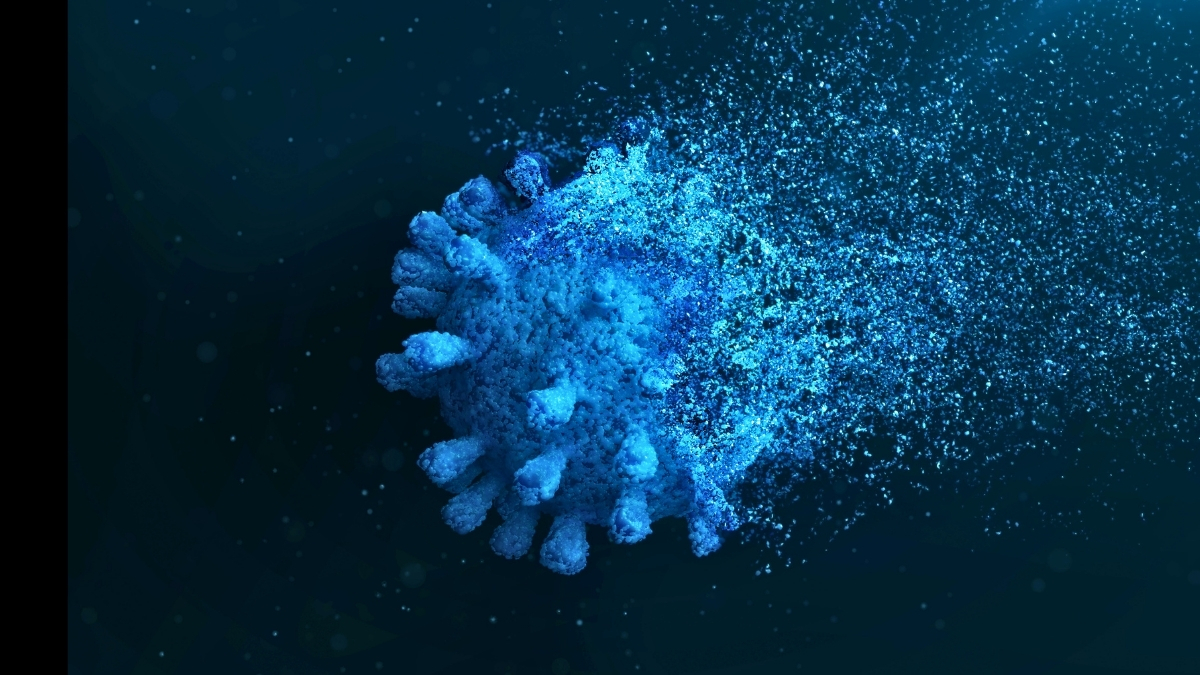
Residual fragments from the ‘zombie’ coronavirus not only exacerbate inflammation associated with long COVID but also inflict damage upon our immune cells.
A recent comprehensive investigation involving an international consortium of over thirty researchers has elucidated the mechanism by which viral disintegration within the body yields pernicious protein fragments. These fragments specifically target certain immune cells, potentially accounting for a portion of the debilitating sequelae experienced by millions afflicted with long COVID.
“These fragments demonstrate an affinity for particular topographical features on cell membranes,” stated bioengineer Gerard Wong. “Cells exhibiting irregular shapes, such as those with spiky or star-like morphology, or those featuring numerous extensions, are disproportionately affected and suppressed.”
Among these characteristically “spiky” cells are the crucial sentinels known as plasmacytoid dendritic cells, which are responsible for initial viral detection and signaling to the broader immune system. Additionally, cytotoxic T cells (CD8+) and helper T cells (CD4+), vital for eliminating infected cells, also fall prey to these fragments.
Prior investigations had already identified this depletion of T cells, a finding that has subsequently been acknowledged as a potential diagnostic indicator.
“Viruses engage in a multitude of processes that remain incompletely understood,” Wong commented. “Our objective is to comprehend the fate and impact of all residual viral material on the human body, both during and after acute infection. The discovery of these viral fragments opens up an entirely new spectrum of possibilities for investigation.”
The capacity of multiple types of these viral fragments to compromise immune cells may offer an explanation for the heightened vulnerability of individuals with pre-existing immune compromised conditions to these adverse effects, even if they are otherwise in good health.
Further substantiating these findings, the Omicron variant of COVID-19, recognized for its high transmissibility but generally reduced severity, decomposes into a more diverse array of protein fragments within the body compared to earlier strains.
“The rapid replication of Omicron, comparable to the original strain, yet its typically less severe clinical presentation, remained largely unexplained,” noted Yue Zhang, a bioengineer. “Our findings revealed that fragments derived from the Omicron spike protein possessed a significantly diminished capacity to induce the demise of these essential immune cells, suggesting a less compromised immune response in affected patients.”
Notwithstanding the prevailing sentiment that the pandemic has receded, COVID-19 continues to claim a substantial toll, resulting in approximately 100,000 fatalities annually in the United States and incapacitating countless others. In 2024, an estimated 17 million individuals in the US were experiencing long COVID.
Against this backdrop, a significant number of individuals find themselves grappling with the persistent and debilitating repercussions of long COVID, often without adequate support. Furthermore, recent research indicates an elevated risk of developing long COVID with recurrent infections in both pediatric and adult populations.
“One of the most compelling arguments for vaccination that I present to patients, families, and healthcare providers is this: increased vaccination rates should translate to fewer infections, which in turn should lead to a reduction in long COVID cases,” emphasized pediatrician Ravi Jhaveri.