
Individuals with exceptional facial recall capabilities—dubbed ‘super-recognizers’—possess an extraordinary ability to retain and recall visages. The underlying mechanisms of this remarkable talent are now being illuminated.
A recent investigation, conducted by Australian researchers and detailed in a new study, indicates that those who exhibit superior face memory tend to approach the task with an effortless, intuitive strategy rather than strenuous effort. In essence, their natural inclination is to concentrate on the most salient and distinguishing characteristics of a person’s face.
For the general population, who may struggle with identifying acquaintances and wish to improve their own facial recognition prowess to avert social awkwardness, this revelation offers limited solace.
“This aptitude is not acquirable through conventional learning methods or as a mere tactic,” elaborates the lead investigator, James Dunn, a specialist in psychology at the University of New South Wales (UNSW) Sydney. “It represents an intrinsic, adaptive mechanism for discerning the unique attributes that define each individual’s countenance.”
In an endeavor to replicate the visual processing of super-recognizers, Dunn and his team employed sophisticated eye-tracking technology to meticulously map how participants surveyed novel faces.
This methodology was applied to a cohort comprising 37 super-recognizers and 68 individuals with conventional facial recognition proficiencies. Their gaze patterns and the duration of their attention on facial images presented on a digital display were systematically recorded.
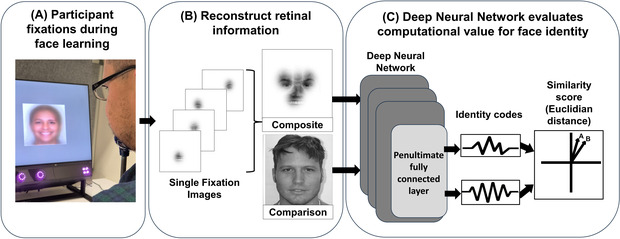
Subsequently, the collected observational data was introduced into advanced machine learning algorithms. These algorithms, specifically deep neural networks, were then tasked with discerning whether pairs of facial images corresponded to the same individual.
“Artificial intelligence has achieved remarkable proficiency in facial recognition,” comments Dunn. “Our objective was to leverage this technological capability to ascertain which human visual fixations yielded the most impactful data for identification.”
While the intricate processing capabilities of the human brain are undeniably crucial for interpreting visual input, the algorithms demonstrated superior accuracy in matching faces when supplied with eye-tracking data from super-recognizers compared to data from individuals with typical recognition abilities.
“These findings strongly suggest that the foundational perceptual processes contributing to individual variations in facial recognition proficiency may stem from the very initial stages of visual information processing—specifically, at the level of retinal encoding,” Dunn and his collaborators state in their publication.
This current research builds upon prior investigations conducted by the same research group. Those earlier studies posited that super-recognizers effectively deconstruct a face into constituent parts, akin to assembling a jigsaw puzzle, before their cognitive systems integrate these elements into a cohesive facial representation.
This “fragmented” approach to processing faces has challenged the prevailing assumption that exceptional face memory relies on a holistic view, focusing on the center of the face.
“It bears resemblance to the principle of caricature, where amplifying a face’s distinctive features enhances its recognizability,” explains Dunn. “Super-recognizers appear to achieve this visually, by selectively attending to those characteristics that are most indicative of an individual’s identity.”

While this research holds potential for enhancing automated facial recognition systems, the investigators acknowledge that humans currently retain an advantage over artificial intelligence in face recognition due to their capacity to incorporate multifarious contextual cues in social interactions.
Nevertheless, complacency regarding human uniqueness in this domain is unwarranted. Emerging evidence suggests a substantial genetic predisposition towards superior facial memory. Moreover, given the critical role of facial identity processing in primate social dynamics, the biological underpinnings of this ability may not be exclusively human.
The findings of this research have been formally published in the Proceedings of the Royal Society B: Biological Sciences.