Humankind has been actively altering its surroundings for a minimum of 10,000 years. However, the term “Anthropocene” denotes a distinct interval in Earth’s geological history characterized by pervasive human influence on the planet’s climate and ecosystems on a global scale.
Despite its official designation as a geological epoch being formally declined, it functions as widely recognized, concise terminology within scholarly discourse for the era of significant human intervention in the Earth system.
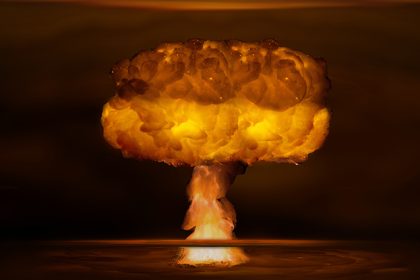
Numerous temporal starting points have been posited for the Anthropocene’s commencement, ranging from the early seventeenth century to the mid-twentieth century, specifically coinciding with the initial detonation of atomic weaponry. My recent investigation into atmospheric methane concentrations lends credence to an earlier starting date, suggesting that the advent of Europeans in the Americas exerted a discernible impact on the atmosphere, predating prior estimations.
Ice cores, which are cylindrical samples extracted from glaciers and ice sheets, furnish crucial data pertaining to historical shifts in atmospheric composition worldwide. It was from these records that a proposed starting point for the Anthropocene, preceding the industrial era, was first put forth in 2015 by two Earth systems scientists from University College London, namely Simon Lewis and Mark Maslin.
They hypothesized that a significant dip in atmospheric CO₂ levels, documented in ice cores and referred to as the “Orbis spike,” occurred around 1610. This unusually low concentration is attributed to a greater absorption of atmospheric CO₂ by trees, stemming from the regrowth of forests in the Americas following European settlement in the late 15th century.
The arrival of Europeans in 1492 and subsequent colonization throughout the 1500s, coupled with the introduction of diseases such as smallpox, led to a catastrophic decline in the population of the Americas, estimated at approximately 50 million individuals. Lewis and Maslin posited that as vast tracts of agricultural land fell into disuse, forests were able to re-establish themselves, facilitating increased atmospheric CO₂ sequestration.
The scale of this carbon removal was substantial enough to be registered in glacial ice, thereby establishing a global indicator for the inception of the so-called Anthropocene.
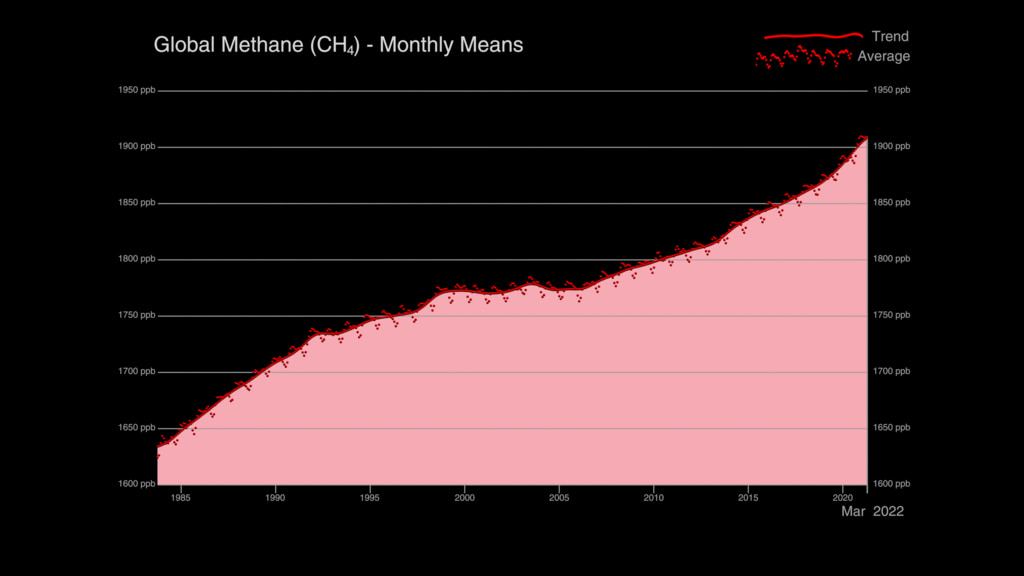
My own investigations into alterations in methane concentrations suggest that the Anthropocene commenced somewhat earlier, specifically in 1592. Analysis of ice core records reveals a minimum in atmospheric methane concentration precisely one century after explorer Christopher Columbus’s initial landing in the Americas. I contend that this finding further buttresses the hypothesis advanced by Lewis and Maslin a decade ago.
In a publication featured in Nature Reviews, Earth and Environment, I delve into the implications of global fluctuations in the exchange of methane between trees and forests.
Methane is a potent greenhouse gas, exhibiting approximately 80 times the warming potential of carbon dioxide over a 20-year timeframe. Critically, methane possesses a relatively short atmospheric lifespan of just under a decade, making ice core records considerably more sensitive to changes in the methane cycle compared to the longer-lived CO₂.
Trees Act as a Methane Reservoir
The connection to trees lies in their role as significant interfaces for methane exchange, a process influenced by their bark surfaces, which, despite appearing biologically inert compared to foliage, are crucial.
In environments such as swamps and forested floodplains, exemplified by the Amazon basin, these arboreal surfaces serve as conduits for methane release into the atmosphere from saturated soils, where methane is produced by anaerobic microbial activity.
However, my team’s research from the previous year illuminated how more expansive forest areas situated on well-drained soils engage with atmospheric methane. The trees host microbial communities capable of directly removing methane from the atmosphere.
This represents one of two mechanisms that, in conjunction, could account for a notable decrease in atmospheric methane levels recorded in Antarctic ice cores during the initial century following European arrival in the Americas. This observation would substantiate Lewis and Maslin’s proposition regarding the global repercussions of forest regrowth during that era.
The proliferation of trees on abandoned agricultural lands led to an increased surface area of woody vegetation in contact with the atmosphere, thereby enhancing methane uptake by the associated microbial populations.
The second contributing factor pertains to the role of trees in intercepting precipitation. A portion of the incoming rainfall can be re-evaporated before reaching the ground. Any moisture that does reach the soil may then be absorbed by tree roots and subsequently released back into the atmosphere. The remaining water infiltrates the soil or is channeled into rivers and wetlands.
It is plausible that the surge in forest expansion contributed to elevated rates of evaporation and transpiration. Consequently, a greater volume of water was transpired by the trees back into the atmosphere, with less runoff occurring over the soil surface.
This resulted in a reduced flow of water into wetland ecosystems. Wetlands are recognized as a significant source of methane. Therefore, a modest reduction in wetland extent, coupled with enhanced absorption of atmospheric methane by an expanding forest canopy, could have collectively diminished atmospheric methane concentrations, thereby explaining the minimum methane levels observed in 1592.
The precise demarcation of the Anthropocene’s commencement may indeed be superseded by the decision not to formally recognize it as a distinct epoch. Indeed, it is conceivable that the clearing of forests for early agricultural endeavors by humans approximately 5,000 to 8,000 years ago, during the mid-Holocene (a period characterized by relative climate stability in the Neolithic era), contributed to the observed increase in atmospheric methane recorded in Antarctic ice from that time.
Beyond serving as an ancient testament to human influence on our forests, ice core methane records offer an avenue for appraising recently identified processes within global forest ecosystems. This is an area of ongoing investigation for myself and my colleague, Peter Hopcroft, a specialist in paleoclimate modeling at the University of Birmingham.
Whether manifested through the clearing of forests for nascent agriculture or the ecological impacts stemming from the drastic depopulation of Indigenous communities following European contact, these historical imprints of our influence underscore a profound reality: an intrinsic and continuously evolving nexus has always existed between humanity and the natural world. This connection is so fundamental that, throughout the vast sweep of our existence as a species, we have been inextricably linked with nature itself.