A significant archaeological undertaking near the Chapel Royal of St Peter ad Vincula, situated within the precincts of the Tower of London, has resulted in the discovery of over 20 previously undocumented interments.
This extensive excavation, the first of its magnitude at this historical locus in thirty years and the inaugural exploration of this particular quadrant of the grounds, follows a preliminary trial pit investigation conducted in 2019. This information was corroborated by Historic Royal Palaces, the autonomous heritage organization entrusted with the stewardship of this landmark.
“The execution of these twin excavations,” remarks Alfred Hawkins, Curator of Historic Buildings at Historic Royal Palaces, referencing a statement made in a press release, “has afforded us a rare, once-in-a-generation chance to deepen our comprehension of the developmental trajectory of the Chapel of Saint Peter ad Vincula, alongside the edifices that preceded it.”
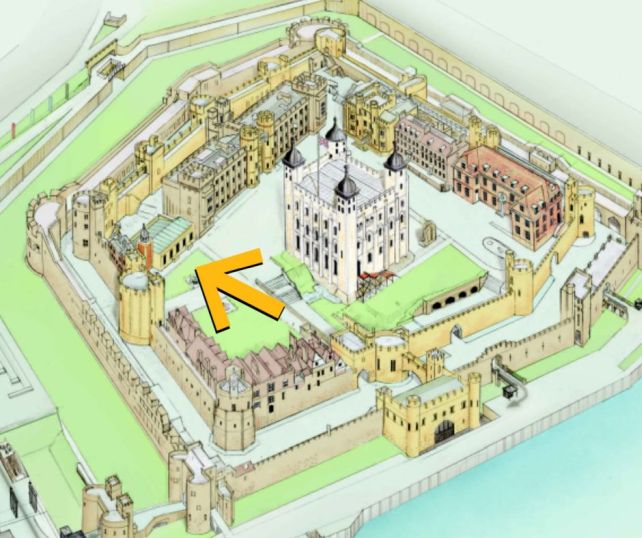
Throughout its existence spanning a millennium, the Tower of London has fulfilled multifaceted roles, encompassing its function as a correctional facility for royal personages, a royal residence, and a defensive bulwark for the safeguarding of the Crown Jewels. While currently a prominent tourist attraction, the Tower’s subsurface still conceals numerous long-held secrets.
Although many of these hidden narratives may remain undiscovered, the recent authorization for the installation of a new elevator, designed to enhance accessibility to the chapel, which dates back half a millennium, has presented an uncommon opportunity.
In the United Kingdom, all substantial construction initiatives are legally mandated to undergo an archaeological appraisal prior to commencement, a measure aimed at the protection and preservation of the nation’s ancient heritage. In 2019, archaeologists conducted a preliminary probe adjacent to the chapel, an undertaking that brought to light the skeletal remains of two individuals who are presumed to have been associated with the Tower community during the 16th century CE.
Earlier in the current year, the archaeological firm Pre-Construct Archaeology embarked on the principal phase of work adjacent to the chapel. This endeavor has thus far unearthed the remains of upwards of 20 individuals. Among these discoveries is a concentration of interments from the 14th century, potentially indicative of a plague-related burial site.
Furthermore, four other burials, dating from the 12th or 13th century, were found encased in coffins. This practice was notably uncommon for the era and could suggest that these individuals held a position of considerable social standing.
Additionally, a few rare grave goods have been recovered, including fragments of textile from a shroud, which typically degrades over time, and ceramic vessels containing charcoal. This latter type of grave good is scarcely documented, having been found at only one other medieval English burial site.
The archaeologists have also identified evidence pertaining to the historical development of the site itself. This includes the carbonized remnants of an earlier iteration of the chapel, commissioned by Edward I in the 1280s, which tragically succumbed to fire in 1512. Beneath this stratum, a layer of stonework hints at the possibility of even earlier construction activities at the location, possibly dating back to Henry III’s reconstruction efforts around 1240.
The ongoing nature of this project means that further interments may yet be revealed before the research concludes. Following this phase, the meticulous process of analyzing the recovered remains will commence, aiming to illuminate the identities of these individuals and the circumstances of their demise.
“We are already acquiring insights into the inhabitants of the Tower in a manner previously unattainable,” states Jane Sidell, an archaeologist affiliated with Historic England. “However, this represents merely the initial phase; there remains a wealth of information to be gleaned through subsequent analysis concerning both the populace and the architectural fabric of one of England’s most compelling historical monuments.”