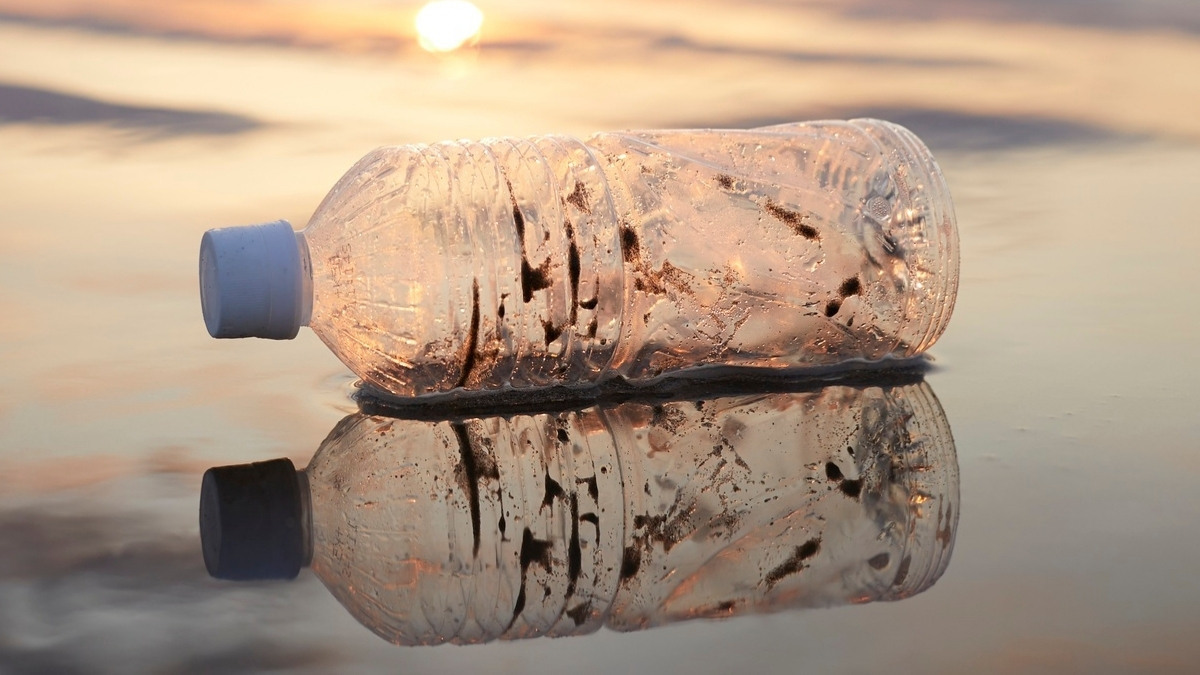
Visualizing oceanic plastic often conjures images of bottles and bags adrift on the waves, gradually drifting towards the vast expanse of the sea. However, the reality of this issue is considerably more intricate and far more enduring.
Our recent research indicates that even if all plastic contamination ceased today, fragments of buoyant plastic would persist in polluting the ocean’s surface for over a hundred years.
These fragments undergo a slow decomposition, liberating microplastics that descend through the water column at an exceedingly slow rate. The consequence is a “natural conveyor belt” of pollution, establishing a connection between the surface waters and the abyssal depths.
Our latest investigation was designed to elucidate the trajectory of large plastic pieces once they enter marine environments. We devised a computational model to replicate the processes by which these plastics degrade, fragment, and interact with the adhesive suspended particles known as “marine snow,” which are instrumental in transporting matter to the seabed.
Marine snow functions as the ocean’s intrinsic precipitation: minute, cohesive flakes of deceased plankton and other organic detritus that aggregate and descend gradually, carrying any adherent substances, such as microplastics, down into the deep.

(Nan Wu, CC BY-NC-ND)
The newly developed model builds upon our prior research concerning the protracted fate of microplastics measuring less than 1mm. This earlier work established that plastics would only engage with suspended fine organic particles after undergoing fragmentation and attaining a specific size threshold. However, that rudimentary one-dimensional model did not account for alternative physical phenomena, such as oceanic currents.
By integrating plastic degradation with oceanic processes, including the settling of marine snow, we have now generated a more comprehensive understanding of the transport mechanisms for minute plastic particles within the marine system and the reasons why certain floating plastics appear to vanish from the surface.
The Enigma of ‘Missing Plastic’
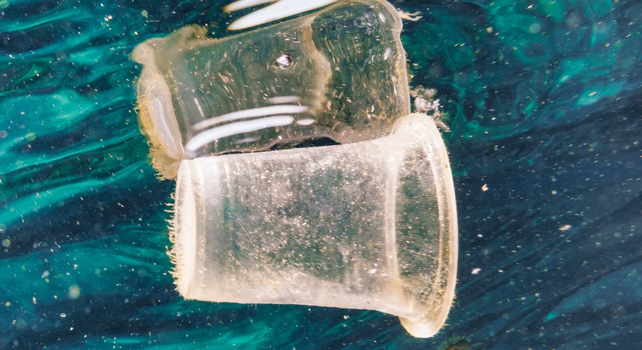
When substantial plastic items, such as discarded food wrappers or fragments of fishing tackle, enter the ocean, they can remain buoyant for extended periods, gradually eroded by solar radiation and wave action, and subsequently colonized by marine biofilm – microorganisms that inhabit the plastic’s exterior.
Over time, these larger items fracture into progressively smaller constituents, eventually reaching a size where they can adhere to marine snow and descend. Yet, this transformation is protracted. Even after a century, approximately 10% of the initial plastic mass may still be discernible at the ocean’s surface.
Regarding the remaining plastic, researchers have long observed a perplexing discrepancy between the volume of plastic entering the ocean and the significantly lower quantities detected on the surface.
Substances floating on the ocean’s surface are invariably removed through degradation and subsequent sinking. However, the quantifiable data has not consistently aligned. Our findings offer a plausible explanation for this “missing plastic” phenomenon.
We are not the inaugural researchers to report the sinking of microplastics. Nevertheless, by amalgamating experimental evidence on the association between microplastics and fine suspended sediments with our computational simulations of plastic degradation and marine snow settling dynamics, we provide credible estimations for the removal of microplastics from the ocean surface that account for the deficit in observed floating plastic.

The ocean’s inherent biological pump, frequently characterized as a transport system, facilitates the movement of carbon and nutrients from the surface to the abyssal zones. Our research suggests that this identical mechanism also governs the transport of plastics.
However, this process carries a potential consequence. As global plastic production continues its upward trajectory, the efficacy of the biological pump risks becoming overwhelmed. Should an excessive quantity of microplastics adhere to marine snow, it could impede the ocean’s capacity for carbon sequestration – an outcome that might have repercussions for marine ecosystems and even global climate regulation.
A Conduit for Contamination
The problem of microplastic pollution is not a transitory challenge. Even if complete elimination of plastic waste were achieved today, the ocean’s surface would remain contaminated for many decades.
To effectively address this issue, a long-term strategic perspective is essential, extending beyond mere superficial cleanup efforts of beaches or oceans. Policy frameworks must confront plastic production, consumption, and disposal at every juncture. Comprehending the migratory patterns of plastic within the oceanic system represents a foundational step towards attaining this objective.
Large, buoyant plastic debris undergoes degradation over protracted periods, yielding microplastics as it disintegrates. These minute particles may eventually settle on the ocean floor, but only after undergoing repeated cycles of adherence and release from marine snow, a process that can span multiple generations.
Consequently, plastic materials discarded at sea decades ago continue to fragment today, perpetuating a continuous source of new microplastics.
The ocean functions as an interconnected system: that which floats today will, in due course, descend, fragment, and re-emerge in novel forms. Our imperative is to ensure that the legacy we bequeath is less deleterious than that which we have already set adrift.