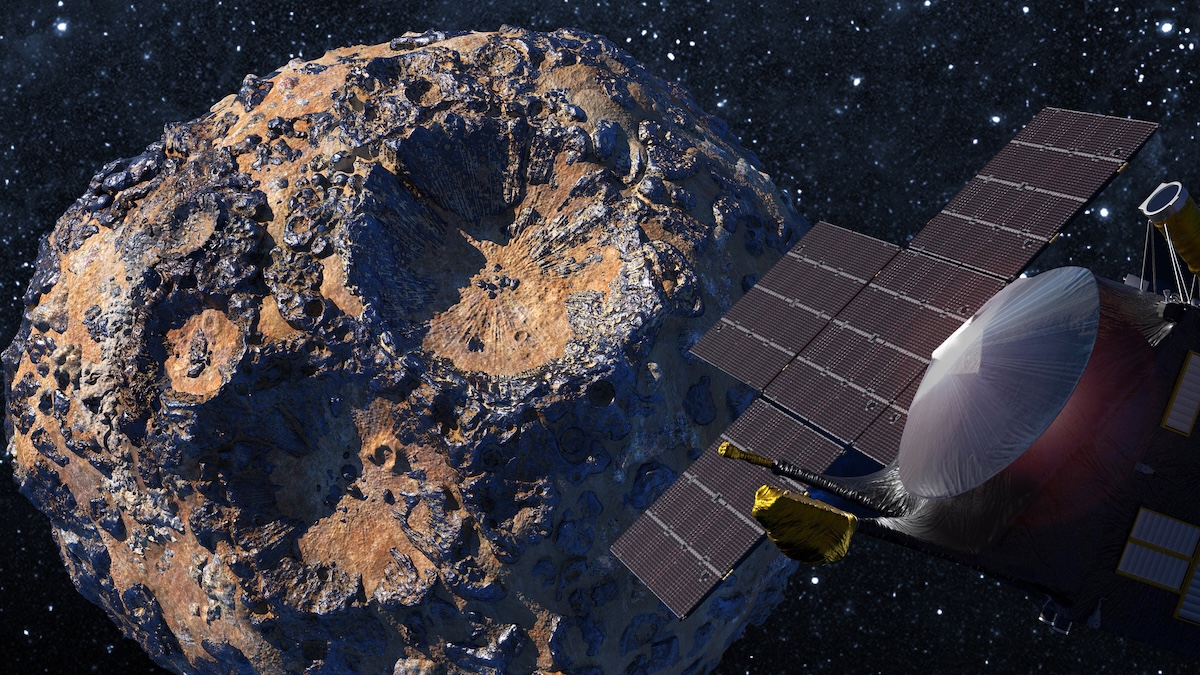
Not long ago, the prospect of extracting resources from celestial bodies captivated the public imagination. As the commercial space industry experienced a period of robust expansion, the notion of transforming space into a domain for economic activity appeared to be within reach.
The conceptual framework involved developing sophisticated platforms and spacecraft capable of approaching and extracting materials from Near-Earth Asteroids (NEAs), subsequently transporting these resources to orbital foundries for processing. This vision was considered on par with the ambitious goal of sending human crews on voyages to Mars.
Following considerable market speculation and the dissolution of several pioneering enterprises, these ambitious initiatives were postponed. The decision was made to defer such endeavors until technological advancements matured and other critical space exploration milestones were achieved.
Despite these setbacks, the aspiration of asteroid mining and the vision of a “post-scarcity” epoch it promises endure. Beyond the imperative for enhanced infrastructure and technological innovation, further scientific inquiry is essential to precisely ascertain the elemental composition of smaller asteroids.
In a recent scientific investigation, a collective of researchers, spearheaded by experts from the Institute of Space Sciences (ICE-CSIC), undertook an analysis of C-type (carbon-rich) asteroids, which constitute a significant majority, approximately 75%, of all known asteroid populations. Their groundbreaking findings indicate that these celestial bodies could serve as an invaluable reservoir of raw materials, thereby unlocking potential avenues for future resource utilization.
The leadership of this research initiative was entrusted to Dr. Josep M. Trigo-Rodríguez, a theoretical physicist affiliated with the Institute of Space Sciences (ICE) and the Catalonian Institute of Space Studies (IEEC) in Barcelona.
He collaborated with a distinguished team, including Pau Grèbol-Tomàs, a doctoral candidate also from the ICE and IEEC; Dr. Jordi Ibanez-Insa, a researcher in Geosciences at Barcelona; Professor Jacinto Alonso-Azcárate from the Universidad de Castilla-La Mancha; and Professor Maria Gritsevich, associated with the University of Helsinki and the Institute of Physics and Technology at Ural Federal University.
The comprehensive details of their research are slated for publication in the January 2nd edition of the esteemed journal Monthly Notices of the Royal Astronomical Society (MNRAS).
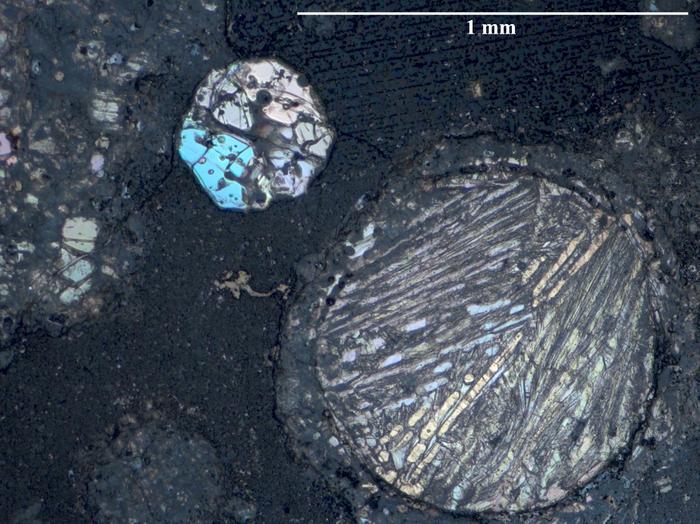
Carbonaceous chondrites (C chondrites) periodically descend to Earth, though their retrieval for scientific examination is a relatively infrequent occurrence. Constituting merely 5% of all observed meteorites, their inherently fragile composition often leads to fragmentation and their subsequent loss. The majority of recovered specimens have historically been discovered in arid environments, notably the Sahara Desert and the Antarctic continent.
The specialized research group at ICE-CSIC focused on Asteroids, Comets, and Meteorites, which is under Dr. Trigo-Rodriguez’s direction, is dedicated to investigating the physiochemical characteristics of asteroids and comets. Furthermore, this group serves as the international custodian for NASA’s collection of Antarctic meteorites.
For their most recent investigation, the research collective meticulously selected and characterized a suite of asteroid samples. These samples were subsequently subjected to detailed analysis by Professor Jacinto Alonso-Azcárate at the University of Castilla-La Mancha, employing sophisticated mass spectrometry techniques.
This rigorous analytical process enabled the researchers to precisely determine the elemental makeup of the six most prevalent types of C chondrites, thereby furnishing invaluable insights into the feasibility of future resource extraction operations. Dr. Trigo-Rodríguez articulated these findings in a press release issued by the Spanish National Research Council (CSIC):
“The scientific significance of each of these meteorites lies in their representation of small, undifferentiated asteroids, offering crucial data regarding the chemical composition and evolutionary trajectory of their parent bodies.
“At ICE-CSIC and IEEC, our expertise lies in developing experimental methodologies to deepen our understanding of these asteroids’ properties and how extraterrestrial physical processes shape their inherent nature and mineralogy. The work we are now unveiling represents the culmination of extensive collaborative effort from our team.”
Understanding the volumetric distribution of materials within asteroids is paramount, given their inherently heterogeneous nature. Although broadly categorized into three primary classifications—C-type (carbonaceous), M-type (metallic), and S-type (silicaceous)—asteroids are also distinguished based on their spectral signatures and orbital paths.
Furthermore, asteroids are essentially remnants from the primordial stages of the Solar System’s formation and have undergone extensive evolutionary processes over approximately 4.5 billion years. Consequently, a precise comprehension of an asteroid’s composition is indispensable for identifying the probable locations of various valuable resources, such as water ice and metallic ores.
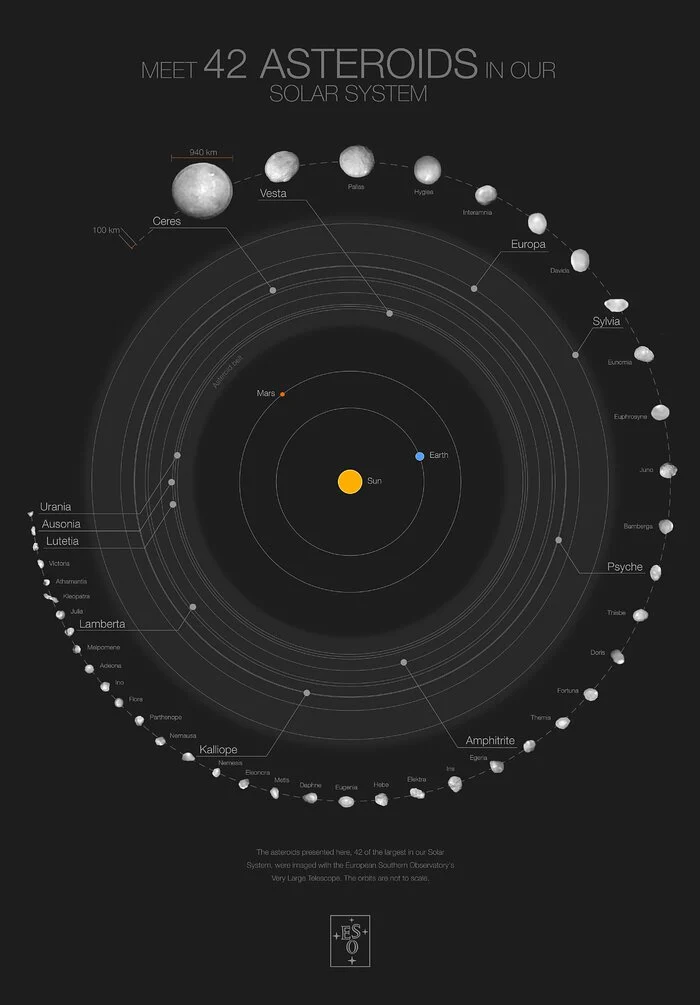
The research findings suggest that the extraction of resources from undifferentiated asteroids, which are believed to be the ancestral bodies of chondritic meteorites, is currently impractical. However, the study did identify a specific class of asteroids, characterized by abundant olivine and spinel bands, as a promising candidate for future mining operations.
The research team also highlighted the importance of targeting asteroids rich in water-bearing minerals. Concurrently, they underscored the necessity of conducting additional sample-return missions to definitively identify progenitor bodies before the commencement of any large-scale mining activities. Dr. Trigo-Rodríguez stated in this regard:
“In parallel with the advancements demonstrated by sample return missions, there is a pressing need for companies equipped to take substantial strides in developing the technological capabilities required for extracting and collecting these materials within low-gravity environments. The subsequent processing of these resources, along with the management of any generated waste, would also exert a considerable environmental impact that necessitates thorough quantification and appropriate mitigation strategies.”
This endeavor, the researchers contend, will mandate the engineering of expansive collection apparatus and methodologies for resource extraction under conditions of reduced gravity.
“For certain carbonaceous asteroids with substantial water content, the feasibility of extracting water for subsequent reutilization, either as propellant or as a fundamental resource for interplanetary exploration, appears more attainable,” remarked Dr. Trigo-Rodríguez.
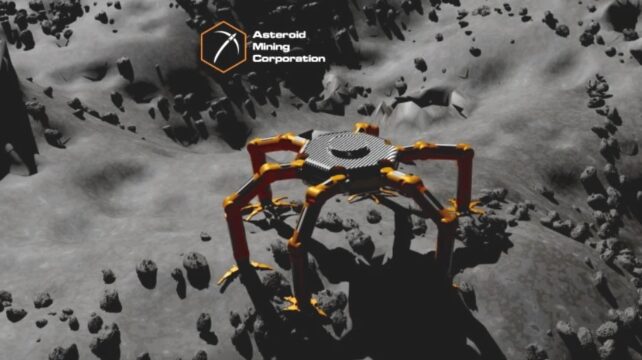
“This pursuit could also enhance our scientific understanding of specific celestial bodies that pose potential existential threats to our planet. In the long term, we might even develop the capacity to mine and reduce the size of potentially hazardous asteroids, thereby neutralizing their danger.” Grèbol-Tomàs added:
“The process of studying and selecting these types of meteorites within our specialized cleanroom environment, using diverse analytical techniques, is profoundly fascinating, particularly given the wide array of minerals and chemical elements they encapsulate. Nevertheless, the majority of asteroids contain relatively modest quantities of precious elements, thus our study’s primary objective has been to ascertain the extent to which their extraction would be economically and technically viable.
“While it may sound like science fiction, the concept of initial sample return missions also seemed like pure fantasy when they were initially conceived three decades ago.”
Regardless, the potential advantages derived from asteroid resource exploitation are immense, which explains the considerable attention this subject has garnered over the past ten years. Beyond precious metals, numerous asteroids are a source of water ice that could be harnessed to produce fuel for deep-space expeditions and provide essential water for human consumption and agricultural purposes.
This would consequently diminish the dependence on resupply missions originating from Earth, empowering both robotic and crewed exploratory missions to achieve a greater degree of self-sufficiency. By relocating mining and manufacturing operations to cislunar space and the main asteroid belt, humanity could also mitigate the detrimental environmental impacts these industrial sectors currently exert on Earth.
Although public enthusiasm for asteroid mining has somewhat subsided in recent years, a multitude of contemporary ventures are actively engaged in research and development of the requisite technologies. Similarly, prominent space agencies such as NASA and JAXA have successfully executed sample-return missions, yielding substantial insights into the scientific and material wealth potentially contained within asteroids.
In the forthcoming period, China’s Tianwen-2 mission is scheduled to rendezvous with a Near-Earth Asteroid and a comet located within the main asteroid belt. Although the emergence of a fully realized industry for space-based resources may be several decades away, or even longer, numerous entities are poised to establish a foundational presence.
This material was originally published by Universe Today. Readers can access the original publication here.